A complete explanation of what shearling actually is, how it differs from sheepskin and faux shearling, how warm it really is, how to choose the right weight, and how to tell genuine shearling from an imitation before you spend a cent.
A shearling jacket is a garment made from a single sheepskin hide that has been tanned with the leather side facing outward and the wool fleece left intact on the inside. This one hide construction is what separates shearling from sheepskin coats that use the wool facing out, and from faux shearling, which is a synthetic fabric printed and textured to imitate the look without any real hide or wool. Because the insulation is built into the same piece of leather as the shell, a genuine shearling jacket traps body heat more consistently than a jacket with a separate synthetic lining, which is why Rove Leather and other heritage outerwear makers still build it from the same core material used in WWII era flight jackets.
What Is a Shearling Jacket?
A shearling jacket starts as a single sheepskin. During tanning, the leather is finished on the outer face while the wool fleece is left attached on the inner face rather than being stripped away. The finished garment is cut and sewn so the smooth leather sits against the weather and the dense wool sits against the body.
This is a genuinely different process from adding a lining afterward. A quilted or faux fur lined jacket is built from two separate materials joined at the seams. A shearling jacket is built from one material that already contains both layers, which is part of why the category has stayed in continuous use for close to a century.
The name itself refers to the tanning method rather than a breed of sheep or a specific look. Any sheepskin that has been tanned with the wool left on and shorn to an even length can correctly be called shearling. The shearing step, where the wool is trimmed to a uniform short pile before the hide is finished, is also where the word shearling actually comes from, and it explains why the material always has that clipped, even textured fleece rather than the longer, looser wool seen on an unshorn hide.
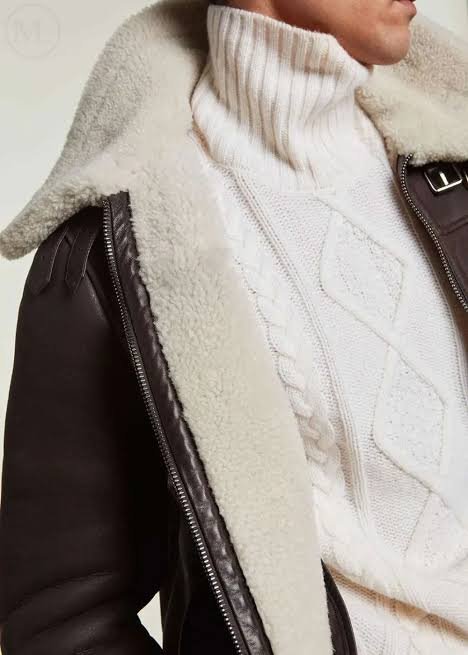
Because the leather and the wool grow from the same connective tissue, there is no seam, glue line, or backing fabric anywhere between the two layers on a genuine shearling garment. That structural fact is the single most reliable thing to check when you are trying to confirm whether a jacket is real shearling or an imitation built from two joined materials instead of one.
Where Did the Shearling Jacket Come From?
Sheepskin flying garments were already in informal use by open cockpit pilots in the mid 1920s, who needed insulation at altitude long before cabin heating existed in aircraft. The garment was formalized in 1934, when the US Army Air Corps introduced the B3 bomber jacket as standard issue cold weather gear.
By 1943, the B3 and its shorter cousin the A2 were standard equipment for high altitude bomber crews flying in unpressurized, unheated aircraft over Europe. The wide shearling collar, straight cut body, and thick shearling lining were not stylistic decisions. Every element solved a specific problem: trapping heat at the neck, blocking wind at the torso, and surviving the wear of a working military garment.
After the war, surplus B3 jackets moved into civilian hands through the 1950s, and by the 1980s the silhouette had become a recognized winter fashion category on its own, independent of its military origin. What kept the design alive through decades of changing fashion cycles was function rather than nostalgia. A garment built to keep a bomber crew alive at high altitude in an unheated aircraft has very little trouble keeping a commuter warm on a cold city sidewalk, and that practical margin of safety is part of why the silhouette has never really gone out of production.
How Is Real Shearling Different From Sheepskin and Faux Shearling?
These three terms get used interchangeably online, which is exactly why buyers get confused. Each one describes a different material.
- Shearling: a sheepskin tanned with the leather face out and the wool face in, shorn to an even short pile.
- Sheepskin (wool out): the same hide, but worn or lined with the wool facing outward instead of in, often seen in rugs, seat covers, or certain coats.
- Faux shearling: a fully synthetic fabric, usually polyester based, that is textured and dyed to visually resemble real shearling with no leather or wool present at all.
Real shearling and faux shearling can look similar in a product photo, which is exactly where most buying mistakes happen. The difference becomes obvious the moment you touch the material or check the listed composition. Genuine shearling has weight and structure to it. The leather side has the slightly cool, dense feel of tanned hide, and the wool side has a natural irregularity to the curl pattern, since no two areas of a real hide are shorn to exactly identical density. Faux shearling tends to feel uniformly light, slightly stretchy, and warm to the touch almost immediately, since synthetic fiber does not carry the same thermal mass as leather.
Price is a rough but useful signal as well. Genuine shearling requires hide sourcing, tanning, and shearing before a single stitch is sewn, which places a floor under what an honest shearling garment can reasonably cost. A jacket priced well below that floor and marketed as shearling is worth a second look at the material description before purchase.
Shearling vs Faux Shearling vs Sheepskin: What Is the Difference?
| Feature | Real Shearling | Faux Shearling | Sheepskin (Wool Out) |
|---|---|---|---|
| Base material | Genuine tanned sheep hide with wool attached | Synthetic fabric, usually polyester | Genuine tanned sheep hide with wool attached |
| Exterior finish | Smooth leather | Printed or bonded fabric backing | Wool fleece |
| Warmth performance | High, wind blocking and insulating | Moderate, no wind blocking from the shell | High, but fleece exposed to weather and dirt |
| Typical lifespan with proper care | Decades | A few winter seasons | Many years, but the exposed wool wears faster |
| Common use case | Jackets and coats worn leather side out | Budget lined jackets, home textiles | Rugs, seat covers, some coats |
How Warm Is a Shearling Jacket?
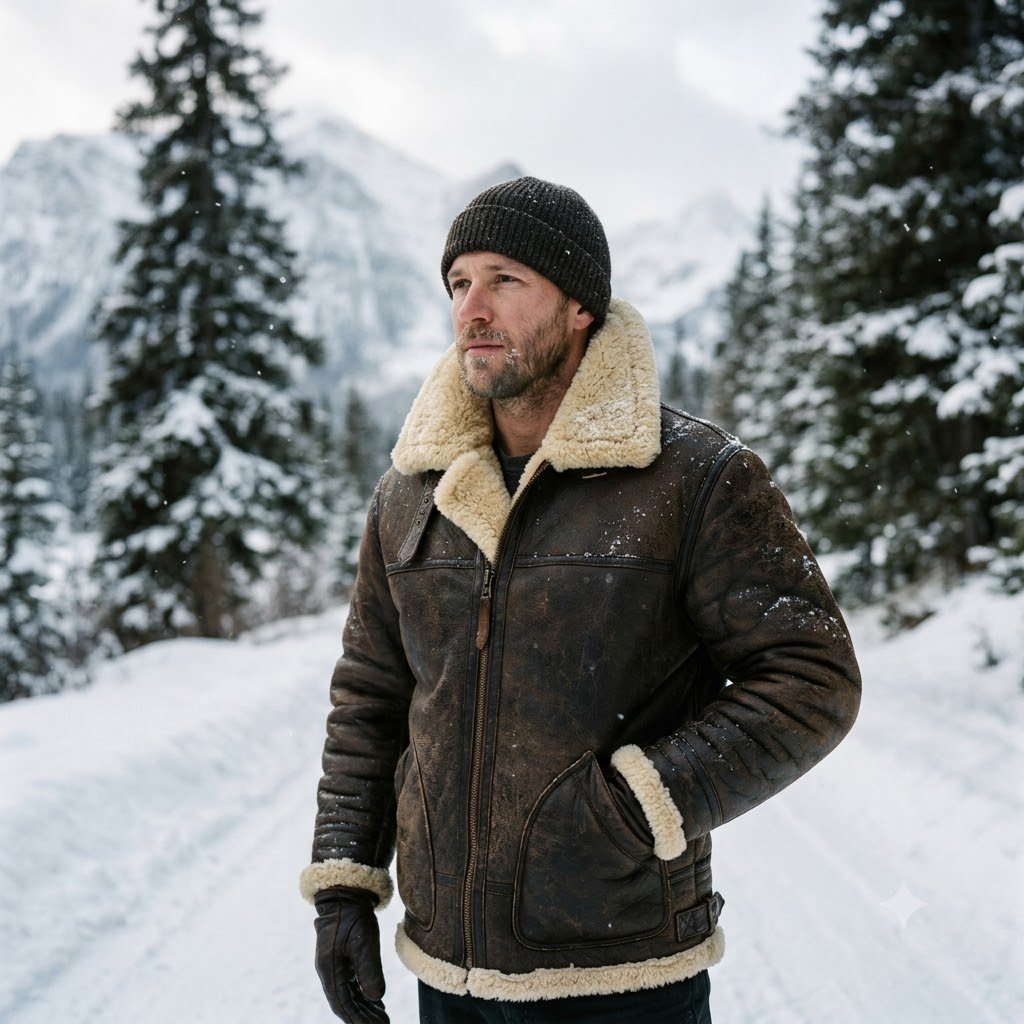
Shearling is one of the most naturally insulating materials used in outerwear because the wool fibers trap air in a dense, crimped structure. Unlike loose down or synthetic fill, that structure sits against a solid leather shell rather than inside a separate quilted panel, so wind cannot pass through and pull the trapped heat away.
This combination is why shearling jackets remain associated with the coldest working conditions on earth. High altitude flight crews in unheated WWII bombers relied on it because down alone, without a wind blocking exterior, loses much of its effectiveness the moment air moves through it.
For everyday winter wear, a genuine shearling jacket is generally suited to freezing and sub freezing temperatures with normal outdoor exposure, and performs noticeably better than a synthetic filled jacket of similar weight once wind is involved. It also behaves differently from insulated jackets in damp cold. Down loses much of its loft and insulating ability once compressed or slightly damp, while the crimped wool structure in shearling holds its shape and continues to trap air even under light moisture exposure, which is one reason it has remained a preferred material for genuinely harsh climates rather than being fully replaced by synthetic alternatives.
Body heat retention in a shearling jacket is also a function of fit, not just material. A jacket that traps a layer of warmed air close to the skin performs better than one that allows constant air exchange at open gaps, which is why the collar, cuff, and hem construction discussed later in this guide matters as much as the raw material.
What Makes a Quality Shearling Jacket? Expert Standards
- Full grain or genuine leather exterior, not a bonded or corrected grain substitute that cracks under cold flexing.
- Even, dense wool pile across the collar, cuffs, and body lining, without bald patches or uneven shearing.
- A single hide origin for the leather and wool, rather than a leather shell with a separately attached synthetic fleece lining marketed as shearling.
- Reinforced seams at the shoulder and underarm, since shearling hide is thicker and heavier than standard garment leather and puts more stress on stitching.
- A collar built to close fully at the throat, since this is the single point where the most heat escapes on any winter jacket.
A well constructed shearling jacket should also hang correctly on its own, without the collar collapsing forward or the cuffs curling outward from an uneven internal seam, since a hide this thick reveals shortcuts in the pattern cutting almost immediately.
How Do You Choose the Right Shearling Jacket Weight for Your Climate?
Not every shearling jacket is built to the same standard of warmth, and matching the weight to your actual climate matters more than most buyers expect. A heavyweight shearling jacket with a deep collar and full body lining is built for genuinely cold, wind exposed conditions, the kind of winter where a synthetic filled jacket would need significant extra bulk to compete.
A lighter shearling piece, sometimes trimmed at the collar and cuffs rather than lined throughout the body, suits milder winter climates or transitional seasons where the goal is a structured leather jacket with added warmth rather than maximum insulation. Buyers in consistently cold, wind exposed regions should prioritize a full body shearling lining, while buyers in milder or coastal climates can reasonably choose a lighter build without losing the core benefit of the material.
Layering habits matter here too. A shearling jacket built for extreme cold is generally cut with enough internal room for a midweight sweater underneath, while a lighter shearling piece is often cut closer to the body for wear over a shirt alone. Checking the intended layering fit before buying avoids the common problem of a jacket that looks correct on a hanger but feels restrictive the moment a sweater goes on underneath it.
Common Mistakes When Buying Shearling Jackets and How to Avoid Them
- Buying by photo alone. Faux and real shearling photograph almost identically. Always confirm the material listed in the product description before purchase.
- Ignoring fit at the collar and cuffs. A loose collar undermines the insulating benefit even on a genuine shearling jacket, since warm air escapes at the neck.
- Skipping care instructions after purchase. Shearling is more sensitive to moisture and direct heat than standard smooth leather, and treating it the same way shortens its lifespan significantly.
- Assuming heavier automatically means warmer. Wool density and pile depth matter more than raw jacket weight, since a heavy jacket with thin wool can underperform a lighter one with denser fleece.
- Choosing the wrong weight for the climate. A heavyweight shearling jacket in a mild climate is often too warm for daily use, while a light trim only piece will underperform in genuinely cold, wind exposed conditions.
How Should You Care for a Shearling Jacket?
The leather exterior of a shearling jacket takes standard leather conditioning, applied two to three times a year to keep the hide supple. The wool interior needs different treatment entirely.
- Brush the wool lining lightly with a soft bristle brush after wear to restore loft that gets compressed against the body.
- Air dry away from direct heat if the jacket gets wet. Radiators, direct sun, and hair dryers all dry the hide unevenly and can cause cracking.
- Store on a wide, padded hanger in a cool, dry space, never folded for long periods, since folding creates permanent creases in shearling hide.
- Avoid machine washing or dry cleaning unless the specific product is labeled as safe for it. Standard dry cleaning solvents can strip the natural oils from shearling.
Seasonal storage deserves its own attention. A shearling jacket left compressed in a garment bag for months at a time will lose loft in the wool and can develop flattened patches at the shoulders and collar. A breathable cotton garment bag, rather than a sealed plastic cover, allows the leather to continue breathing through the off season and helps the jacket come out of storage in the same condition it went in.
Tundra Men’s Dark Brown Shearling Leather Jacket
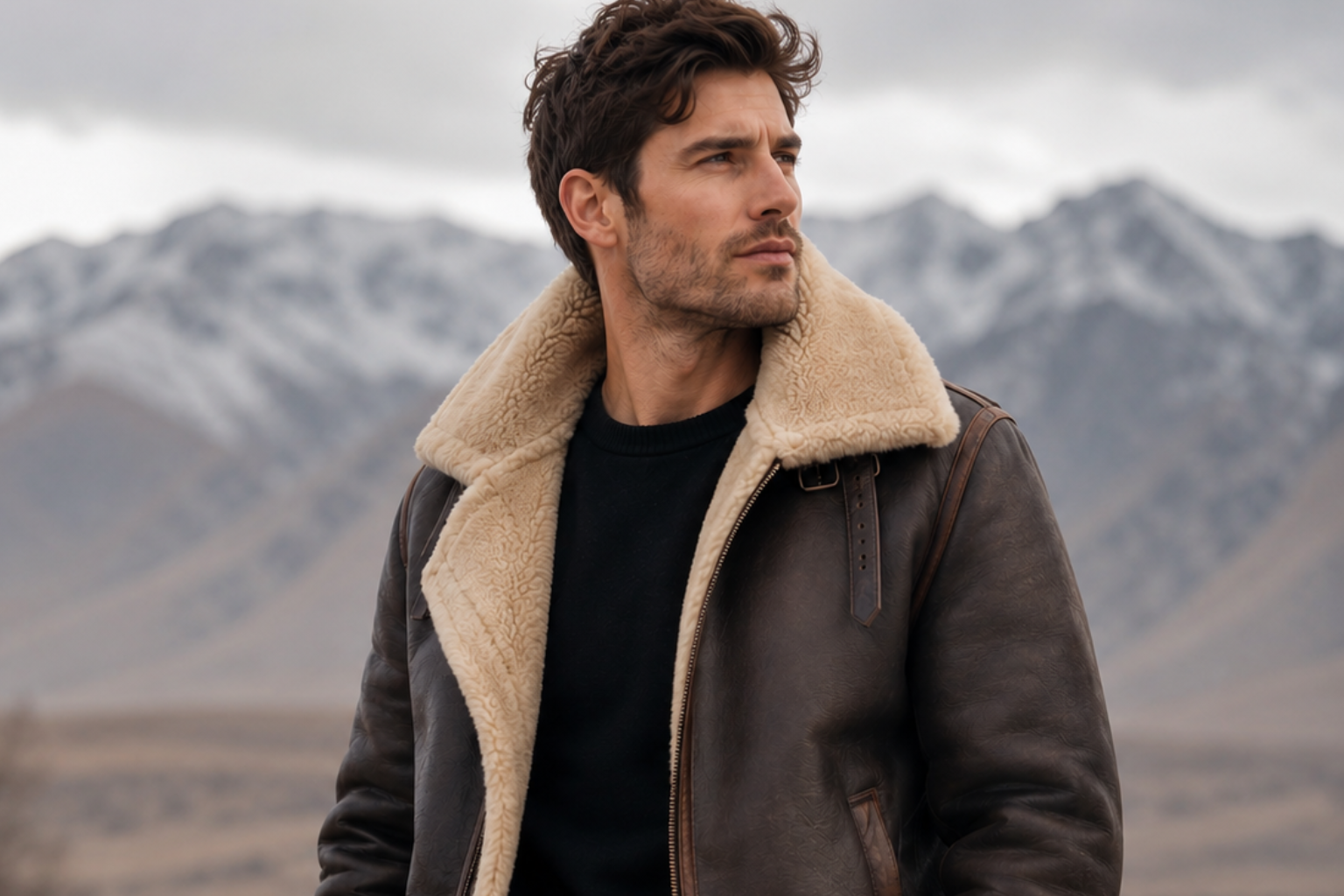
The Tundra is a direct example of some of the construction standards covered above. It uses a genuine leather exterior in a deep espresso brown, paired with a thick shearling lining running through the body, collar, cuffs, and hem rather than as a thin decorative strip. The collar in particular is cut wide and deep, which matters more for real warmth than most buyers expect.
The silhouette follows the same wide collar, straight body B3 heritage shape discussed earlier in this guide, and the shearling is extended throughout rather than isolated to a trim panel.
It suits buyers who want a single jacket built for genuinely cold winters rather than mild autumn weather, and who are comfortable maintaining a leather and wool garment with the light brushing and conditioning routine described above. Free shipping and 14 day returns on all orders from Rove Leather.
How Long Does a Shearling Jacket Last?
A Shearling jacket, properly conditioned and stored, is built to last considerably longer than most winter garments, largely because the leather exterior only improves in appearance with age rather than degrading. Where synthetic filled jackets tend to lose loft and structure within a handful of seasons, a well maintained shearling jacket can remain fully functional for decades, which is part of why so many original military surplus pieces from past decades are still worn today rather than treated as collectible only items.
The wool lining is the component most affected by neglect. Consistent brushing and proper storage keep the fleece from matting or flattening permanently, while long term compression or moisture exposure without care will shorten its effective lifespan well below what the leather shell alone is capable of.
Why Does the Shearling Jacket Still Matter Today?
Modern synthetic insulation has closed some of the performance gap that once made shearling the only real option for extreme cold. What synthetics have not replicated is the specific combination shearling offers in one material: a genuinely wind blocking exterior fused to a naturally insulating interior, with no separate lining to wear out, shift, or clump over time.
That single hide construction is also why shearling jackets age differently than most winter garments. The leather develops a deeper patina with wear, and the wool, properly cared for, keeps its loft for years rather than seasons. A well built shearling jacket is one of the few winter garments genuinely designed to outlast the wardrobe rotation around it, which is exactly why Rove Leather continues to build its shearling collection on the same century old standard rather than a trend driven redesign.
There is also a practical argument for shearling that has little to do with heritage appeal. A garment that performs in genuinely extreme cold gives a wide margin of comfort in ordinary winter weather, which means a shearling jacket rarely feels like it is being pushed to its limit during typical daily use. That margin, more than any styling detail, is the real reason the category has outlasted almost every synthetic alternative introduced since the B3 first entered service.
Frequently Asked Questions — Shearling Jackets
The most common questions buyers ask about shearling jackets, answered directly.
- Shearling is one hide, two functions: the same sheepskin provides both the wind blocking leather shell and the insulating wool lining, unlike jackets with a separate synthetic lining.
- Faux shearling is a different material entirely: it is synthetic fabric with no leather or wool content, and it will not match the warmth or lifespan of genuine shearling.
- Fit at the collar and cuffs determines real world warmth: a well sealed neck and wrist matter as much as overall jacket weight for retaining body heat.
- Weight should match climate: heavyweight, fully lined shearling suits genuinely cold and wind exposed conditions, while lighter trimmed shearling suits milder winters.
Understanding what a shearling jacket actually is turns a confusing shopping category into a simple checklist. The material is a single tanned sheepskin, the warmth comes from pairing a solid leather exterior with a naturally insulating wool interior, and the biggest buying risk is mistaking a synthetic sherpa style lining for the real thing.
For anyone shopping for genuine cold weather protection this winter, that distinction is the difference between a jacket that performs for one season and one built on the same construction that has kept people warm in the harshest conditions for close to a century. Rove Leather builds its shearling collection to that original standard, with the material and construction details covered above running through every piece.
Shop Shearling Jackets at Rove Leather
Genuine leather and shearling · Free worldwide shipping · 14 day returns