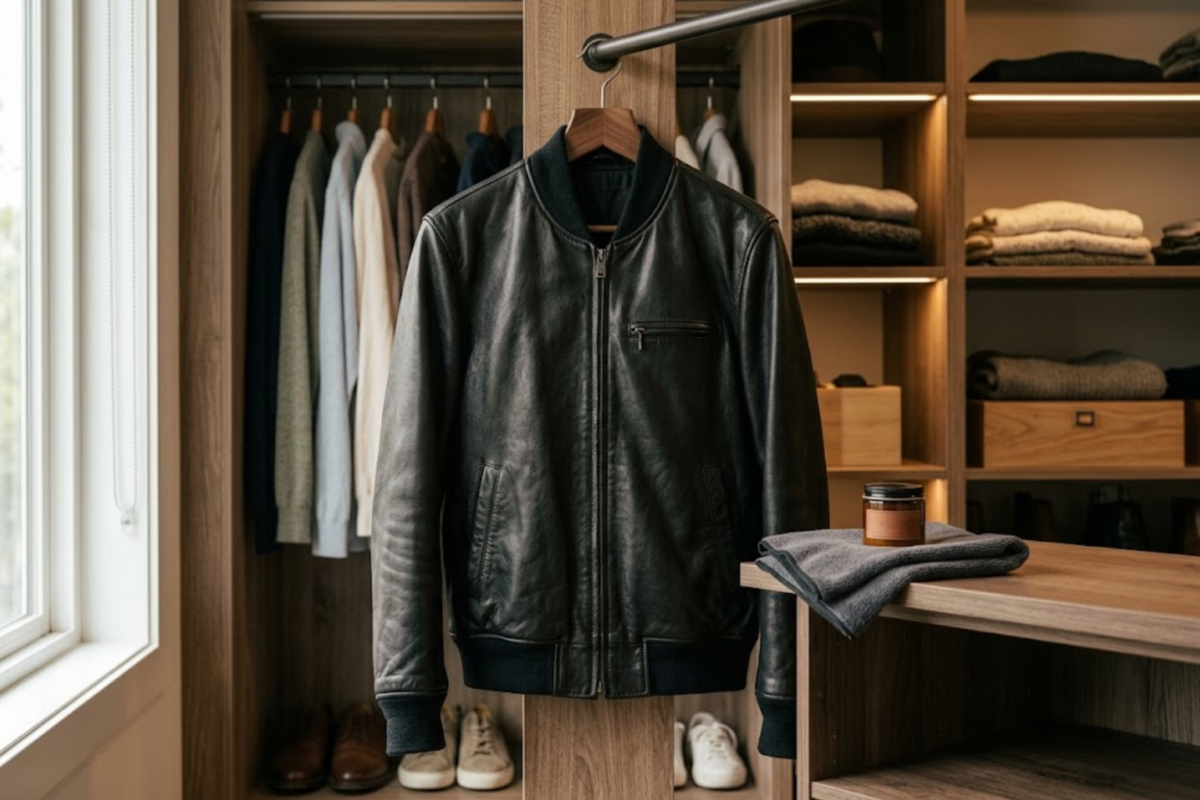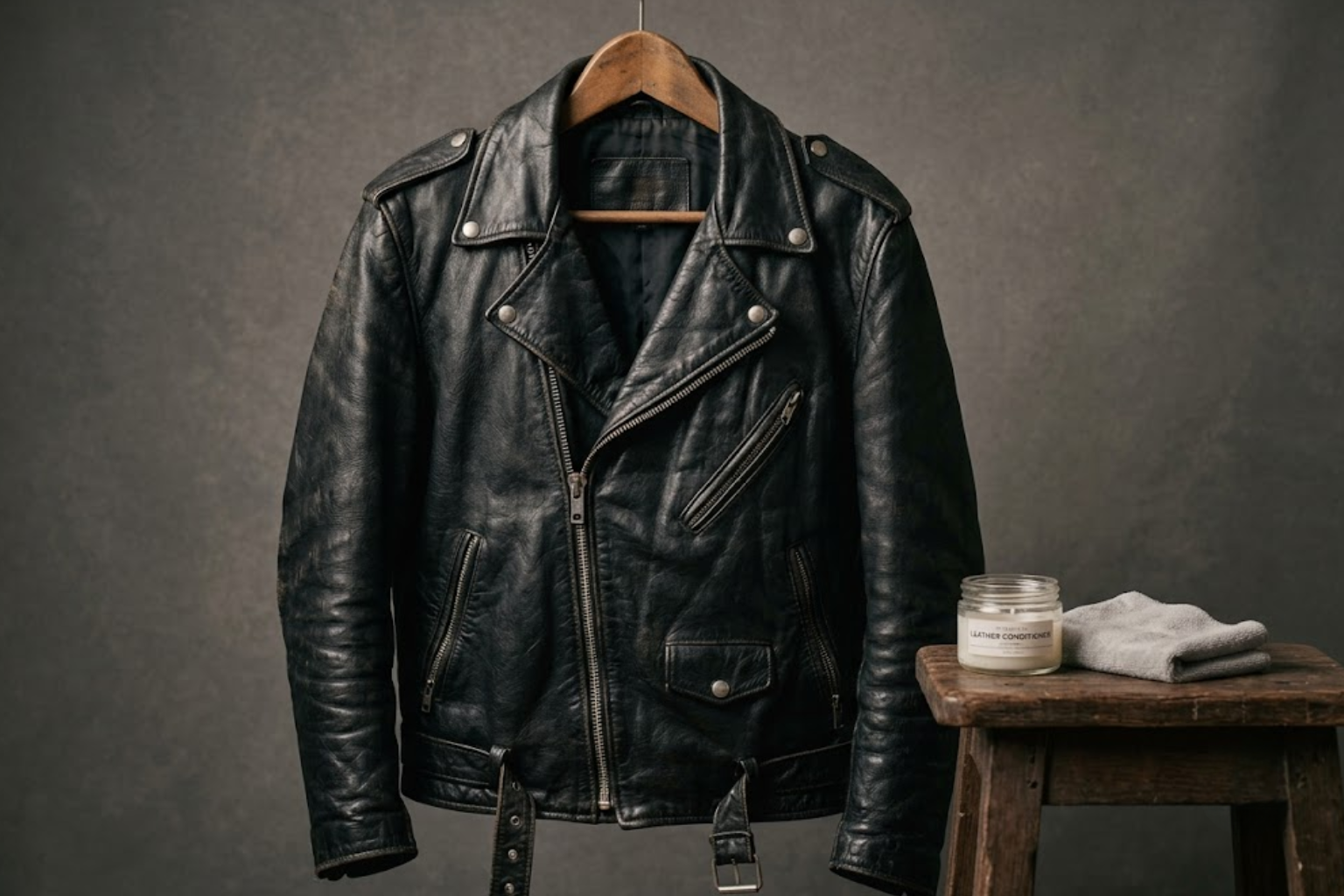
How to Break In a Leather Jacket: 7 Expert Methods That Actually Work
A stiff new jacket does not have to stay stiff for a year. Here is exactly how to soften it faster, without damaging the hide.
The fastest way to break in a leather jacket is to wear it consistently, flex the stress points by hand, apply a thin layer of leather conditioner, and use light, controlled steam to relax the fibers at the shoulders, elbows, and collar. Natural wear combined with conditioning softens leather significantly faster than wearing alone, because the conditioner keeps the fibers pliable while movement works them loose. None of these methods force a jacket to soften overnight, but combined correctly they cut the process down substantially compared to simply waiting, a standard Rove Leather recommends to every new jacket owner.
Why Does New Leather Feel Stiff at First?
New leather feels stiff because the fibers inside the hide are still tightly packed and the natural oils used during tanning have not yet redistributed evenly across the material. This is especially true of full grain and genuine leather, since the tightest, densest fiber structure is what gives the hide its long term strength, but it also means the material starts firm and only loosens with movement, heat, and conditioning over time.
This stiffness is not a flaw, it is a sign the leather has not been artificially softened with excess chemical treatment. A jacket that feels slightly rigid out of the box is usually the one that ages the best, since the same tight fiber structure that resists movement early on is what holds the jacket’s shape and durability for years afterward.
How Long Does It Take to Break In a Leather Jacket?
Break in time varies significantly depending on the hide, the climate, and how often the jacket is worn, so there is no single fixed number that applies to every jacket. Regular daily wear alone typically takes weeks to noticeably soften a stiff hide, while combining wear with the conditioning and flexing methods below can meaningfully shorten that timeline. Thinner hides such as lambskin naturally soften faster than thicker cowhide, simply because there is less densely packed fiber to work loose in the first place.
7 Expert Methods to Break In a Leather Jacket
These methods are ordered from the simplest, lowest risk approach to the more involved techniques that require a bit more care. Using several of them together, rather than relying on just one, produces the fastest and safest results.
Wear It Consistently, Every Day if Possible
The single most effective and lowest risk method is simply wearing the jacket regularly. Body heat and natural movement are what leather responds to best, since the warmth from your body gradually softens the fibers while everyday motion works the stiffness out of the shoulders, elbows, and back panel.
Daily wear, even for short periods like a commute or errands, adds up faster than occasional wear on weekends only. Consistency matters more than duration in any single session.
Flex the Stress Points by Hand
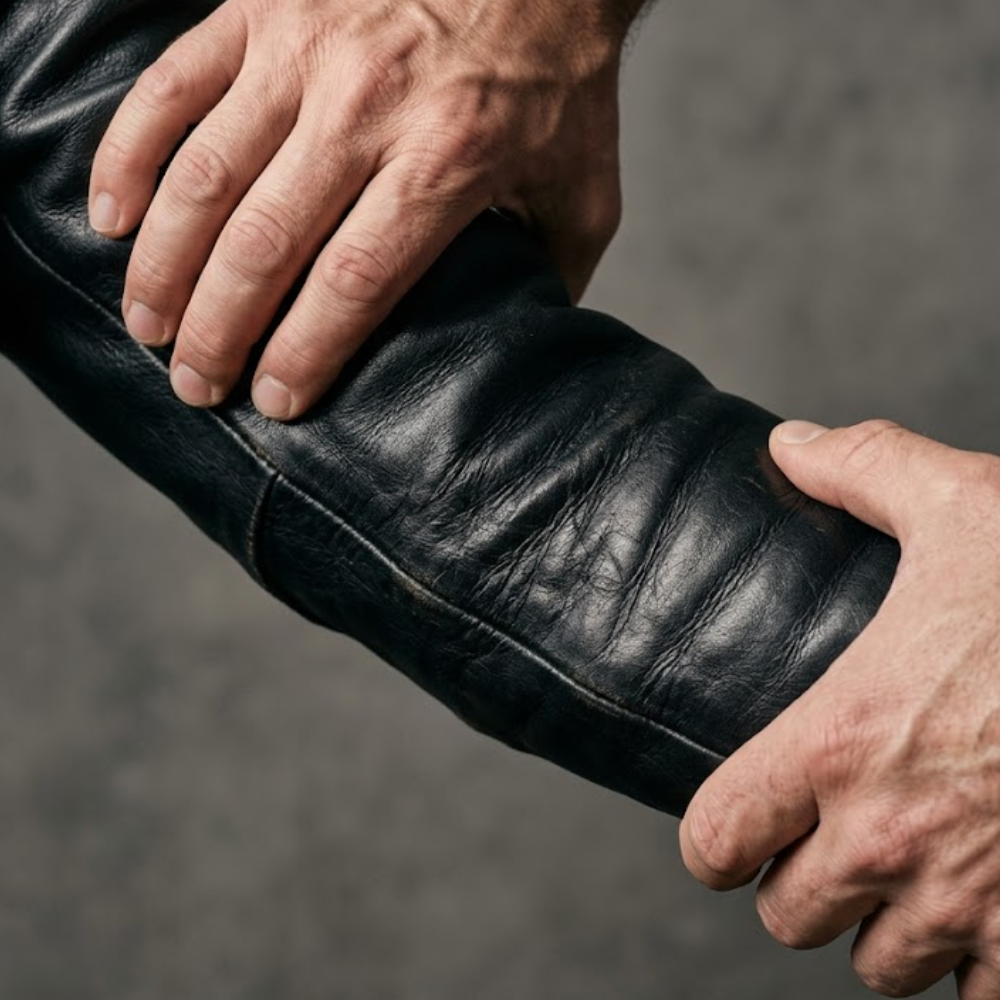
Before or after wearing the jacket, spend a few minutes manually bending and flexing the areas that feel stiffest, typically the elbows, the underarms, and the front closure area. This targeted flexing speeds up the same process that natural movement achieves, concentrating effort exactly where the jacket needs it most instead of waiting for wear alone to reach those spots.
Wear It Snug, Not Loose
A jacket worn close to the body transfers more of your body heat directly into the leather, which helps soften the fibers faster than a jacket worn loosely over bulky layers. This is why a properly fitted jacket breaks in faster than an oversized one, the snugger fit keeps the leather in constant, close contact with the warmth that helps it relax.
Apply a Thin Layer of Leather Conditioner
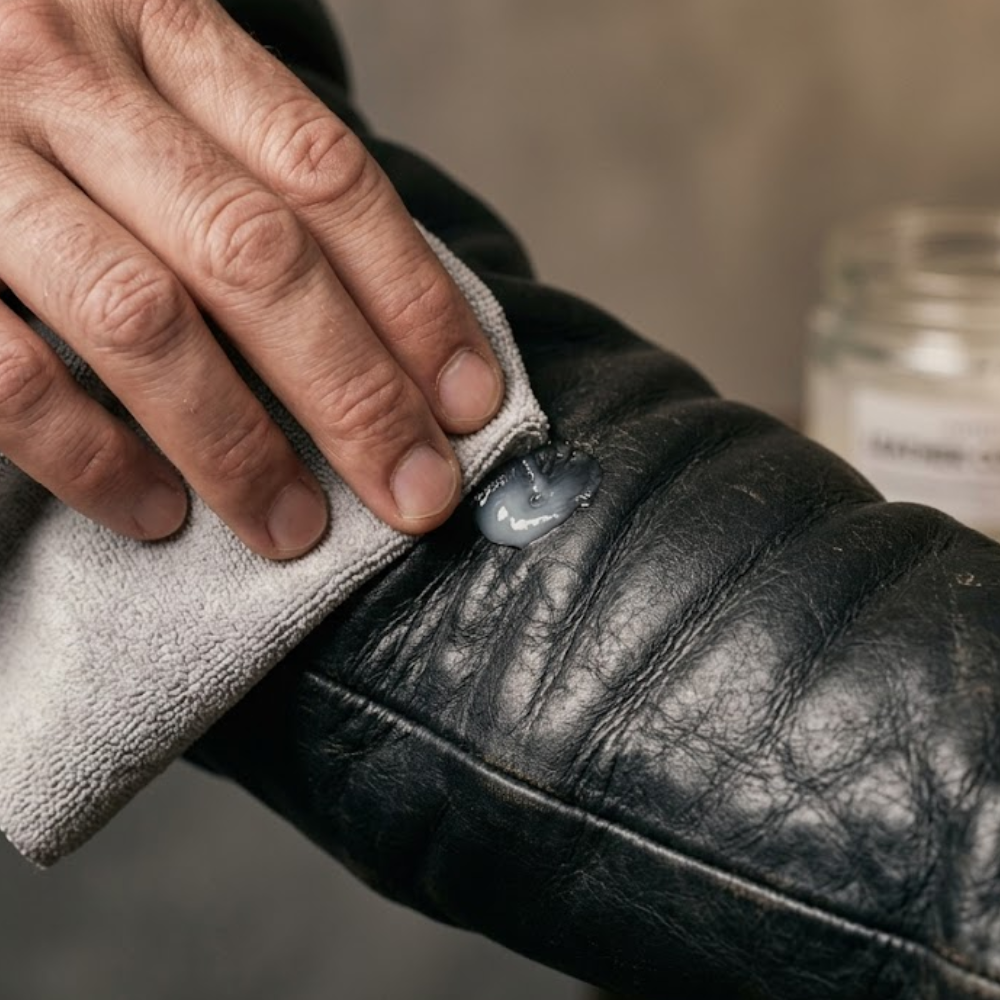
A small amount of a quality leather conditioner, worked in gently with a soft cloth, restores some of the natural oils lost during tanning and helps the fibers move more freely against each other. Less is more here, a thin, even layer absorbed fully into the hide is far more effective than a heavy application, which can leave the surface feeling greasy rather than genuinely softened.
Always test a small, hidden area first, such as the inside of a cuff, before applying conditioner to the entire jacket.
Use Light, Controlled Steam on Stiff Areas
Holding a garment steamer several inches away from the leather for a few brief passes can loosen tightly packed fibers around the collar and shoulders, since gentle heat and moisture make the hide temporarily more pliable. Controlled distance is essential, direct or prolonged steam can damage the finish, so this method works best in short, careful passes followed immediately by gentle hand flexing while the leather is still warm.
Roll and Crease the Material Gently
Rolling the jacket loosely, or gently creasing the sleeves and body panels by hand in different directions, introduces the same kind of movement the jacket will eventually get from regular wear. This is a useful supplement between wears, particularly for stiffer cowhide jackets that benefit from extra manual working before they see consistent daily use.
Store It Correctly Between Wears
How a jacket is stored between wears affects how quickly it breaks in, since folding a jacket sharply or hanging it on a narrow wire hanger can work against the softening you have already achieved. A wide, curved hanger that supports the shoulder seams properly keeps the jacket’s shape intact while it continues to relax naturally over time, rather than developing new creases in the wrong places.
| Method | Speed | Risk Level |
|---|---|---|
| Daily wear | Gradual, most reliable long term | None |
| Manual flexing | Fast for targeted stiff spots | Very low |
| Leather conditioner | Moderate, improves suppleness quickly | Low, if tested first |
| Controlled steam | Fast for collar and shoulder areas | Moderate, requires care |
Common Mistakes When Breaking In a Leather Jacket and How to Avoid Them
Most damage done during the break in process comes from impatience rather than the leather itself being fragile. These are the mistakes worth avoiding entirely.
- Soaking the jacket in water. Water does not safely soften leather and can cause permanent staining, warping, or stiffening as it dries.
- Using direct high heat, such as a hair dryer on high setting. Excess heat can dry out and crack the surface rather than relax it, undoing the very softness you are trying to achieve.
- Applying too much conditioner at once. Overloading the leather with product can leave a greasy residue and attract dirt rather than genuinely softening the fibers.
- Forcing creases in the wrong places. Aggressively bending a jacket in areas it was not designed to flex can create permanent, unattractive lines rather than natural break in wear.
How Do You Know When a Jacket Is Fully Broken In?
A fully broken in jacket moves with the body rather than against it, with no resistance at the elbows, shoulders, or underarms during normal movement like reaching or turning. The surface will also show subtle, natural creasing at the points of most frequent movement, a visible sign that the fibers have relaxed into the shape of how the jacket is actually worn rather than the flat, uniform stiffness it had straight from the packaging.
Why Does Proper Break In Still Matter Today?
A properly broken in leather jacket fits better, moves better, and develops a richer character over time than one that is forced to soften too quickly through damaging shortcuts. Patience during this early period pays off for the entire life of the jacket, since leather that softens naturally, through wear, conditioning, and gentle handling, keeps its structural strength intact while still becoming comfortable.
Understanding how to break in a leather jacket properly is what turns a stiff new purchase into a piece that genuinely improves with age, rather than one that either stays uncomfortable or gets damaged trying to rush the process.
Vantage Men’s Black Leather Biker Jacket
The Vantage is a useful example of exactly the kind of jacket this guide applies to. Built from a smooth, tight grain leather with quilted shoulder panels, it starts with the same firm structure discussed in the Why Does New Leather Feel Stiff at First section, and responds well to the daily wear and conditioning methods covered above.
Its diamond quilted panels and mandarin collar are stitched directly into the hide, meaning the flexing and conditioning methods in this guide work with the construction rather than against it. Like any quality leather jacket, it is not designed to feel instantly soft, it is designed to soften correctly over time with proper care.
It suits a buyer who wants a jacket that will genuinely improve with wear rather than one built from pre softened, lower grade material that offers comfort immediately but little durability afterward. Every order ships with free shipping and a 14 day return window from Rove Leather.
Frequently Asked Questions — Breaking In a Leather Jacket
The most common questions buyers ask about breaking in a new leather jacket, answered directly.
- Combine methods for the fastest results: daily wear, manual flexing, and light conditioning together outperform any single method used alone.
- Patience protects durability: shortcuts like soaking in water or using direct high heat can damage leather permanently instead of softening it safely.
- Stiffness at first is a sign of quality: tightly packed fibers that resist movement early on are usually the same fibers that keep the jacket durable for years.
Breaking in a leather jacket is less about finding a single trick and more about combining a few low risk habits consistently over time. Wearing the jacket regularly, flexing the stiffest areas by hand, and conditioning lightly when needed will soften the hide safely without compromising the structure that makes leather worth choosing in the first place.
At Rove Leather, every jacket is built from genuine hide designed to soften properly with care, not pre treated shortcuts that trade durability for a false sense of instant comfort.
Shop Leather Jackets at Rove Leather
Genuine hide construction · Free shipping · 14 day returns