How to Care for a Leather Jacket: The Complete Seasonal Maintenance Guide
What to actually do, month by month, to keep a leather jacket looking better with every year rather than worse.
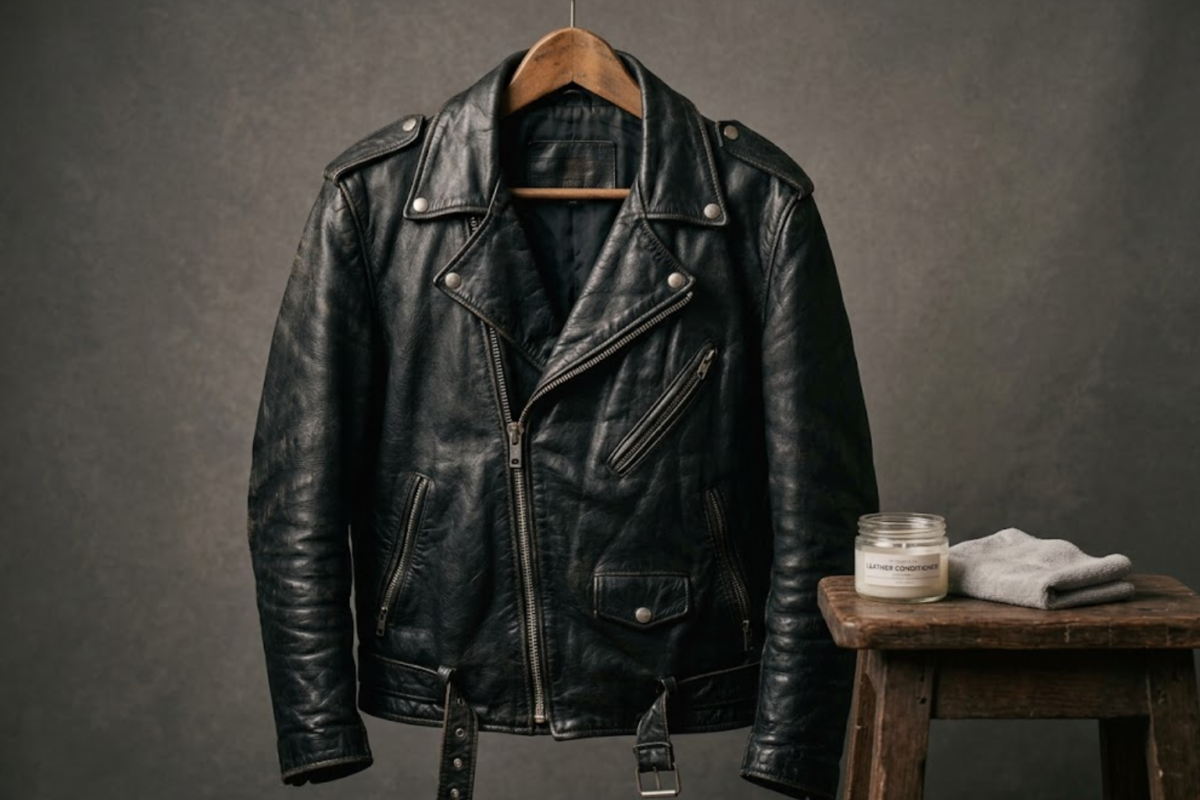
Caring for a leather jacket properly comes down to four habits repeated consistently across the year, wiping it down after wear, conditioning it a few times annually, storing it on a wide hanger away from direct heat and sunlight, and treating spills or stains immediately rather than letting them set. Different seasons place different demands on the hide, humid summer months invite mildew if a jacket is stored damp, while dry winter heat pulls moisture out of the leather and accelerates cracking if conditioning is neglected. Rove Leather builds every jacket from genuine hide designed to reward this kind of consistent, seasonal attention rather than one time care.
What Does Leather Jacket Care Actually Involve?
Leather jacket care breaks down into four ongoing habits rather than a single deep clean, regular wiping down, periodic conditioning, correct storage, and prompt attention when something goes wrong. None of these individually take much time, but skipping any one of them for long enough is usually what leads to the two most common failure points, a dried out, cracking surface or a stain that has been left to set for too long to fully lift.
Genuine leather is a living material in the sense that it continues responding to its environment long after it leaves the tannery. Humidity, heat, direct sunlight, and how a jacket is stored between wears all affect how it ages, which is why seasonal awareness matters more for leather than for most other outerwear fabrics.
How Should You Clean a Leather Jacket at Home?
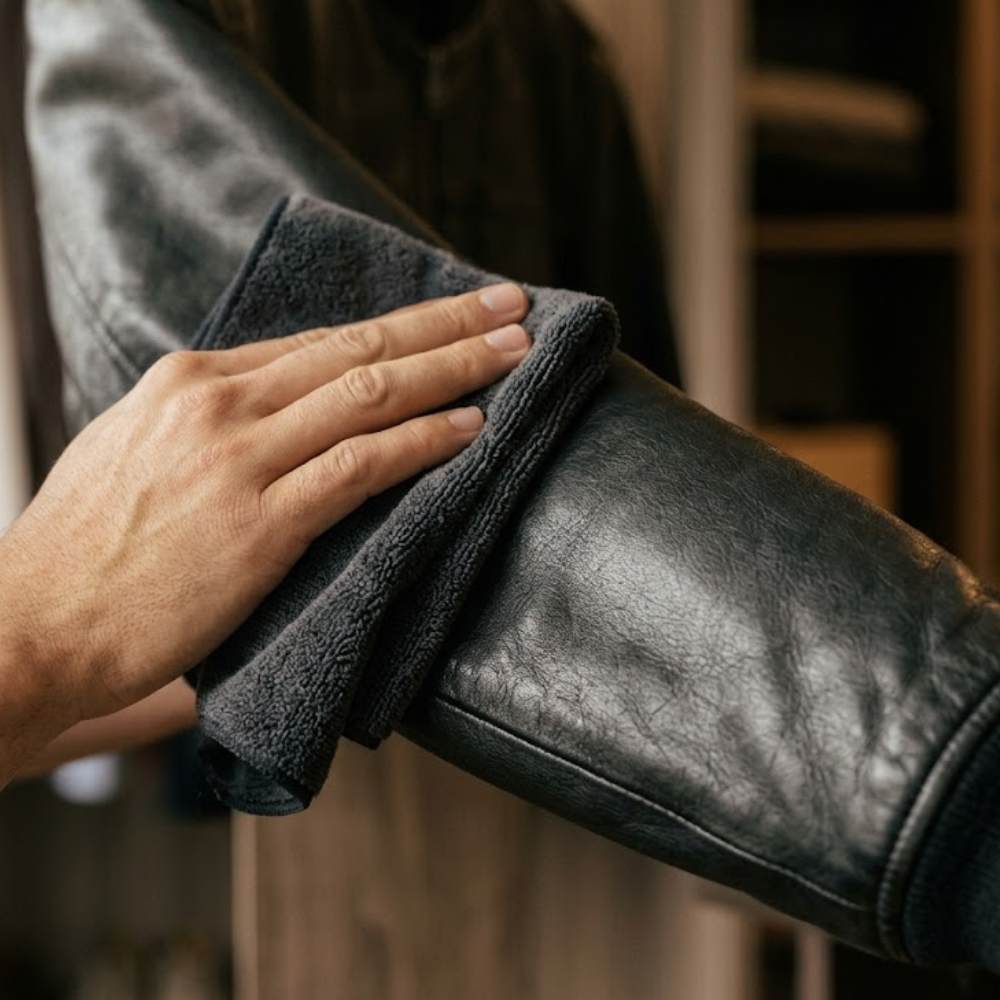
Routine cleaning at home should stay simple. A soft, dry microfiber cloth wiped over the surface after each wear removes surface dust and light grime before it has a chance to work into the grain. For a deeper clean every few months, a cloth lightly dampened with water, wrung out well, can be wiped gently in small circular motions, followed immediately by a dry cloth to remove excess moisture.
- Avoid soaking the leather. Excess water is one of the most common causes of long term damage, including warping and permanent discoloration.
- Never machine wash or dry clean a leather jacket using standard fabric settings, since both processes are built for textiles rather than hide and can strip natural oils or damage the finish.
- Test any product on a hidden area first, such as the inside of a cuff, before using it anywhere visible on the jacket.
- Let the jacket air dry naturally, away from direct heat sources such as radiators, vents, or hair dryers.
Spring and Summer Leather Jacket Care
Managing Humidity and Storage Between Wears
Humidity is the primary concern during spring and summer, since leather stored in a damp, poorly ventilated space during warmer, wetter months is more prone to developing mildew than during drier winter conditions. Jackets that see less use in the heat should still be checked periodically rather than left completely undisturbed in a closed closet.
- Store the jacket somewhere with airflow, avoiding sealed plastic bags that trap moisture against the leather.
- If the jacket gets caught in summer rain, wipe it dry promptly and let it air dry fully before storing it again.
- Check periodically for a musty smell or soft, powdery discoloration, both early signs of mildew that are much easier to address early.
Fall and Winter Leather Jacket Care
Combating Dryness From Cold Air and Indoor Heating
Cold, dry outdoor air combined with indoor heating pulls moisture out of leather faster than most other times of year, which is why conditioning becomes especially important heading into and through winter. A jacket worn heavily through the coldest months benefits from a light conditioning pass at the start of the season rather than waiting until dryness or cracking is already visible.
- Apply a thin layer of leather conditioner before the coldest stretch of the season begins, rather than reacting after dryness appears.
- Keep the jacket away from direct contact with radiators or heating vents, both during wear and storage.
- Brush off snow promptly rather than letting it melt into the leather and sit, since prolonged wet cold exposure can affect the finish.
How Often Should You Condition a Leather Jacket?
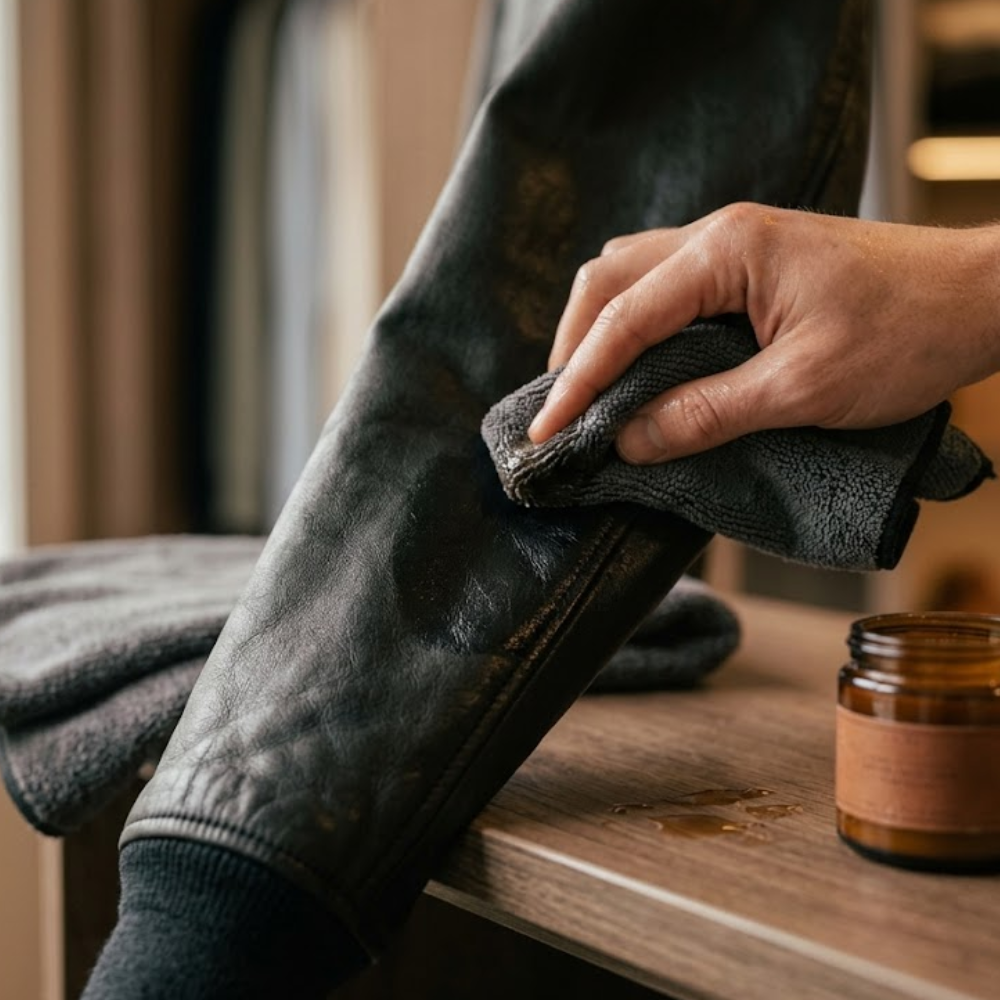
Most leather jackets benefit from conditioning roughly two to three times a year, though the right frequency depends on climate, how often the jacket is worn, and how dry the surrounding air tends to be. A jacket worn daily through a cold, dry winter may need conditioning more often than one worn occasionally in a mild, humid climate.
How Should You Store a Leather Jacket Between Seasons?
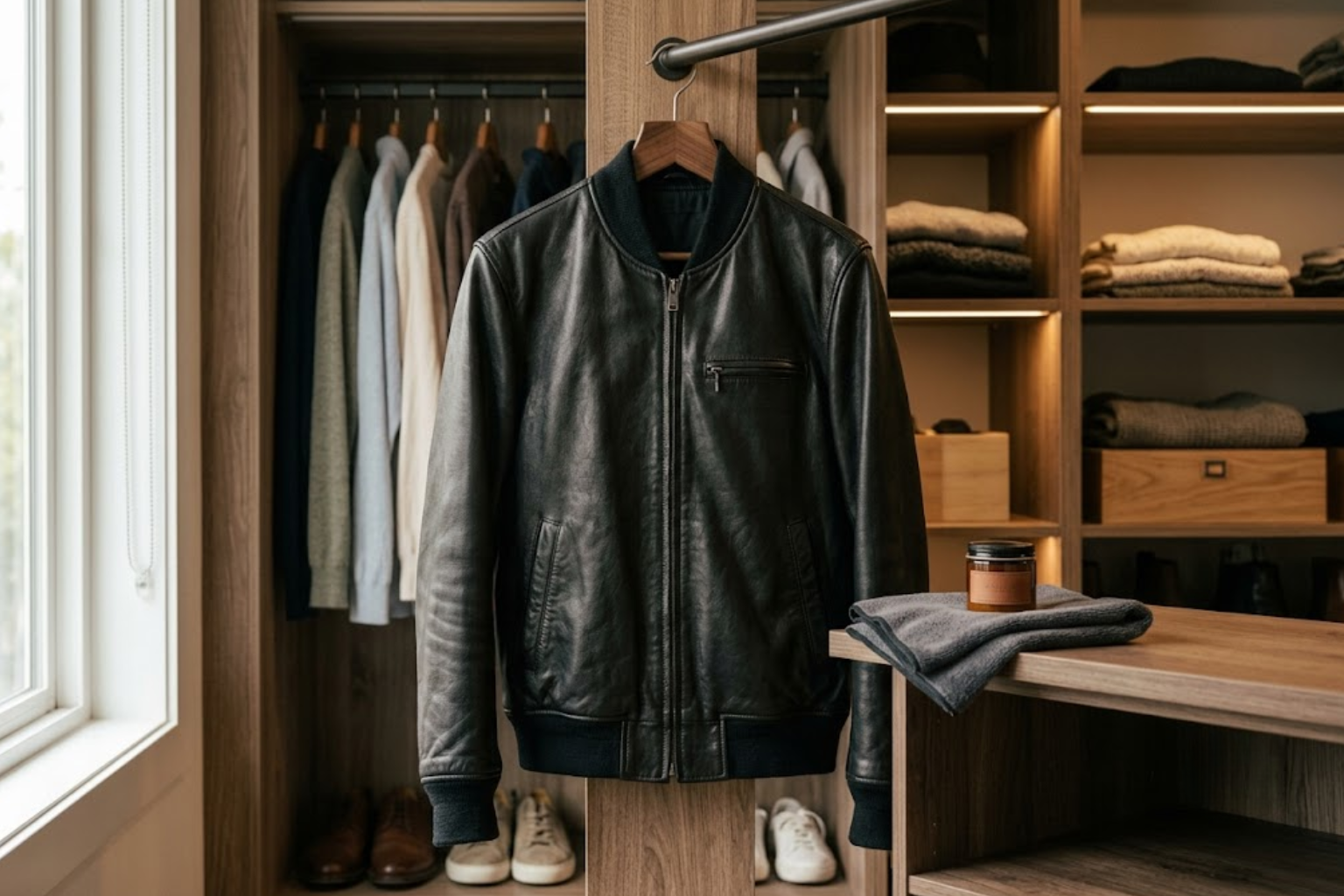
Correct storage matters as much as active care, since a jacket spends far more time hanging in a closet than it does being worn. A wide, curved hanger that supports the shoulder seams prevents the distorted shoulder points that a narrow wire hanger can create over months of storage.
- Use a breathable garment bag, such as cotton or a similar fabric, rather than sealed plastic, which traps moisture and can encourage mildew.
- Keep the jacket away from direct sunlight, since prolonged UV exposure can fade and dry out leather over time even when the jacket is not being worn.
- Avoid tightly packed closets where the jacket is compressed against other garments for long stretches, which can create permanent creasing in the wrong places.
What Should You Do When Something Goes Wrong?
Even with consistent care, occasional issues like stains, scuffs, or early dryness are normal over a jacket’s lifetime. How quickly and correctly you respond matters more than the incident itself.
| Issue | Recommended Response |
|---|---|
| Fresh liquid spill | Blot immediately with a dry cloth, never rub, then air dry away from heat |
| Light surface scuff | Gently buff with a soft, dry cloth before considering any product |
| Early dryness or dull patches | Apply a thin layer of leather conditioner to the affected area only |
| Musty smell or soft discoloration | Move to a well ventilated space immediately and consult a professional leather cleaner if it persists |
Why Does Seasonal Care Still Matter Today?
A leather jacket that receives consistent seasonal attention typically looks better after several years than one left untouched between wears, since leather actively responds to its environment rather than remaining static like many synthetic materials. The habits covered in this guide are small individually but compound significantly over years of ownership, which is exactly what separates a jacket that develops a rich, natural character from one that dries out, cracks, or develops damage that could have been prevented.
Understanding how to care for a leather jacket across the full year, not just when something already looks wrong, is what turns a single purchase into decades of wear rather than a few good seasons followed by decline.
Obsidian Men’s Black Leather Bomber Jacket – Handcrafted Genuine Leather
The Obsidian is a useful example of the kind of jacket this guide is built around. Made from 100% genuine leather with a heavy grain that hardens naturally with age, it responds well to the seasonal conditioning routine outlined in the Fall and Winter Leather Jacket Care section, particularly given how much its thicker hide benefits from consistent attention through colder months.
Its ribbed knit collar, cuffs, and hem, along with the silver YKK hardware throughout, follow the same care principles covered here, gentle wiping after wear, periodic conditioning, and correct storage on a wide hanger away from direct heat. The jacket’s tactical heritage detailing, including the epaulettes and utility pockets, does not require different care from the rest of the body.
It suits a buyer who wants a substantial, heavier grain jacket built to reward long term care rather than one that needs to feel finished the moment it arrives. Every order ships with free shipping and a 14 day return window from Rove Leather.
Frequently Asked Questions — Leather Jacket Care
The most common questions buyers ask about caring for a leather jacket, answered directly.
- Care is seasonal, not one time: humid months raise mildew risk while dry, cold months raise cracking risk, and each calls for a slightly different focus.
- Consistency beats intensity: a quick wipe down after each wear and conditioning two to three times a year outperforms occasional deep intervention.
- Storage matters as much as active care: a wide hanger, breathable garment bag, and avoidance of direct sunlight protect a jacket during the majority of its life spent hanging unused.
Caring for a leather jacket well is less about any single product or technique and more about a handful of consistent habits repeated across the year. Wiping it down after wear, conditioning it a few times annually, storing it correctly, and responding quickly when something goes wrong will keep genuine leather looking better with each passing year rather than worse.
At Rove Leather, every jacket is built from genuine hide designed to reward exactly this kind of ongoing seasonal attention, rather than requiring constant intervention to simply hold together.
Shop Leather Jackets at Rove Leather
Genuine hide construction · Free shipping · 14 day returns