

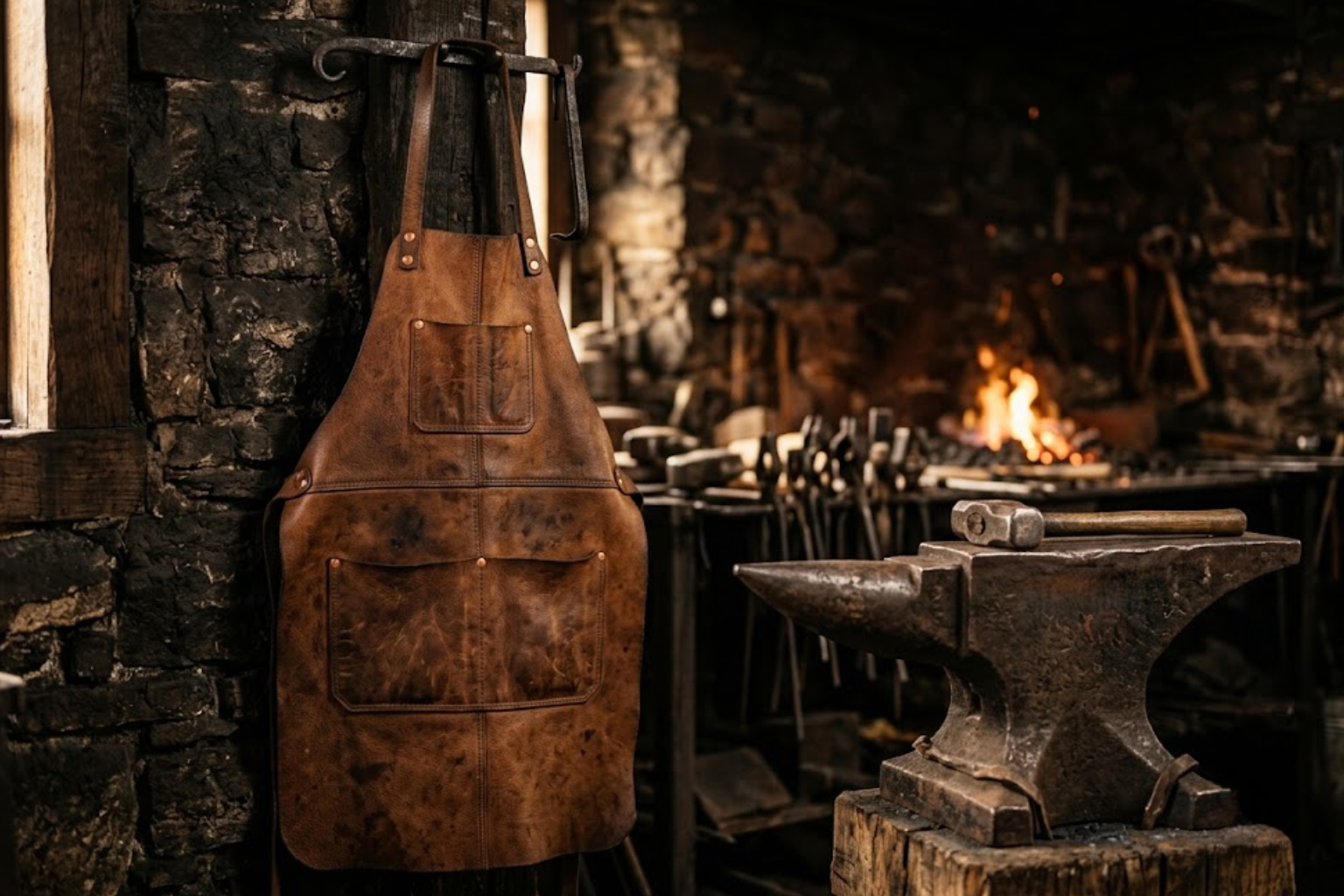
Leather Blacksmith Apron: Coverage Standards, Material Specs and What the Forge Demands
Hide quality, coverage, and hardware, broken down against real forge conditions rather than a generic work apron checklist.
A blacksmith leather apron needs to be built from thick, full grain leather with a bib design that covers the chest to at least mid thigh, reinforced pockets, and brass hardware that will not corrode from repeated heat and humidity exposure at the forge. The forge produces sparks, scale, and radiant heat well beyond what a general work apron is built for, which is why hide quality and coverage matter more here than in almost any other apron category. Rove Leather builds its blacksmith apron from thick, full grain leather designed for forge, anvil, and workbench conditions.
What Makes Forge Work Different From Other Trades an Apron Protects?
A forge produces a specific combination of hazards that few other trades match at the same time, sustained radiant heat from the fire itself, flying scale as hot metal is hammered, and direct spark contact at chest and forearm height during striking. This combination is why a blacksmith apron cannot simply borrow the specs of a kitchen or bar apron and expect the same level of protection.
Coal and gas forges both run hot enough to soften and shape steel, and the sparks and scale thrown off during hammering travel with real force toward the smith’s chest and forearms. An apron built for lighter kitchen or bar work is simply not constructed to absorb that kind of repeated, close range heat exposure over a full session at the anvil.
What Coverage Standards Should a Blacksmith Apron Meet?
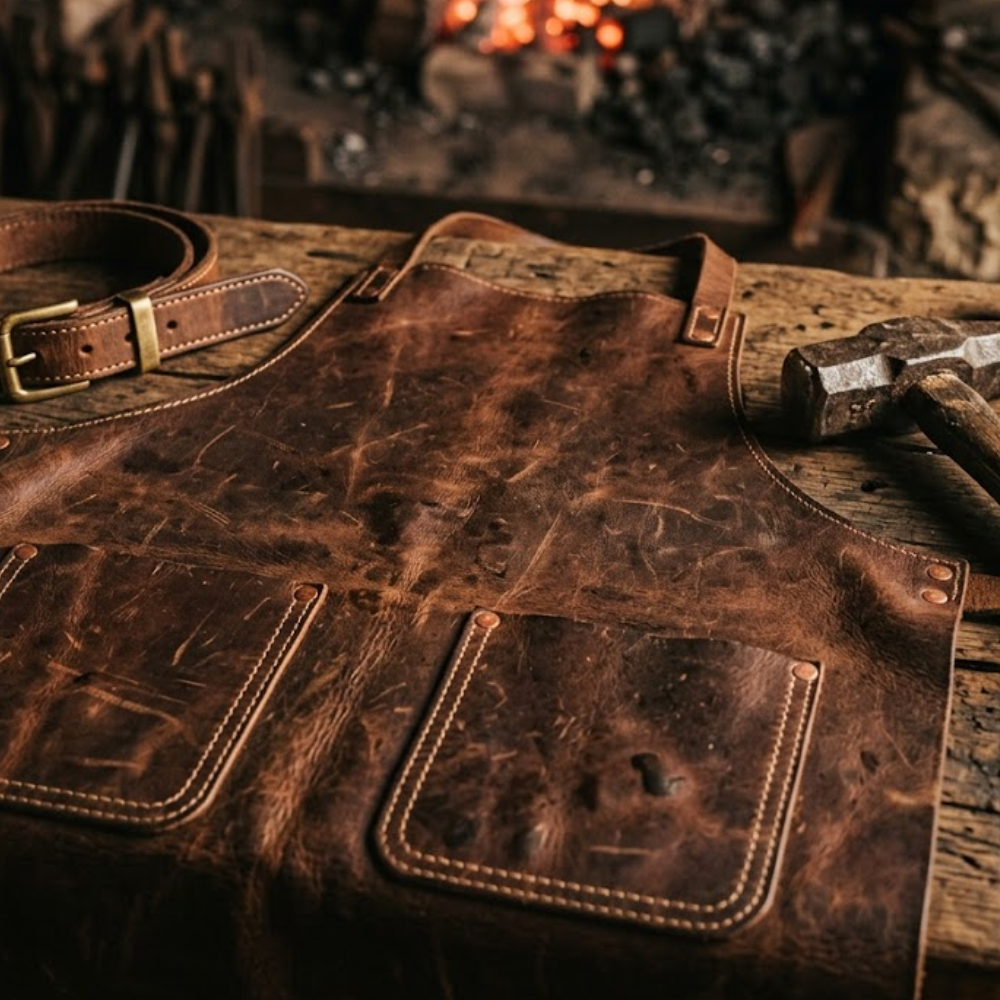
Coverage should run from the chest down to at least mid thigh, since scale and sparks fall downward during hammering and the forearms and thighs both see repeated exposure over a working session. A full bib design that protects the chest and upper legs is the standard to look for, rather than a shorter waist apron that leaves the thighs exposed to falling scale.
An adjustable neck strap matters as much as the panel itself, since it lets the bib height be set to protect the chest properly without restricting the reach needed to swing a hammer or work the bellows. Side waist ties add a second point of adjustment, keeping the apron secure and flat against the body through repeated bending and striking motions.
| Forge Hazard | What the Apron Needs to Do |
|---|---|
| Flying scale and sparks | Thick, full grain leather that resists puncture and light burns |
| Sustained radiant heat | Full bib coverage from chest to mid thigh |
| Repeated bending and striking | Adjustable neck strap and secure waist ties that hold position |
| Heat and humidity at the forge | Brass hardware rather than hardware prone to corrosion |
Why Does Hide Thickness Matter So Much at the Forge?
Leather thickness determines how much of a barrier the apron actually provides against scale, sparks, and radiant heat before the wearer feels it through the hide. A thin, low grade hide will scorch and stiffen quickly under forge conditions, which is exactly the kind of failure a working smith cannot afford mid session.
Full grain leather retains the outer layer of the hide, keeping its natural fiber density intact, which is what gives it real resistance to heat and puncture compared to a lower grade split. For forge work specifically, a thick, full grain hide is not a preference, it is close to a baseline requirement for anyone spending real hours at the anvil rather than occasional light hobby work.
Why Does Hardware Choice Matter More at a Forge Than Elsewhere?
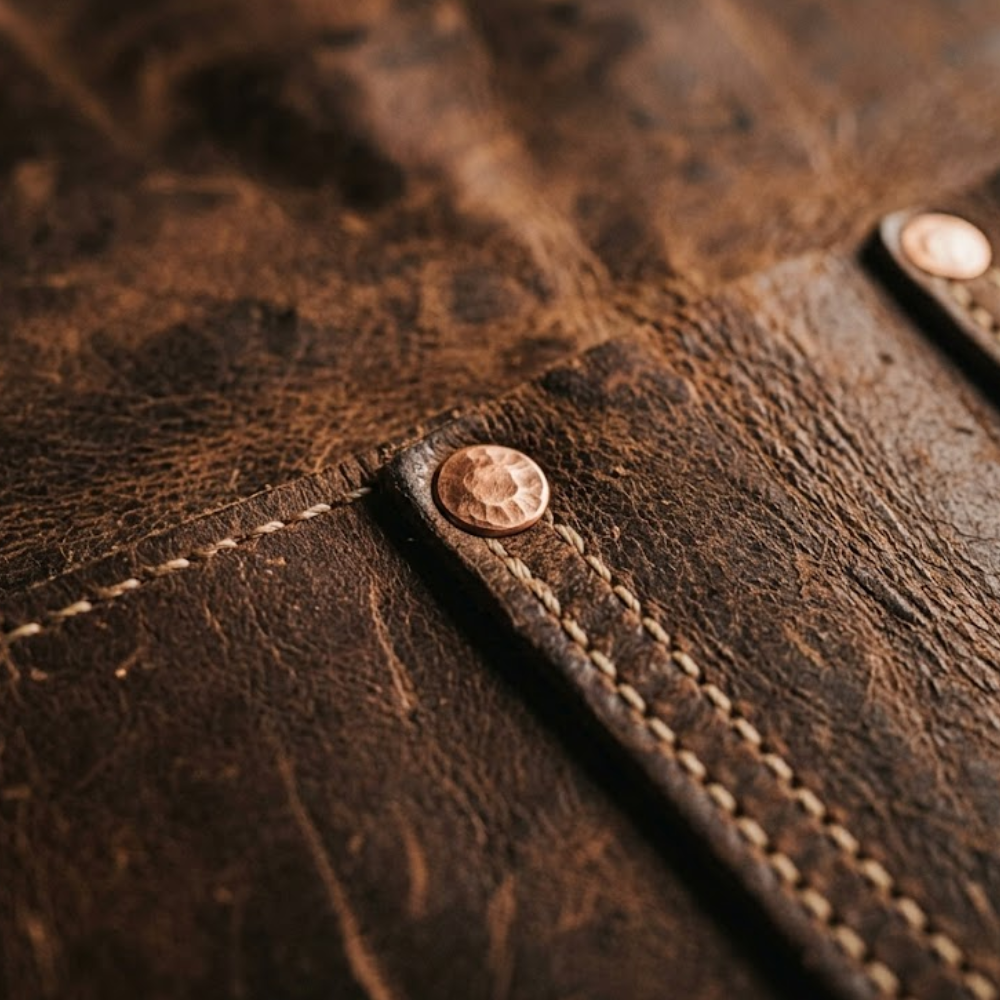
The forge environment combines sustained heat with humidity from quenching and sweat, a combination that accelerates corrosion in lower grade metal hardware faster than almost any other work setting. Brass hardware resists this kind of corrosion far better than plated or zinc alloy fittings, which is why a genuine forge apron should use brass buckles and rivets rather than hardware that looks similar but degrades quickly under repeated heat and moisture cycles.
Beyond corrosion resistance, brass hardware simply holds up to the mechanical stress of daily buckle adjustment and pocket loading better over years of use, which matters for a piece of gear a working smith depends on every day at the anvil.
What Else Should You Check Before Buying a Blacksmith Apron?
Beyond hide quality, coverage, and hardware, a handful of construction details separate an apron actually built for forge work from a general leather apron that happens to look rugged.
- Reinforced stitching at pocket corners and strap anchors. These points take the most repeated stress from bending, reaching, and striking motions.
- A divided tool pocket alongside a deeper open pocket. Small tools like a scribe or punch need their own slot, while larger items need a deeper pocket that will not let them fall out during movement.
- An adjustable neck strap with a secure buckle. A forge apron gets worn for long stretches, so a fit that can be dialed in precisely matters over a full working day.
- A naturally distressed or waxed finish. This kind of finish tends to camouflage scorch marks and scale residue better than a lighter, unfinished hide.
Common Mistakes When Buying a Leather Blacksmith Apron
- Buying a general work apron and assuming it will hold up at the forge. Kitchen and bar aprons are simply not built for the same heat and spark exposure.
- Choosing based on appearance rather than hide thickness. A dark, rugged looking finish says nothing about how the leather underneath performs under real forge heat.
- Overlooking hardware material. Non brass hardware can corrode quickly under the repeated heat and humidity cycles a forge produces.
- Ignoring coverage length. A short, waist length apron leaves the thighs exposed to falling scale during hammering.
How Do You Care for a Leather Blacksmith Apron?
Wipe the apron down with a damp cloth after each session to remove scale dust and residue before it settles into the grain. Apply a quality leather conditioner every few months to maintain suppleness, since sustained radiant heat pulls moisture out of leather faster than most other daily conditions a work apron encounters.
Avoid prolonged exposure to water, and store the apron away from direct heat sources rather than near the forge itself between sessions. Checking stitching and pocket corners periodically will catch early wear well before it becomes a real failure point.
Why Does Getting the Specs Right Still Matter Most?
A blacksmith apron is safety equipment before it is a style choice, and the forge does not forgive a hide that is too thin or hardware that corrodes halfway through a project. Matching hide thickness, coverage, and hardware to real forge conditions is what actually determines whether an apron holds up across years of anvil work rather than a single busy season.
Understanding these standards, and buying against them rather than against a photo, is what separates gear that performs at the forge from gear that only looks the part until the first real session.
Men’s Brown Leather Apron for Blacksmith
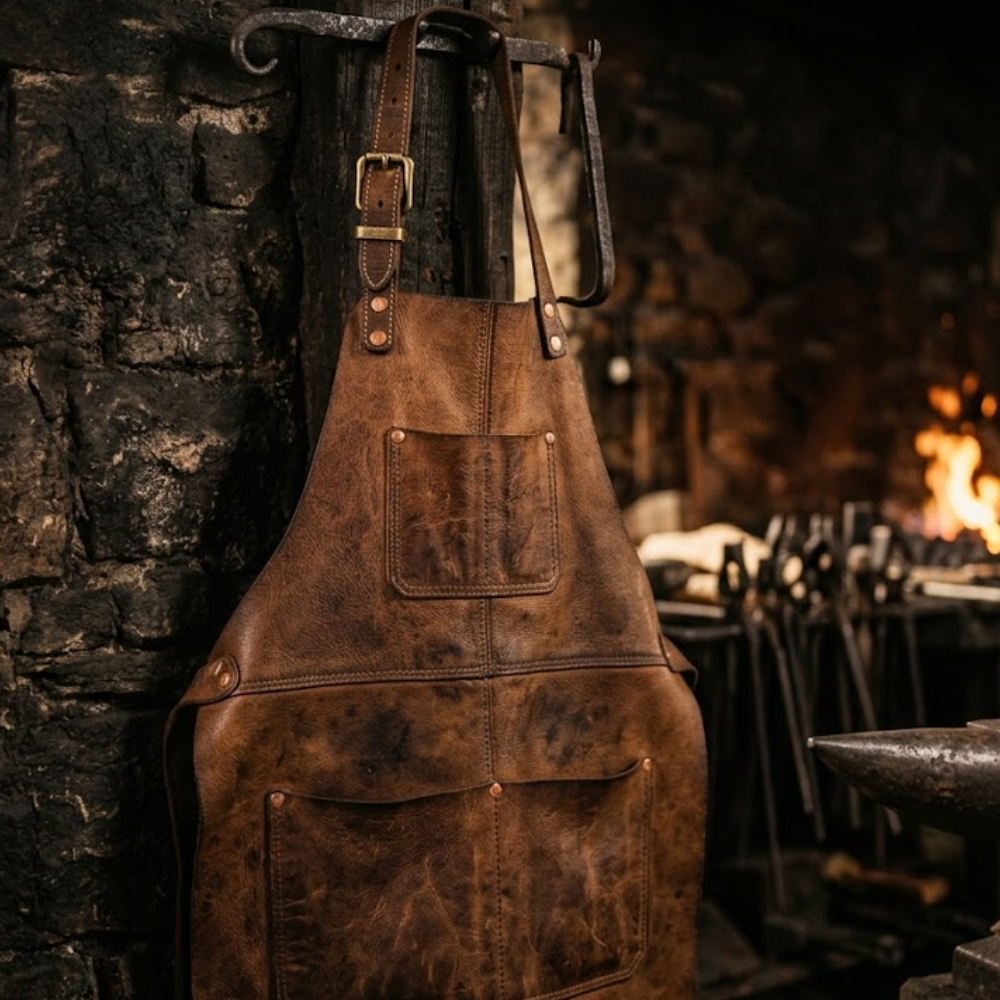
This apron is built from thick, full grain leather with a naturally distressed finish that meets the durability standard discussed above, developing more character rather than simply wearing out as it sees regular forge use. An adjustable brass buckle neck strap paired with side waist ties addresses the fit and hardware standards outlined in this guide.
Two front pockets, a divided tool slot on the left and a deep patch pocket on the right, keep frequently used tools within reach without the clutter of too many small undivided slots. Contrast cream stitching and solid copper rivets reinforce each seam and pocket corner, addressing the exact stress points this guide flags as the first to fail on a lower quality apron.
It suits blacksmiths, woodworkers, and anyone spending real hours at the forge or workbench rather than occasional light hobby use. Every order ships with free shipping and a 14 day return window from Rove Leather.
Frequently Asked Questions — Leather Blacksmith Aprons
The most common questions blacksmiths and metalworkers ask when choosing a leather forge apron, answered directly.
- Forge conditions demand more than a general work apron: sustained radiant heat, flying scale, and close range spark contact require thick, full grain leather and full bib coverage.
- Brass hardware is not a style choice, it is a durability requirement: heat and humidity at the forge accelerate corrosion in lower grade metal fittings.
- Reinforced pockets and coverage to mid thigh separate real forge gear from a lookalike: most failures happen at the seams and at the hem line, not the center of the hide.
Choosing a leather blacksmith apron comes down to matching hide thickness, coverage, and hardware to what a real forge session actually demands, rather than choosing based on a rugged looking finish alone. The forge does not forgive gear that was not built for it.
At Rove Leather, the blacksmith apron is built from thick, full grain leather with brass hardware and reinforced pockets, so it holds up across years at the anvil rather than a single forging season.
Shop the Blacksmith Apron at Rove Leather
Full grain leather construction · Free shipping · 14 day returns