

Leather Cooking Apron: What Professional Chefs Look for and Why It Matters
Why a growing number of professional and home cooks are choosing leather over cotton, and what actually separates a good kitchen apron from a decorative one.
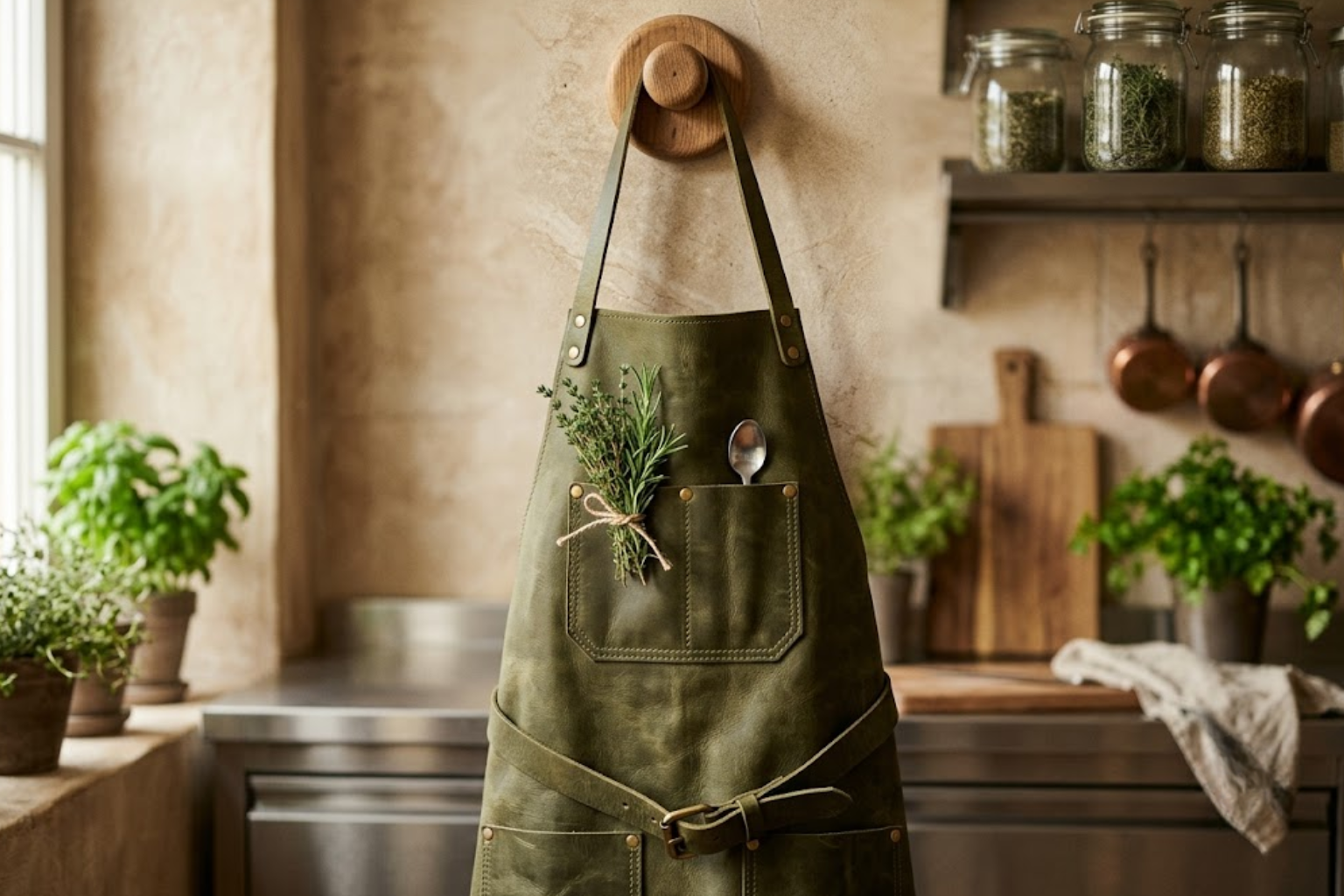
A leather cooking apron is chosen by professional chefs for three practical reasons: it resists heat, oil, and repeated washing far longer than cotton or canvas, it holds its shape and pockets under daily kitchen use rather than sagging over time, and it develops a worn in character instead of simply wearing out. The best leather apron for a chef uses a medium weight full grain hide, light enough for a full service on your feet but dense enough to resist grease, heat, and blade contact near a stove. Rove Leather builds its chef apron from full grain leather with a divided front pocket and adjustable neck strap suited to exactly this kind of daily kitchen use.
What Makes a Leather Cooking Apron Different From a Cotton Chef Apron?
A cotton or canvas apron absorbs oil, scorches near open flame, and starts to look worn within a season of regular kitchen use. A leather cooking apron is built to resist exactly those conditions, shrugging off splashes, brief heat exposure, and repeated wiping down without soaking through or losing its shape.
The tradeoff professional kitchens have to weigh is weight and washability. Leather cannot be thrown in a washing machine the way cotton can, so the appeal comes down to durability and appearance over time rather than convenience on day one. For chefs who wear an apron daily for years rather than replacing one every season, that tradeoff tends to favor leather.

Why Do Professional Chefs Choose Leather Over Cotton or Canvas?
Ask a working chef who has switched to leather and the reasoning tends to repeat itself across kitchens. Three reasons come up consistently.
- Heat and oil resistance. Leather does not scorch as easily as cotton near a stovetop or grill, and oil wipes off the surface rather than soaking in and staining.
- Structural durability under daily wear. A well built leather apron holds its shape and pocket structure through years of daily use, while cotton stretches, thins, and eventually tears at the same stress points.
- A worn in look that reads as experience, not wear and tear. Leather develops a patina that many chefs consider a mark of real kitchen time, rather than a sign the apron needs replacing.
What Weight Leather Works Best in a Professional Kitchen?
Leather thickness is measured in ounces, where roughly one ounce equals 1/64 of an inch. A cooking apron generally performs best in the medium range, light enough to stay comfortable through a full service on your feet, but dense enough to resist splashes, light heat, and daily wear near a stove.
A hide much lighter than that range can feel closer to a fashion apron than working kitchen gear, while anything much heavier, closer to what a blacksmith or welder would wear, becomes unnecessarily stiff and restrictive for the fast, repetitive motion cooking requires.
| Setting | Recommended Weight | Why |
|---|---|---|
| Home cooking, occasional use | Lighter to medium hide | Comfort and flexibility matter more than heavy exposure |
| Professional kitchen, daily service | Medium weight full grain hide | Balances comfort with resistance to oil, splashes, and wear |
| Grill or open flame stations | Medium to heavier hide | Slightly more heat and spark resistance near open flame |
What Should a Cooking Apron’s Pocket and Strap Design Include?
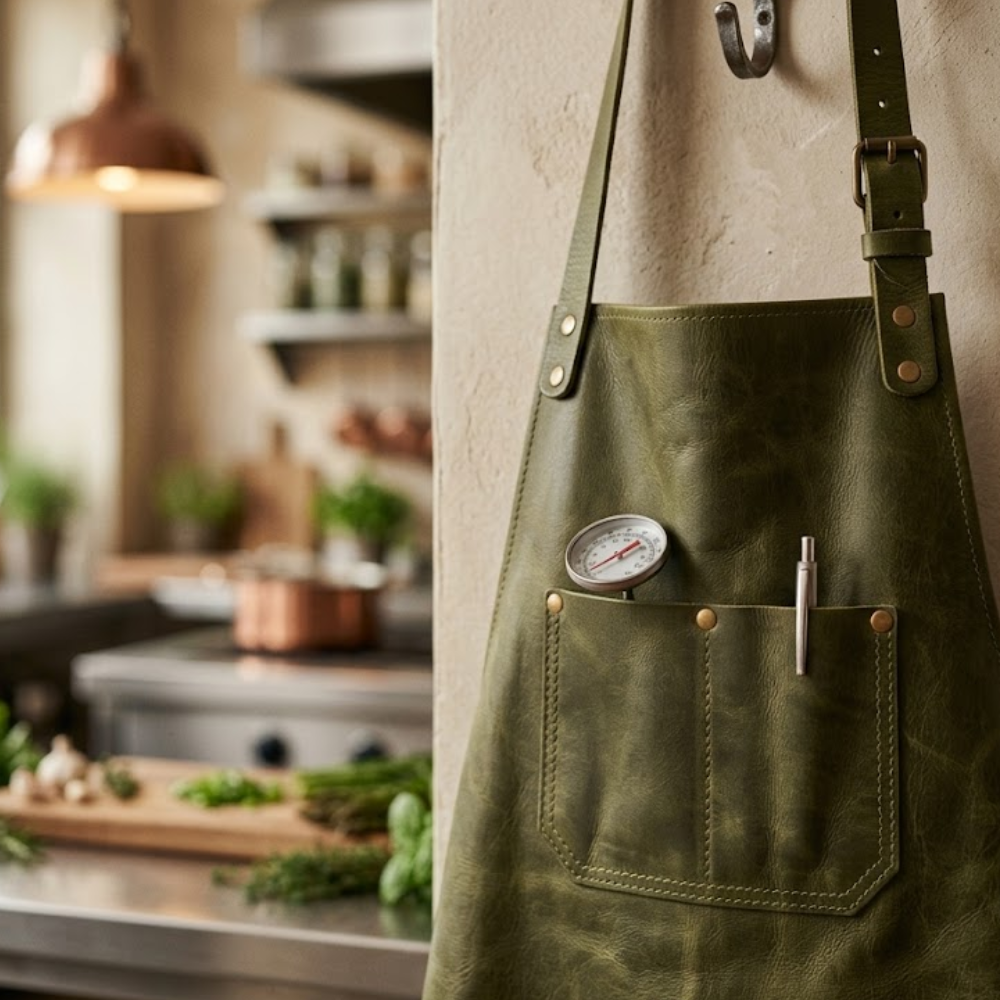
Kitchen work does not require the heavy tool storage a carpentry or blacksmith apron needs, so a cooking apron should stay simple rather than overloaded with pockets. A single divided front pocket, sized for a pen, an instant read thermometer, or a small notepad, covers most of what a working chef reaches for during service without adding unnecessary bulk.
An adjustable neck strap matters more here than it might seem. A fixed strap that fits well in a t shirt during prep will not fit the same way over a chef coat during service, so an adjustable buckle keeps the apron sitting correctly across different layers and shifts.
Full Grain vs Split Leather for Kitchen Use: Does It Matter?
Full grain leather keeps the outer layer of the hide intact, giving it stronger resistance to oil, staining, and repeated flexing than a lower grade split. Split leather with a corrected surface can look similar new, but it tends to absorb oil and stain more readily, and it wears at the seams and pocket edges faster under the daily bending and reaching a kitchen shift involves.
For a chef wearing the same apron nearly every working day, that difference compounds quickly. A full grain leather apron for a chef is the more defensible investment over a season of real use, even though a split leather option may cost less upfront.
Common Mistakes When Buying a Leather Cooking Apron
- Choosing a heavy trade weight hide for kitchen use. A hide built for welding or blacksmithing is unnecessarily stiff and restrictive for the fast movement cooking requires.
- Overlooking strap adjustability. A fixed neck strap will not accommodate the different layers worn during prep versus service.
- Assuming any dark leather is full grain. Color and finish alone do not indicate hide quality, the stated leather grade should be checked directly.
- Buying based on looks rather than pocket function. An apron with several decorative pockets that do not fit a thermometer or pen is less useful than one simple, well placed pocket.
- Expecting leather to replace certified heat protection. A leather apron reduces everyday exposure but is not a substitute for oven mitts or cut resistant gloves for high risk tasks.
Is a Leather Apron a Good Gift for a Chef or Home Cook?
A well made leather cooking apron is one of the few kitchen gifts that improves with use rather than losing its appeal after the first wash. It works well as a gift for both professional chefs and serious home cooks, since the same qualities that matter in a working kitchen, durability, a clean pocket layout, and an adjustable strap, translate directly to a home cooking setup.
Unlike a cotton apron that quickly becomes indistinguishable from any other kitchen linen, a leather apron tends to be used and kept for years, which is generally what makes it feel like a considered gift rather than a routine one.
How Do You Care for a Leather Cooking Apron?
Wipe the surface down with a dry or lightly damp cloth after each use to remove oil and food residue before it settles into the grain. Never machine wash or soak a leather apron, since water and detergent strip the natural oils that keep the hide flexible.
Condition the leather every few months, particularly if it sees regular exposure to heat near a stove or grill, and hang it on a hook rather than folding it into a drawer to avoid permanent crease lines at the shoulder and waist.
Why Does a Leather Cooking Apron Still Matter in a Modern Kitchen?
Synthetic and cotton blends exist for nearly every kitchen use, but they wear out and replace themselves on a predictable cycle, while a properly chosen leather cooking apron continues to look better the longer it is worn. The appeal for professional chefs is not nostalgia, it comes down to real durability under daily heat, oil, and repeated washing, paired with a worn in look that reads as time spent in the kitchen rather than neglect.
Choosing the right weight, a simple pocket layout, and full grain construction is what turns a leather cooking apron from a stylish accessory into gear that actually earns its place on a working kitchen hook.
Olive Green Full Grain Leather Chef Apron with Neck Strap and Divided Front Pocket
This apron sits at the medium weight recommended earlier in this guide, built from full grain leather that resists oil and heat near a stove without becoming stiff or restrictive during a full shift. The olive green finish offers a distinct alternative to the dark browns and blacks common across most trade aprons.
The divided front pocket follows the guidance above almost exactly, sized for a pen and thermometer rather than overloaded with unnecessary storage, while the adjustable neck strap accommodates both prep work and service over a chef coat without needing to be readjusted throughout the day.
It suits professional chefs, culinary students, and home cooks who want a kitchen apron built to last years rather than a single season. Every order ships with free shipping and a 14 day return window from Rove Leather.
Frequently Asked Questions — Leather Cooking Aprons
The most common questions chefs and home cooks ask about leather cooking aprons, answered directly.
- Leather outperforms cotton on durability, not convenience: it resists heat and oil better but cannot be machine washed, so care habits matter.
- Medium weight full grain leather is the right choice for kitchen use: heavy trade weight leather is unnecessarily stiff for fast cooking movement.
- Simple pocket design beats excess storage: one well placed divided pocket covers what most chefs actually need during service.
A leather cooking apron earns its place in a professional or home kitchen the same way any good piece of trade gear does, by matching hide weight and construction to the real conditions it faces rather than being chosen on looks alone. Heat and oil resistance, a simple pocket layout, and full grain construction matter far more over years of use than finish or price.
At Rove Leather, the chef apron is built from full grain leather in a medium weight suited to daily kitchen work, with a pocket and strap design shaped around what a working chef actually reaches for during a shift.
Shop the Chef Apron at Rove Leather
Full grain leather construction · Free shipping · 14 day returns