

Leather Barista Apron: What Specialty Coffee Professionals Actually Wear and Why
How the leather apron became a fixture behind specialty coffee bars, and what actually separates a good one from a purely decorative one.
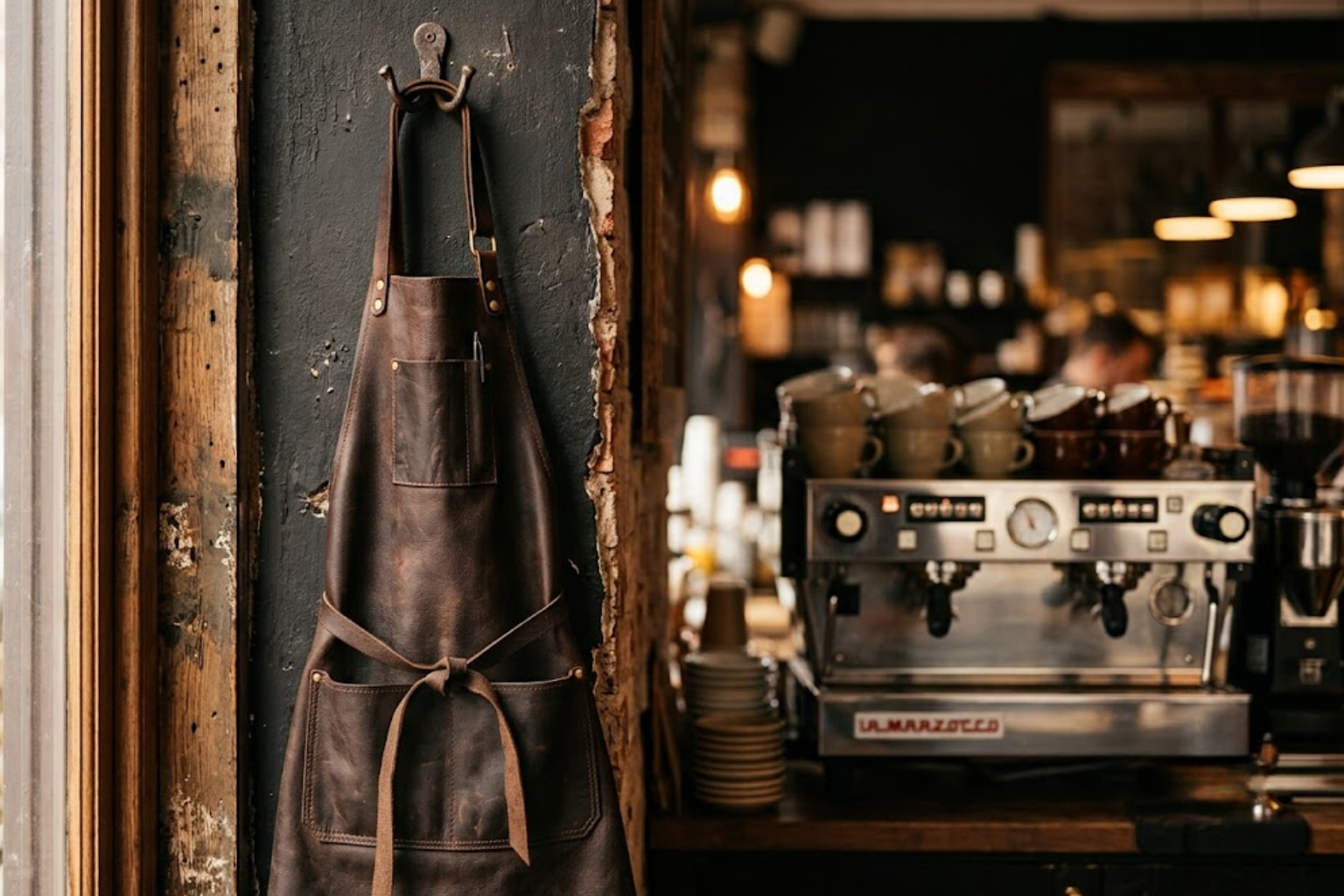
A leather barista apron is a lightweight, tie waist apron worn behind a coffee bar that combines a clean, minimal look with genuine daily durability against espresso grounds, milk splashes, and repeated washing at the sink. Specialty coffee shops favor leather over cotton or denim mainly for two reasons, it holds a consistent, on brand appearance across a full staff far longer than fabric does, and a tie waist design adjusts quickly across different baristas working the same shift. Rove Leather builds its barista apron from a lighter full grain hide with a tie waist and slim tool pockets designed specifically for this kind of front of house coffee work.
Why Has the Leather Apron Become a Fixture in Specialty Coffee Culture?
Walk into almost any independent specialty coffee shop today and the leather apron shows up far more often than the branded cotton polo shirt that used to define cafe uniforms. Part of that shift is aesthetic, a well made leather apron photographs cleanly, ages with a visible patina, and reads as craft rather than fast casual service, which matters in an industry that has increasingly positioned itself around craft and provenance.
The other part is practical. A cotton apron stains permanently within weeks behind a busy espresso bar, while leather wipes clean and simply darkens slightly with use rather than showing every coffee ground and milk splash as a visible mark.
What Do Baristas Actually Wear Under the Apron, and How Does It Fit In?
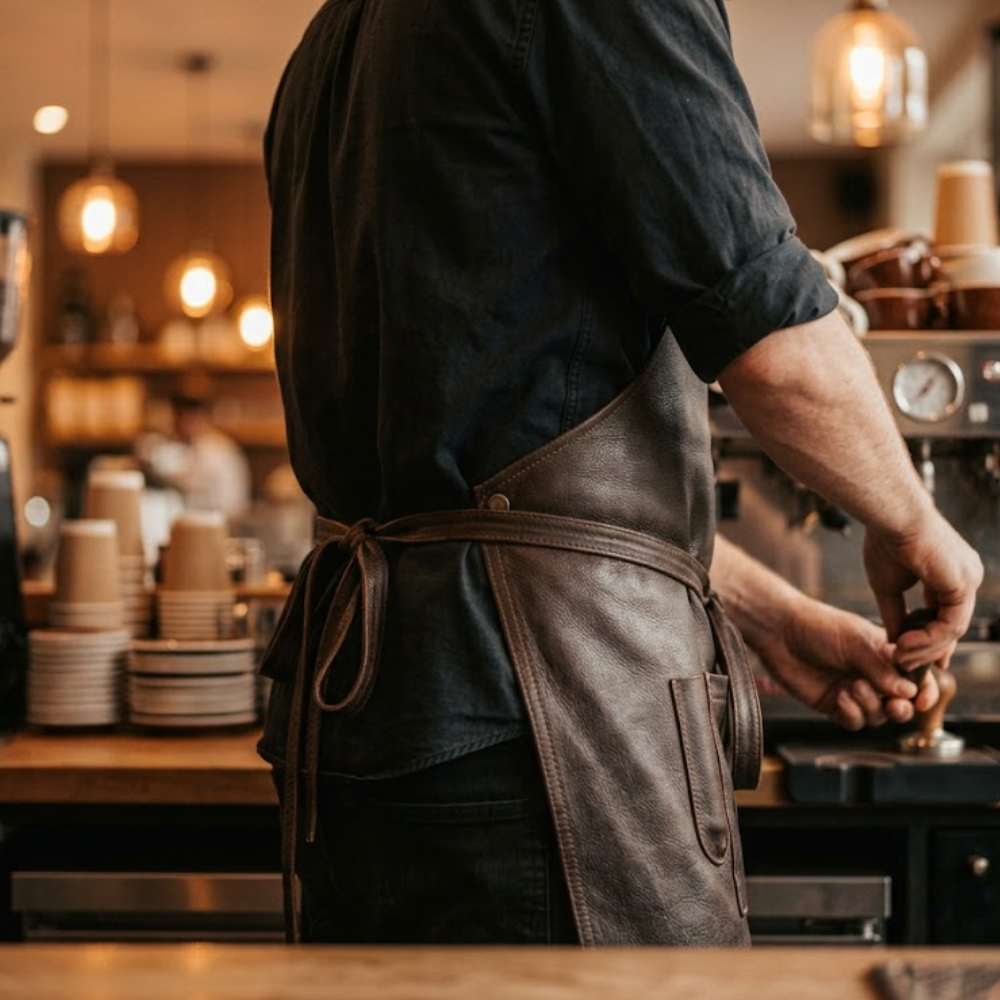
Most specialty coffee shops pair a leather apron with simple, dark, low branded clothing underneath, a plain t shirt or button up in black, white, or a neutral tone. The apron itself becomes the visual identity, which is part of why so many shops now treat it as the primary uniform piece rather than a functional add on over a heavily branded shirt.
This also explains why fit matters more for a barista apron than it might for a heavier trade apron. It sits over minimal clothing and stays visible for an entire shift, so an ill fitting or stiff apron stands out far more obviously than it would layered over bulkier workwear.
What Should a Barista Apron Look Like Behind the Bar?
Style expectations in specialty coffee have narrowed toward a fairly consistent look, a cross body or waist tie design in a dark, natural leather tone, slim enough to move quickly behind a busy bar without excess bulk. Minimal hardware and a clean silhouette read as more premium in this setting than heavy buckles or an overly rugged, trade style build.
What Weight and Style of Leather Works Best for Barista Wear?
A barista apron should sit at the lighter end of the leather weight spectrum, generally in the 3 to 5 ounce range. This weight stays flexible and comfortable through hours of standing, reaching, and moving behind an espresso bar, without the stiffness a heavier trade hide would bring to a role that has nothing to do with heat or blade exposure.
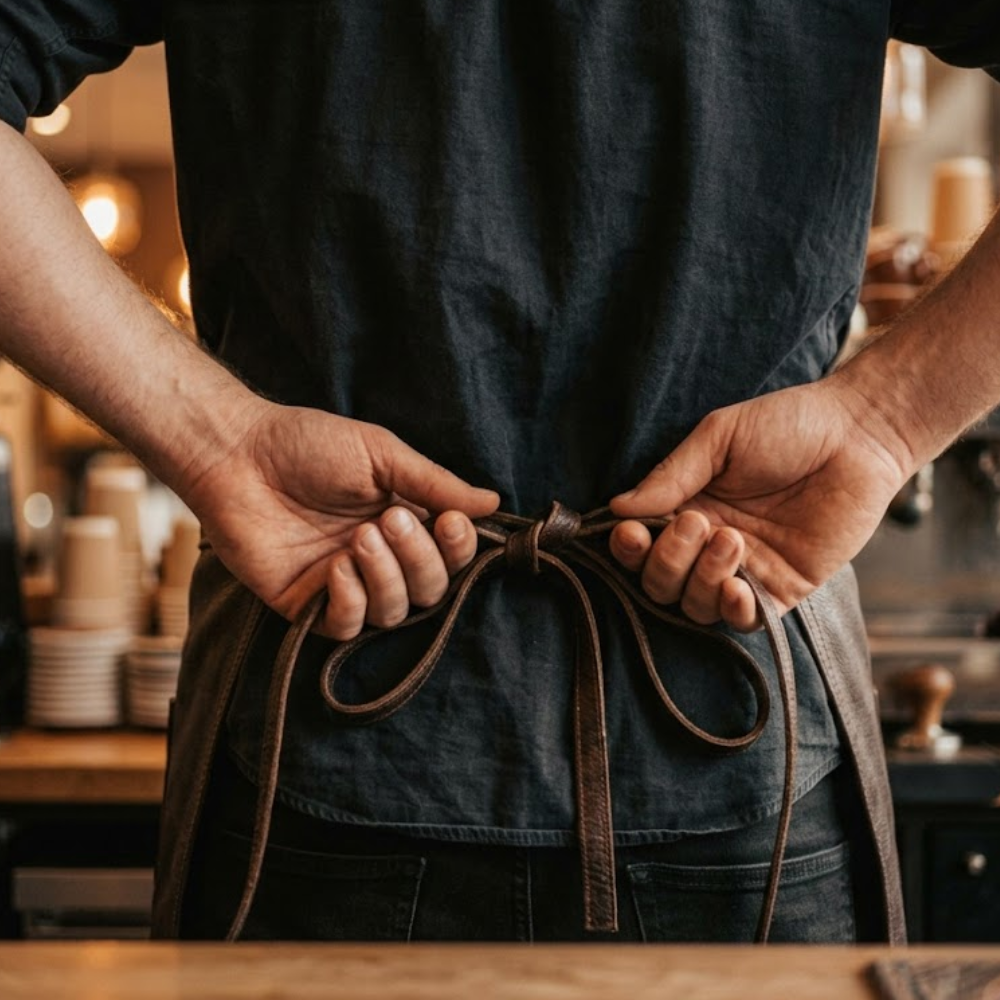
A tie waist construction, rather than a fixed buckle, tends to suit coffee shop use particularly well, since it wraps and knots to fit a wide range of body types without needing multiple sizes on hand for a rotating staff.
Full Grain vs Split Leather for Cafe Use: Does It Matter for Aesthetics Too?
Full grain leather keeps the outer layer of the hide intact, which gives it a more even, natural grain and a more consistent aging process than split leather with a corrected surface. For a piece worn front and center all day, that visual consistency matters almost as much as the added durability, since split leather tends to develop uneven wear patches rather than an even, attractive patina.
Split leather can also absorb coffee and milk stains more readily, which shows up as a duller, patchier finish over time rather than the darkened, even patina full grain leather typically develops with regular wear.
What Should a Cafe Owner Look for When Buying Aprons for a Whole Team?
Outfitting an entire team changes the buying calculation slightly from a single apron purchase. Consistency, adjustability, and washability across multiple staff members become the priority rather than any single unique feature.
- Choose one color and style across the team. A cohesive look across every barista reinforces brand identity far more than a mix of individually chosen aprons.
- Prioritize a tie waist or widely adjustable strap. Staff turnover means a fixed size apron often ends up poorly fitted on whoever wears it next.
- Confirm the apron wipes clean easily. A busy bar needs an apron that can be quickly wiped down between shifts without special care.
- Order slightly ahead of immediate headcount. Having a spare apron or two on hand avoids a mismatched look when new staff start before a reorder arrives.
Common Mistakes When Buying a Leather Barista Apron
- Choosing a heavy trade weight hide for barista use. A stiff, thick apron built for a workshop looks and feels out of place behind a coffee bar.
- Overlooking tie waist adjustability for a rotating staff. A fixed buckle apron sized for one person rarely fits the next barista who wears it.
- Mixing apron styles across a team. Individually chosen aprons undercut the cohesive, branded look most specialty cafes are aiming for.
- Assuming any dark leather will photograph the same. Full grain leather develops a more even, attractive patina than split leather over time.
- Ignoring pocket size relative to actual barista tools. A pocket built for a bar apron’s bottle opener does not suit the pen or thermometer a barista actually carries.
How Do You Care for a Leather Barista Apron Behind a Busy Bar?
Wipe the apron down with a dry or lightly damp cloth at the end of each shift to remove coffee grounds, milk splashes, and general grime before they settle into the grain. Never machine wash or soak a leather barista apron, since water and detergent strip the natural oils that keep the leather flexible for repeated daily wear.
Condition the leather every few months to keep it supple through constant motion, and hang each apron on a hook at the end of a shift rather than leaving it balled up or folded, which helps it keep a clean, presentable shape for the next shift.
Why Does the Right Apron Still Matter for a Coffee Shop’s Brand?
In specialty coffee, the apron functions as a visible piece of brand identity almost as much as the cup design or the shop’s interior. A consistent, well chosen leather apron across an entire staff signals the same attention to craft that a shop applies to sourcing and brewing, while a mismatched or quickly worn out uniform undercuts that impression regardless of how good the coffee actually is.
Choosing the right weight, fit, and construction is what turns a barista apron from a uniform requirement into a genuine extension of a coffee shop’s brand, one that holds up to the pace of a real bar rather than just looking good on opening day.
Dark Espresso Leather Barista Apron with Tie Waist and Tool Pockets
This apron sits at the lighter end of the weight range recommended above, built from full grain leather that stays comfortable through hours of standing and movement behind a bar. The dark espresso finish reads as a natural, premium tone that photographs well and suits the minimal aesthetic most specialty coffee shops favor.
The tie waist construction follows the team buying guidance covered earlier almost exactly, wrapping and knotting to fit a range of body types without requiring multiple sizes across a rotating staff. Slim tool pockets are sized for a pen and small notepad or thermometer rather than the bulkier tools a trade apron would carry.
It suits baristas, cafe owners outfitting a full team, and specialty coffee shops looking for a consistent, on brand look behind the bar. Every order ships with free shipping and a 14 day return window from Rove Leather.
Frequently Asked Questions — Leather Barista Aprons
The most common questions baristas and cafe owners ask about leather barista aprons, answered directly.
- Leather has become the default in specialty coffee for both looks and durability: it holds a clean appearance across a full staff far longer than cotton or denim.
- Lighter hide and a tie waist suit barista work best: a 3 to 5 ounce full grain leather stays comfortable through long shifts and adjusts across different staff.
- Consistency across a team matters as much as any single apron: one shared style and color reinforces brand identity far more than a mismatched mix.
A leather barista apron earns its place behind a specialty coffee bar for reasons that go beyond appearance, though appearance is certainly part of why it has become the default. Weight, fit, and full grain construction determine whether it actually holds up to the pace of a real shift, not just how it photographs on opening day.
At Rove Leather, the barista apron is built from a lighter full grain hide with a tie waist designed specifically for coffee shop use, so it fits the team wearing it and the pace of the bar it works behind.
Shop the Barista Apron at Rove Leather
Full grain leather construction · Free shipping · 14 day returns