How to Choose a Leather Apron for Your Trade
Match the hide to the hazard first, the pockets second, and the finish last. Here is how to buy a leather apron that actually fits the work.
Choosing the right leather apron starts with the hazard it needs to stand up to, not the color or the price tag. Exposure type, tool load, and how many hours it will be worn each day are the three factors that should drive the decision, since a hide built to shrug off sparks feels stiff and unnecessary behind a coffee bar, while a light apron built for comfort will not survive a shift near open flame. Rove Leather builds eleven trade specific apron styles from full grain leather, each shaped around the real working conditions of that trade rather than sold as one universal cut.
What Actually Separates One Leather Apron From Another?
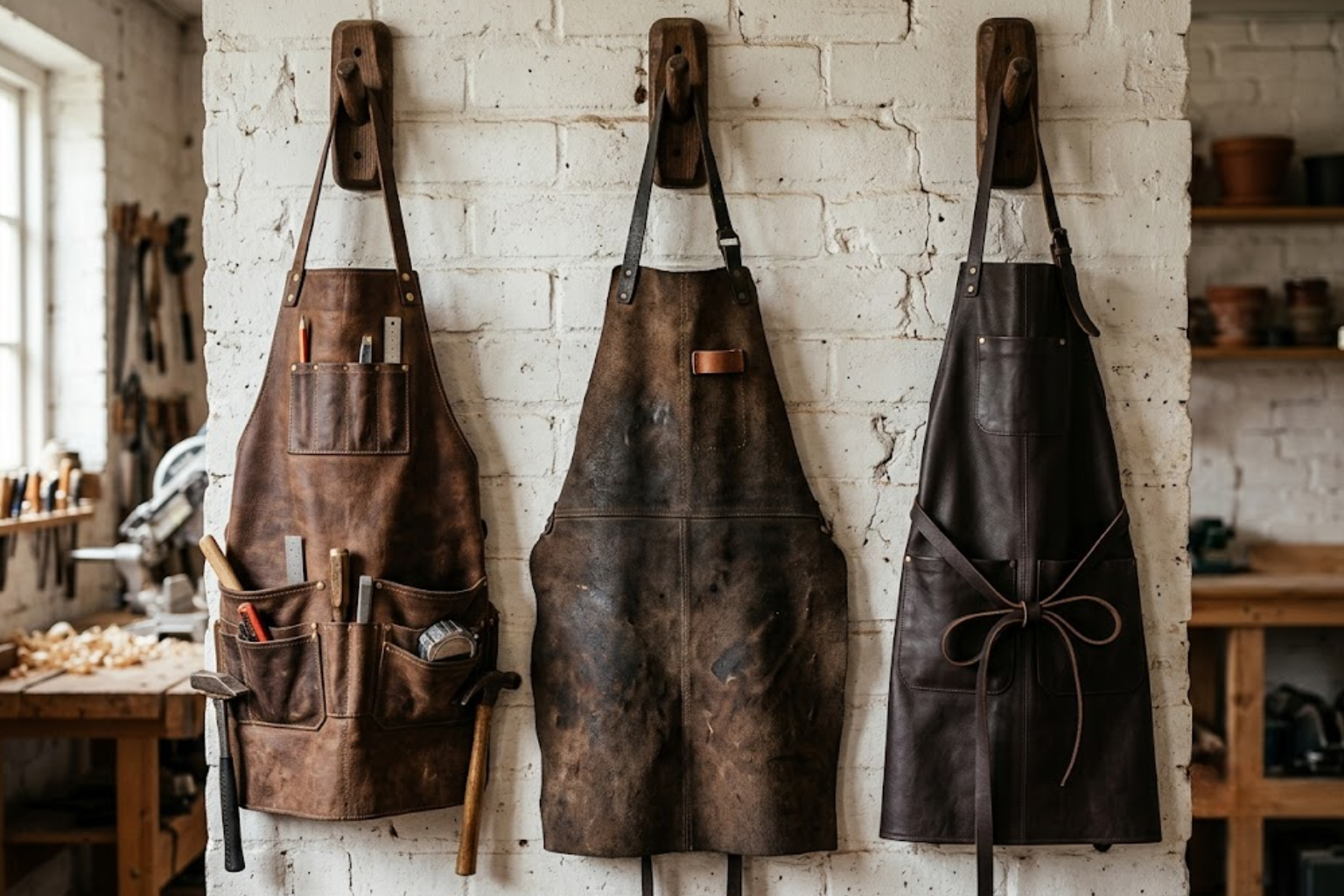
Two aprons can look nearly identical on a hook and behave completely differently on the job. The real differences sit in three places that a photo will not show you, how thick and stiff the hide is, how the pockets are shaped and positioned, and how the straps are built to hold up over a full shift rather than a quick try on.
None of that is a knock on any single apron. It is simply a reminder that a leather apron is trade equipment first and a garment second, so the right one depends entirely on what a person is doing while wearing it, not on which style photographs best.
What Should You Check Before You Buy a Leather Apron?
Run through these five points before adding anything to cart, in this order, since each one narrows the field further than the last.
Fit and Coverage for the Job at Hand
Coverage should match exposure, not preference. A full bib running from chest to mid thigh belongs in front of a forge, a grill, or a butcher block, while a shorter waist apron is often the more comfortable and practical choice for counter work where the main need is pocket access rather than upper body protection.
Hide Thickness Scaled to the Hazard
A heavy, wax treated hide belongs in trades with sustained heat or sharp contact, while a lighter, more supple leather suits anyone standing and moving for hours at a time. Buying the heaviest available option regardless of trade is its own mistake, since excess stiffness slows down repetitive motion and adds unnecessary fatigue across a long shift.
Pocket Architecture Built Around Real Tools
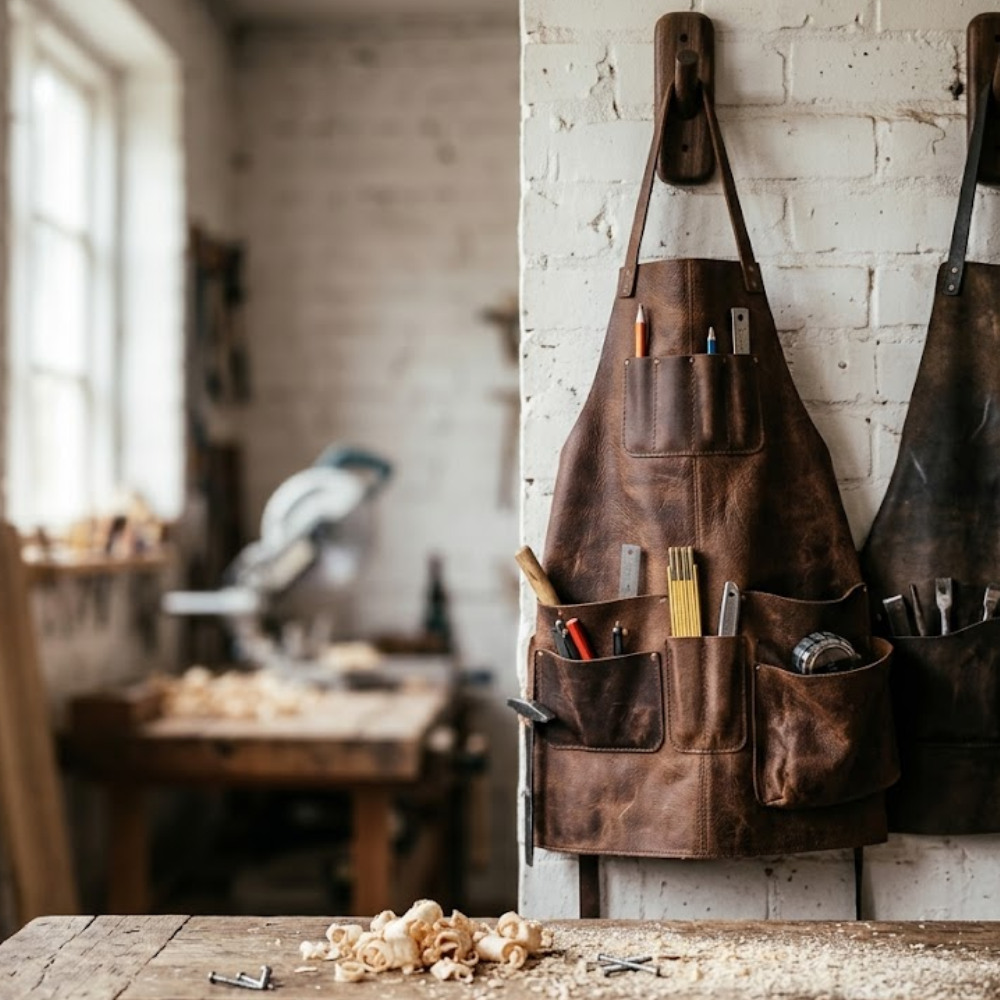
Pockets should be sized and placed for the specific items a trade actually carries, not a generic single pouch. A narrow slot built for a bottle opener does nothing useful for a carpenter, and a wide bay built for a folding rule is wasted space on a bar apron.
Strap and Hardware Quality
An adjustable neck strap with a solid roller buckle distributes weight evenly across a full day of standing, while long leather tie waist straps that wrap and knot in front tend to stay secure through repeated bending and reaching better than a fixed buckle waist.
Seam Construction at the Stress Points
Pocket corners and strap attachment points take the most repeated strain of any part of the apron. Saddle stitching, where two needles lock each stitch from opposite sides, holds significantly longer under that kind of load than a single pass lockstitch.
Full Grain vs Split Leather: Does the Difference Actually Show Up in Use?
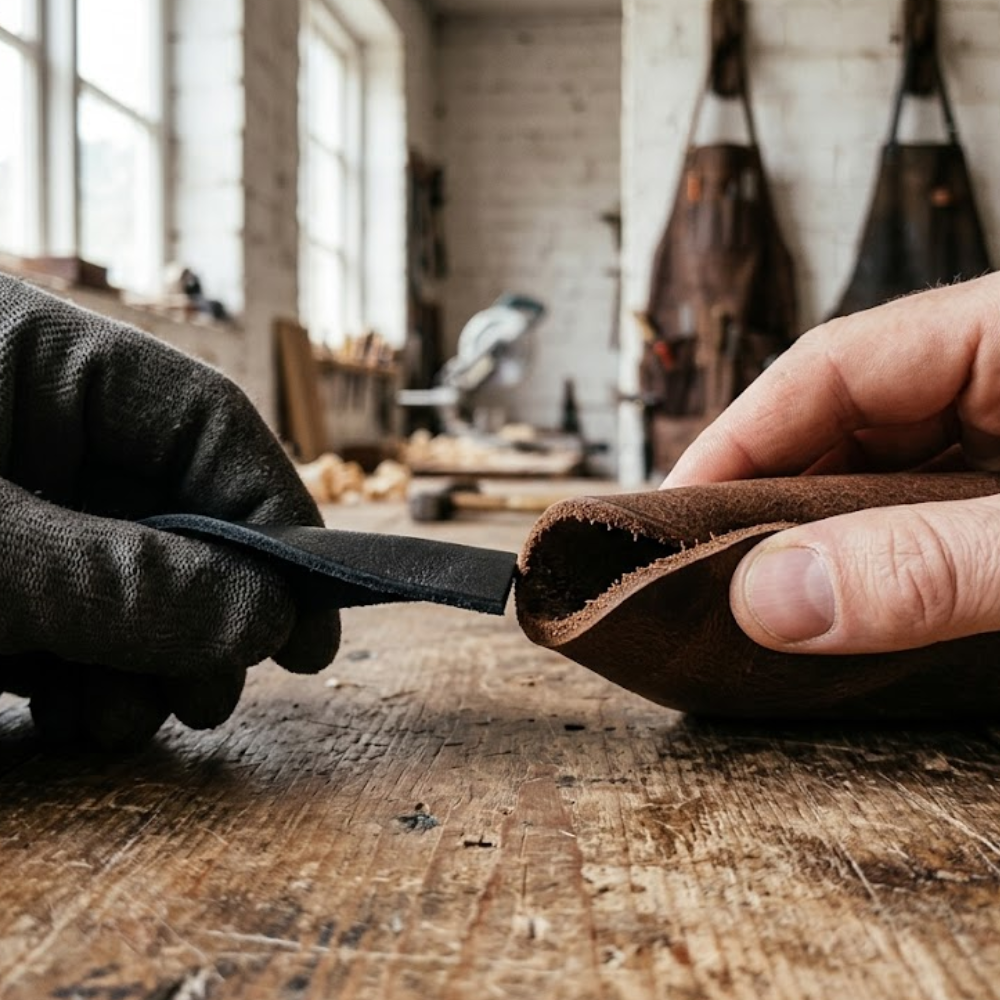
Full grain leather is cut from the outer layer of the hide, keeping its natural grain and tight fiber structure intact. Split leather, cut from the layers underneath, looks nearly identical off the shelf but has noticeably less structural integrity, which only becomes obvious once the apron is under real, repeated pocket load.
That is the part most buyers miss. A split leather apron will not necessarily look wrong on day one. It shows its limits weeks or months in, at the exact seams and pocket corners carrying the most weight, which is precisely where a full grain leather apron for craftsmen is built to hold up instead.
Which Leather Apron Suits Each Trade?
The clearest way to sort eleven very different trades is by what they are actually protecting against, since that is what should decide hide weight and pocket layout far more than the industry itself.
Heat and Spark Exposure
A blacksmith apron and a welding apron both call for the heaviest, most heat resistant hide in the lineup, cut for full coverage from chest to below the waist. Sparks and radiant heat at chest height make this the one category where thickness should never be compromised for comfort.
Blade and Moisture Exposure
A butchery apron needs a dense hide and a secure buckle waist to resist blade contact and stay stable through moisture and repeated motion. A BBQ apron faces similar grease and open flame exposure, while a cooking apron trades some of that thickness for a divided front pocket and a strap built for comfort over a long kitchen shift.
Tool Load and Organization
A carpentry apron lives or dies on pocket architecture, needing several dedicated slots for a pencil, utility knife, tape measure, and hand tools. A bar apron carries a smaller, faster access kit, a bottle opener, wine key, and pen, while a gardening apron needs a lighter, more flexible build with pockets sized for hand tools and seed packets rather than a heavy hide meant for a workshop.
Comfort Across a Long Shift
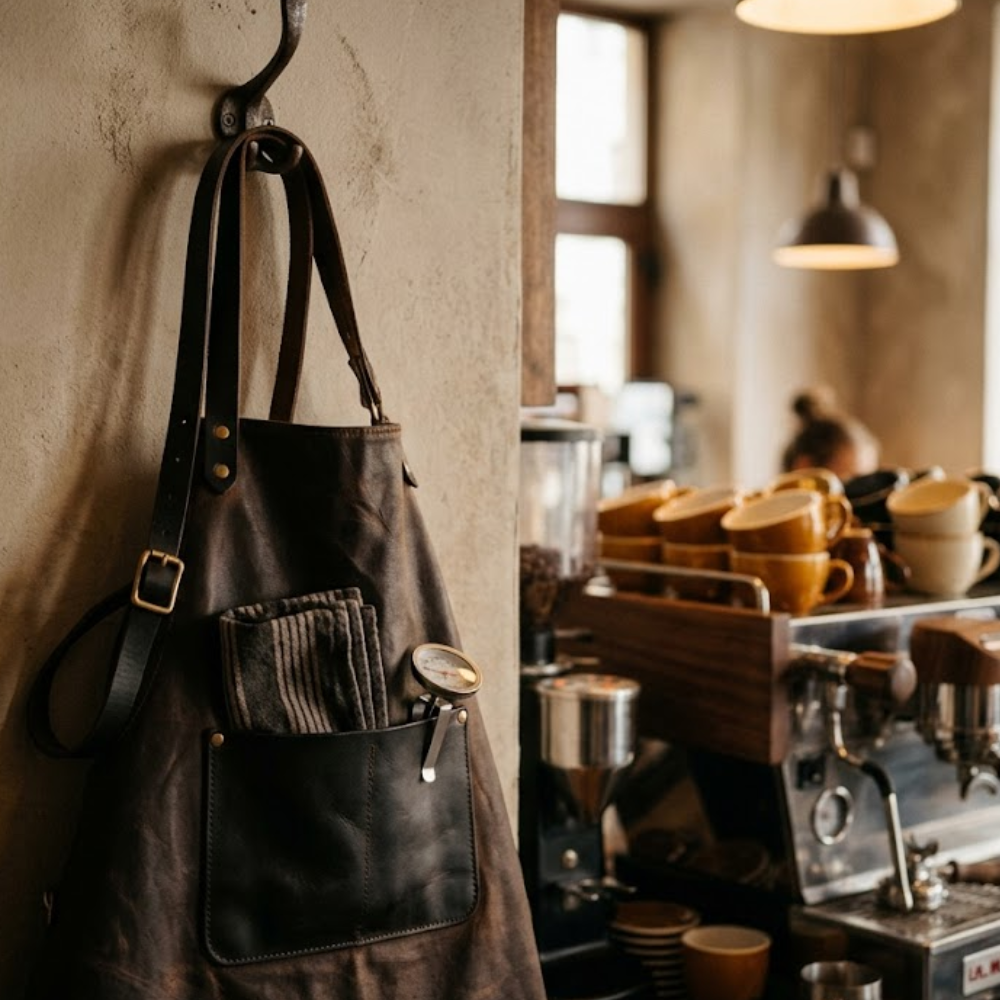
A barista apron and a barber apron both prioritize a softer, more flexible cut worn for hours at a time, close to customers rather than open flame. An artistry apron sits in the same weight class, favoring multiple pocket organization for brushes and palette knives over raw thickness, since the main threat is paint rather than heat or blades.
| Apron Style | Main Hazard | What to Prioritize |
|---|---|---|
| Blacksmith | Radiant heat and sparks | Heaviest hide, full coverage |
| Welding | Molten spatter and slag | Full chest to thigh bib |
| Butchery | Blade contact and moisture | Dense hide, buckle waist |
| Carpentry | Repeated tool weight | Several dedicated pockets |
| BBQ | Grease and open flame | Mid to heavy hide |
| Cooking | Kitchen heat and spills | Comfort over a long shift |
| Bar | Fast, repeated tool access | Narrow, purpose built pockets |
| Barista | Hours of standing movement | Lighter hide, tie waist |
| Barber | Close, sustained client contact | Soft, flexible hide |
| Artistry | Paint and pastel, not heat | Multiple pocket organization |
| Gardening | Soil and outdoor moisture | Light, flexible build |
Common Mistakes to Avoid When Buying a Leather Apron
Most of these come down to skipping the matching step above and choosing on appearance instead. Watch for these before you check out.
- Buying the thickest hide available regardless of trade. Extra stiffness that a heavy trade needs will only slow down repetitive motion in a lighter duty role.
- Choosing a fixed, non adjustable neck strap. A strap that fits well in a t shirt will not fit the same way over a jacket or a layered work shirt.
- Overlooking where the pockets actually sit. A pocket positioned for the wrong hand or the wrong reach slows down exactly the motion a trade repeats most often.
- Assuming a dark, distressed finish means a heavier hide. Color and finish say nothing about thickness or construction quality on their own.
- Treating all full grain leather as interchangeable. A full grain leather apron for craftsmen in a heavy trade still needs a noticeably thicker cut than one built for hospitality work.
How Should You Care for a Leather Apron Between Shifts?
A work apron sees more daily stress than almost any other leather item a person owns, so a few habits go a long way. Wipe the surface down with a dry cloth after each shift to clear dust, grease, or food residue before it works into the grain, and condition the leather every few months so it does not dry out at the points where it flexes most, the shoulders and the waist.
Hang the apron on a hook or wide peg rather than folding it into a drawer, since folding creates permanent crease lines at the same spots that already see the most repeated movement. Trades involving heat, moisture, or blades tend to need conditioning slightly more often than lighter hospitality aprons.
Why Buy Trade Specific Instead of One Universal Apron?
A single generic apron sold across every trade almost always compromises somewhere, either it is too heavy and stiff for a job that needs mobility, or it is too light to actually protect against real heat and blade contact. The best leather apron for any individual buyer is simply the one built for their specific trade, not the option with the most pockets or the highest price regardless of whether those features match the work being done.
Once hide weight, pocket layout, and coverage are matched correctly to the job, a leather apron stops being a piece of protective gear you tolerate and becomes one you barely notice while working, which is exactly the point.
Men’s Full Coverage Leather Welding Apron with Tool Pockets
This apron sits at the heaviest end of the lineup and shows what the Heat and Spark Exposure category above looks like in practice. Genuine heavy duty leather runs from chest to well below the waist, giving full protection against molten spatter rather than the partial coverage suited to lighter trades.
Tool pockets are sized for the fewer, larger items a welder actually carries through a shift, a good example of pocket architecture following the trade rather than a single universal layout.
It suits welders, metalworkers, and anyone working regularly near open flame or sustained heat. Every order ships with free shipping and a 14 day return window from Rove Leather.
Men’s Dark Brown Crazy Horse Leather Butcher Apron with Buckle Waist and Tool Pockets
This apron represents the Blade and Moisture Exposure category, built from dense crazy horse leather that resists cuts, fat, and repeated washing better than a lighter hide would. The buckle waist, rather than a tied strap, allows the fast on and off changes butchery work often requires between tasks.
Tool pockets stay simple and secure rather than heavily divided, reflecting the fact that this trade generally carries fewer, larger tools rather than many small ones, unlike a carpentry or artistry layout.
It suits butchers, meat cutters, and anyone working close to blades and moisture through a full shift. Every order ships with free shipping and a 14 day return window from Rove Leather.
Unisex Full Grain Leather Gardening Apron with Loop Neck and Tool Pockets
At the lighter end of the range, this apron illustrates the Tool Load and Organization category applied outdoors rather than in a workshop. A flexible, breathable hide and a loop neck design keep it comfortable through long stretches of bending and kneeling, where a heavy trade hide would be unnecessary and uncomfortable.
Its pockets are shaped for hand tools, seed packets, and gloves rather than the larger items a carpentry or blacksmith apron needs to carry, matching the lighter tool load this trade actually involves.
It suits gardeners, landscapers, and anyone working outdoors with hand tools for extended periods. Every order ships with free shipping and a 14 day return window from Rove Leather.
Frequently Asked Questions — Leather Apron Buying Guide
The most common questions buyers ask when choosing a leather apron, answered directly.
- Match the hide to the hazard, not the other way around: heavy trades need thick, protective leather, comfort focused trades need a lighter, more flexible build.
- Pocket architecture should follow the tools of the trade: a generic layout rarely serves any single job as well as one built around specific tool shapes and sizes.
- Full grain leather shows its advantage over time, not on day one: seams and pocket corners are where a lower grade leather fails first under repeated load.
Buying the right leather apron comes down to three questions in order, what hazard the trade actually involves, what tools need to be carried, and how many hours the apron will be worn each day. Get those three answers right and the rest of the decision, hide weight, pocket layout, and coverage, tends to sort itself out.
At Rove Leather, each of the eleven apron styles is built from full grain leather and shaped specifically for the trade it serves, so the apron works with the job from the first shift rather than needing to be broken in around it.
Shop Leather Aprons at Rove Leather
Full grain leather construction · Free shipping · 14 day returns