

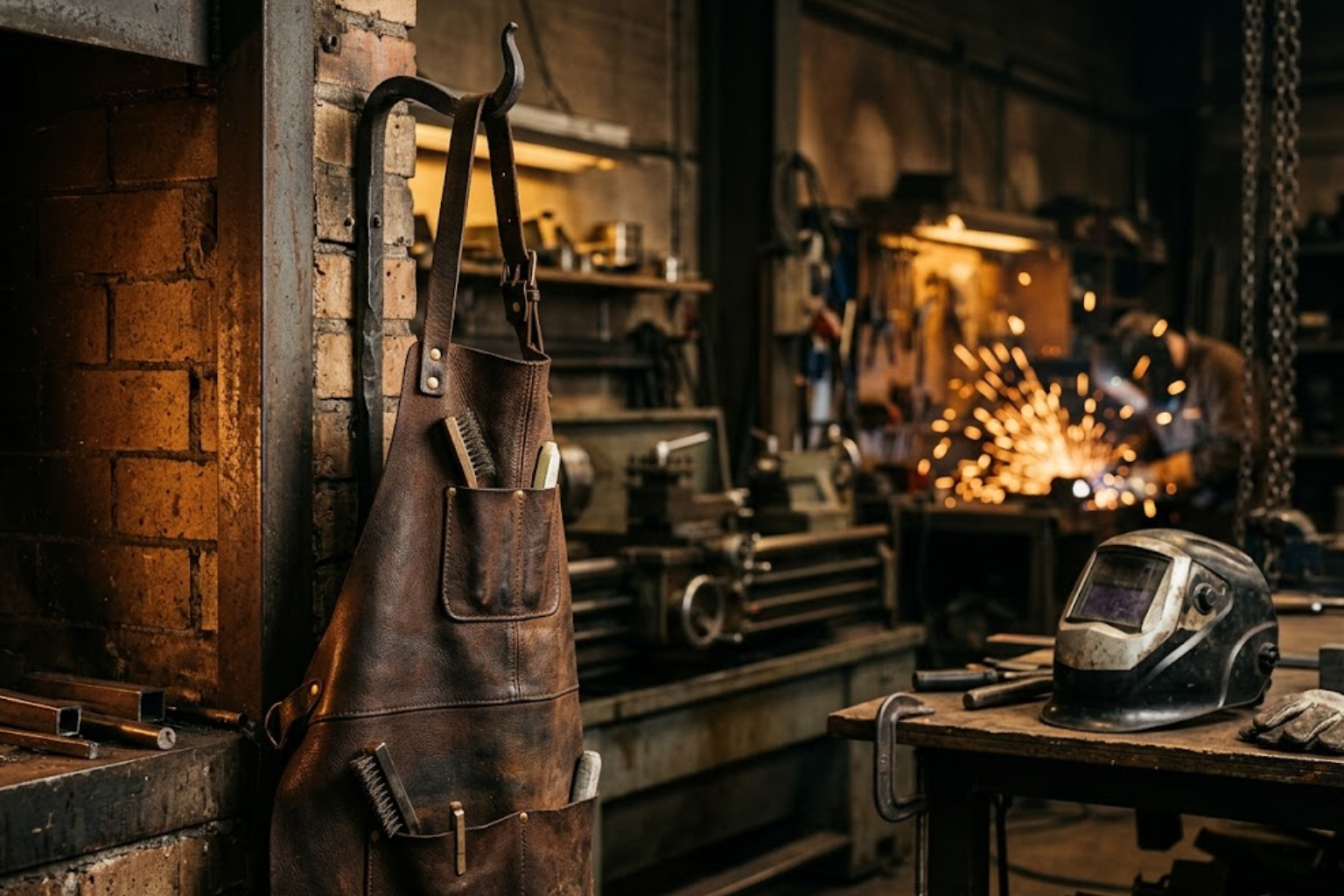
Leather Welding Apron: What Thickness You Need and Why Most Aprons Fail Under Heat
Hide weight, stitching, and coverage, broken down by real welding conditions rather than a single generic recommendation.
A leather welding apron needs to be matched in thickness to the kind of welding it will face, generally a lighter hide of about 4 to 6 ounces for occasional tack work, a mid weight hide of about 6 to 8 ounces for regular MIG or stick welding, and a heavier hide of 8 to 10 ounces or more for structural, overhead, or high spatter work. Most welding aprons that fail under heat do so because the hide is too thin for the job, not because leather itself is a poor choice, since thin, low grade leather scorches, stiffens, and cracks at exactly the seams and edges that see the most spark contact. Rove Leather builds its welding apron from full coverage, heavy duty full grain leather designed for the higher end of that thickness range.
What Makes a Welding Apron Different From a General Work Apron?
A welding apron faces a narrower but far more punishing set of conditions than most other trade aprons. Molten spatter, radiant heat, and direct spark contact at chest height are the specific hazards it needs to resist, which is a meaningfully different job than the abrasion or moisture resistance a carpentry or cooking apron is built for.
That narrower job is exactly why thickness matters more here than in almost any other apron category. A hide that performs well for carpentry or bar work can still scorch through in seconds under a shower of weld spatter, since resistance to blunt abrasion and resistance to concentrated heat are simply not the same property.
How Thick Should a Leather Welding Apron Be?
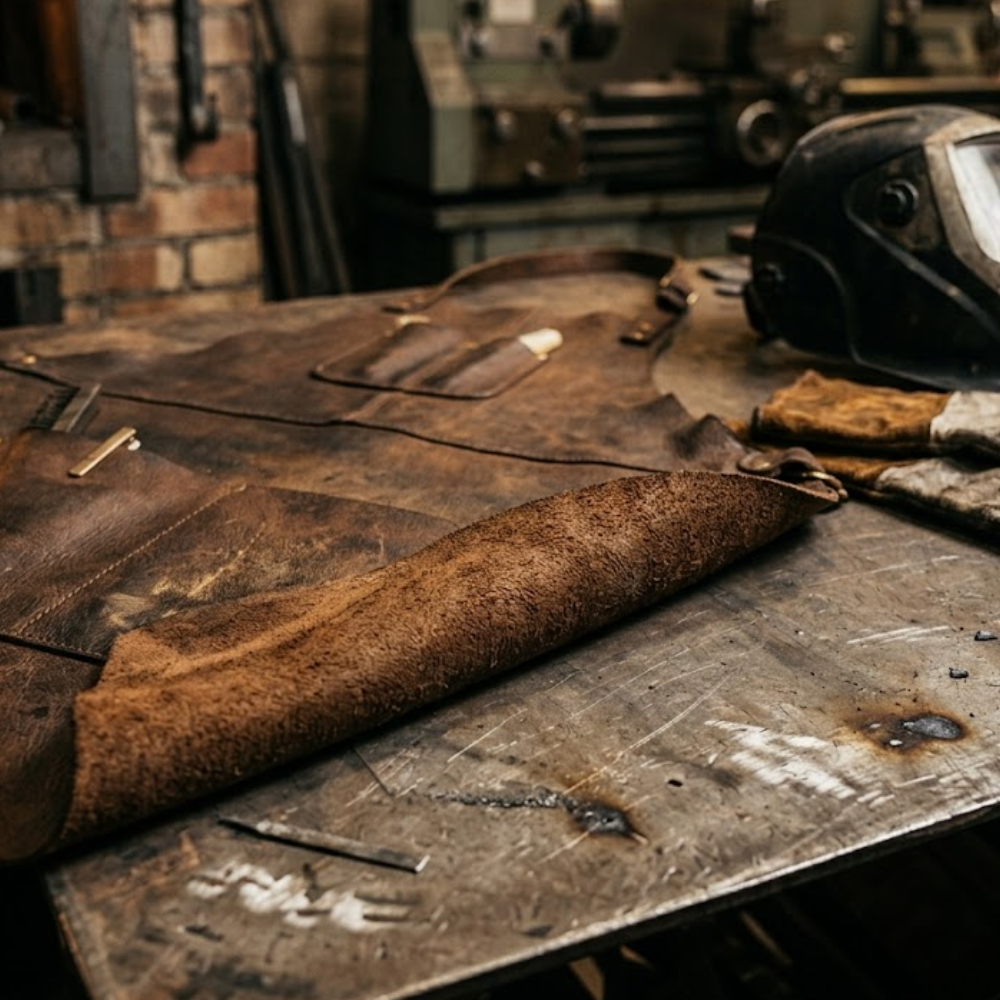
Leather thickness is measured in ounces, an industry standard where one ounce equals roughly 1/64 of an inch. The right weight depends entirely on how much heat and spatter exposure the work actually involves, not on picking the single heaviest option available by default.
4 to 6 Ounce Hide: Light and Occasional Welding
This lighter range suits hobbyists and anyone doing brief, occasional tack welding at low amperage. It offers real protection against stray sparks but will not hold up as the primary barrier for a full shift of sustained arc time.
6 to 8 Ounce Hide: Regular MIG and Stick Welding
This is the range most working welders should look for as a baseline. It offers meaningful resistance to sustained spatter and radiant heat during regular MIG or stick welding sessions without becoming too stiff to move comfortably in.
8 to 10 Ounce Hide and Heavier: Structural, Overhead, and High Spatter Work
Structural welding, overhead positions, and high amperage work throw the most spatter and the most sustained heat, so this heavier range is worth prioritizing even though the hide is stiffer and takes longer to break in. This is the range a full coverage, heavy duty welding apron should sit in.
| Hide Weight | Typical Use | Tradeoff |
|---|---|---|
| 4 to 6 oz | Occasional tack welding, hobby use | Most flexible, least heat reserve |
| 6 to 8 oz | Regular MIG and stick welding | Balanced flexibility and protection |
| 8 to 10 oz and up | Structural, overhead, high spatter work | Maximum protection, stiffest to break in |
Why Do Most Welding Aprons Fail Under Heat?
The failures almost always trace back to one of a small number of specific weaknesses, not a general problem with leather as a material. Knowing what actually fails helps explain why hide weight and construction matter more than finish or color.
- Hide that is too thin for the exposure level. A 3 to 4 ounce hide sold for general work will scorch and stiffen fast under sustained spark contact it was never built for.
- Synthetic or lightweight thread at the seams. Thread that melts or weakens under heat gives way at exactly the stress points, pocket corners and strap attachments, before the leather itself fails.
- Unfinished or raw cut edges. Edges that are not burnished or bound catch sparks more easily and begin fraying and curling faster than a properly finished edge.
- Incomplete coverage for the position being welded in. A waist length or partial apron leaves the chest and upper body exposed exactly where sparks and spatter concentrate during overhead or close range work.
- Metal hardware placed too close to the work area. Exposed metal snaps or buckles near the chest can conduct heat uncomfortably during sustained close range welding.
What Coverage Standards Should a Welding Apron Meet?
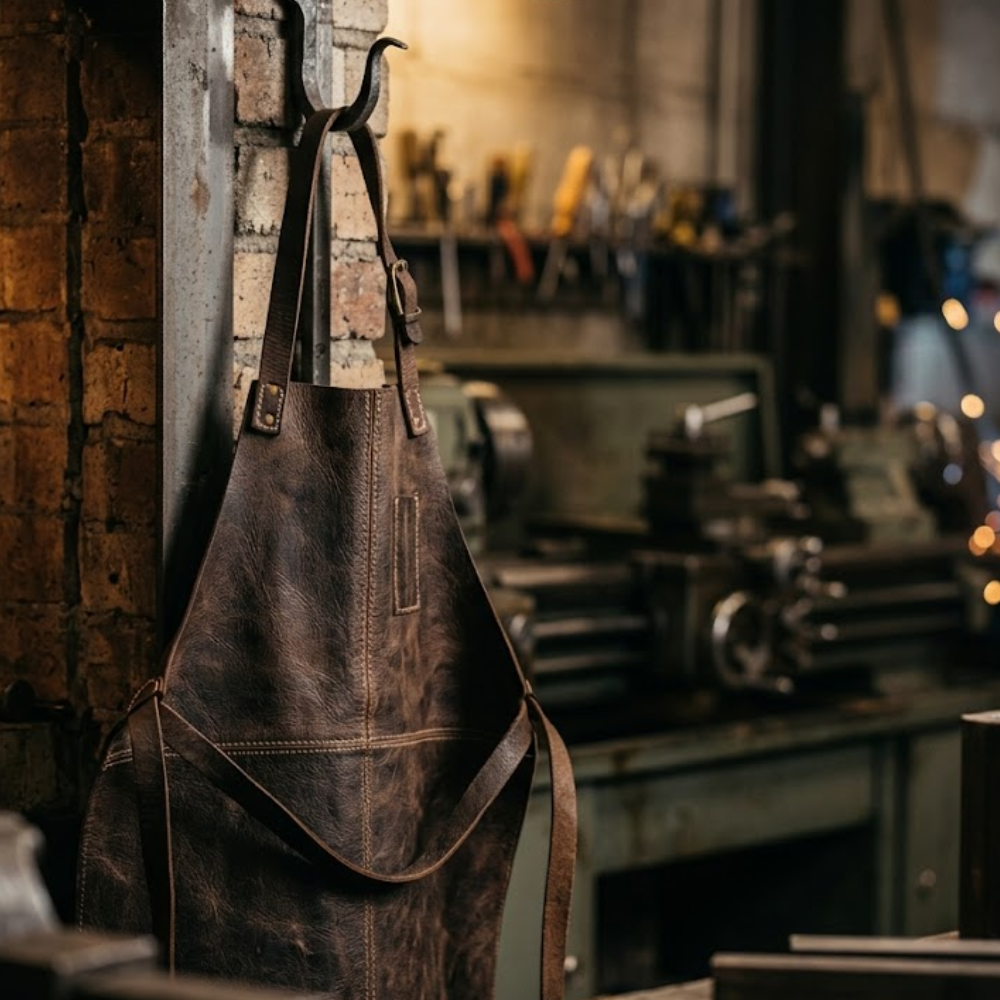
Coverage should run from the chest down to at least mid thigh, and ideally lower, since spatter falls and sparks travel downward during most welding positions. A full bib cut with a wide chest panel protects the area directly in the line of the arc, which a shorter waist apron simply cannot cover regardless of hide quality.
Straps matter as much as the panel itself. An adjustable neck strap that distributes weight evenly, paired with long waist straps that wrap and tie securely, keeps the apron flat against the body rather than shifting or gapping during overhead work or repeated bending.
Full Grain vs Split Leather for Welding: Does It Matter More Here?
Full grain leather retains the outer layer of the hide, keeping its natural fiber density intact, which gives it stronger heat and puncture resistance than a lower grade split. This distinction matters more for welding than for almost any other apron category, since split leather with a corrected surface can look convincing when new but breaks down noticeably faster under sustained radiant heat.
Split leather is also more prone to becoming brittle after repeated heat exposure, since it lacks the same fiber structure that allows full grain leather to flex and recover rather than crack. For a welding apron specifically, full grain leather is not a preference, it is close to a requirement for anyone welding regularly rather than occasionally.
What Else Should You Check Before Buying a Welding Apron?
Beyond hide weight and coverage, a few construction details separate an apron built for real welding work from one that only looks the part.
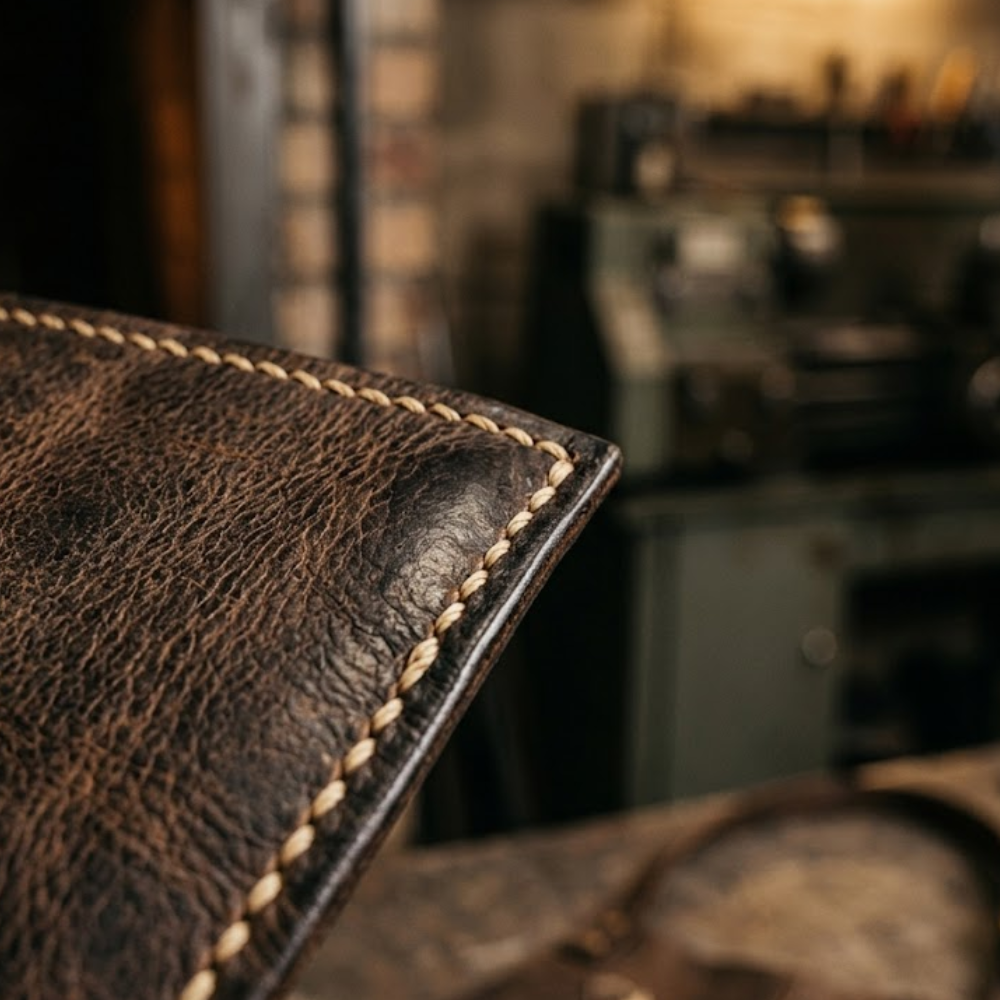
- Heavy cotton or linen stitching thread, which resists heat far better than lightweight synthetic thread used in general purpose aprons.
- Riveted stress points at pocket corners and strap anchors, since stitching alone is more likely to give way first under repeated heat and motion.
- Pockets positioned away from direct spark exposure, since a pocket placed directly in the line of the arc will wear through faster than the rest of the apron.
- A tested, adjustable strap system that holds its position through bending, kneeling, and overhead reaching without needing constant readjustment.
Common Mistakes When Buying a Leather Welding Apron
- Buying based on appearance rather than stated hide weight. A dark, worn looking finish says nothing about actual thickness or heat resistance.
- Choosing a general purpose leather apron for regular welding work. An apron built for carpentry or cooking is not built for sustained spark and heat exposure.
- Overlooking coverage length for the welding position typically used. Overhead and close range work needs longer, fuller coverage than occasional flat position tack welding.
- Ignoring strap and hardware placement near the chest. Metal components positioned in the direct spark zone can become uncomfortably hot during sustained work.
How Do You Care for a Leather Welding Apron?
Brush off loose spatter and dust with a dry cloth after each use, since embedded particles left sitting on the surface can work into the grain over time. Condition the leather every few months, focusing on areas that see the most direct heat exposure, since sustained radiant heat pulls moisture out of leather faster than most other conditions a work apron encounters.
Store the apron hanging rather than folded, since folding creates crease lines at the exact points that already flex most during welding positions such as bending and reaching overhead. Inspect stitching and edges periodically, since these are the first points to show wear well before the hide itself does.
Why Does Hide Thickness Still Matter More Than Style?
A welding apron is safety equipment first, and its appearance is a distant second consideration. Choosing based on stated hide weight, coverage, and construction quality rather than finish or price alone is what actually determines whether an apron holds up under real welding conditions for years rather than a single project.
Understanding the thickness ranges covered in this guide, and matching them honestly to the kind of welding actually being done, is what separates a welding apron that performs from one that only looks the part until the first real shower of spatter.
Men’s Full Coverage Leather Welding Apron with Tool Pockets
This apron is built at the heavier end of the thickness range covered above, using genuine heavy duty full grain leather designed for structural and sustained welding work rather than occasional tack jobs. Full coverage runs from the chest down well below the waist, meeting the coverage standard outlined earlier in this guide for overhead and close range spark exposure.
Tool pockets are positioned outside the primary spark zone and sized for the fewer, larger tools welding work typically requires, rather than the many small divided slots a lighter trade apron would carry. Reinforced construction at the pocket corners and strap attachments addresses the exact failure points discussed above.
It suits welders, metalworkers, and fabricators working regularly near open flame, spatter, or sustained heat. Every order ships with free shipping and a 14 day return window from Rove Leather.
Frequently Asked Questions — Leather Welding Aprons
The most common questions welders ask when choosing a leather welding apron, answered directly.
- Match hide weight to actual welding conditions: 4 to 6 ounces for occasional work, 6 to 8 ounces for regular welding, 8 to 10 ounces or more for structural and overhead work.
- Most failures happen at the seams, not the hide itself: stitching thread, edge finishing, and hardware placement matter as much as thickness.
- Full grain leather is close to a requirement, not a preference: split leather breaks down noticeably faster under sustained radiant heat.
Choosing a leather welding apron comes down to being honest about the kind of welding it needs to survive, then matching hide weight, coverage, and construction quality to that exposure rather than to price or appearance. Occasional tack work and daily structural welding are not the same job, and they should not be protected by the same weight of leather.
At Rove Leather, the welding apron is built from full grain, heavy duty leather at the higher end of the thickness range covered in this guide, so it holds up under sustained spark and heat exposure rather than failing at the first real shift.
Shop the Welding Apron at Rove Leather
Full grain leather construction · Free shipping · 14 day returns