Leather Apron Buying Guide: What to Look For, What to Avoid, and Which Trades Need What
A trade by trade breakdown of leather weight, stitching, and pocket layout, so the apron you buy actually matches the work you do.
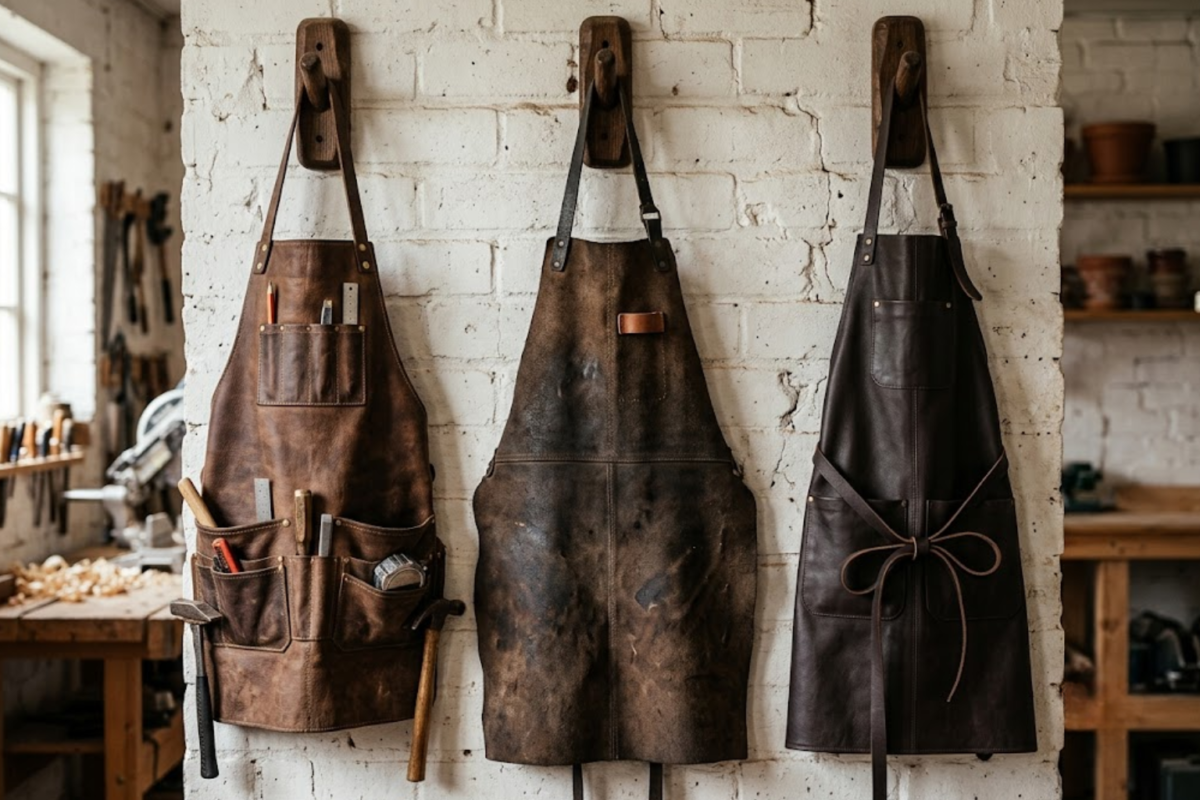
A leather apron is a protective garment worn over the torso and legs to shield clothing and skin from heat, sparks, blades, stains, and abrasion during hands on trade work. The best leather apron for any given trade comes down to three factors: the weight of the hide measured in ounces, the pocket layout built for that trade’s actual tools, and whether the leather is full grain or a lower grade split. A blacksmith or welder needs a heavier, thicker hide for heat and spark resistance, while a barista or barber needs a lighter, more flexible cut for comfort across a long shift. Rove Leather builds eleven trade specific apron styles, each cut and pocketed for the real demands of that trade rather than sold as one generic shape.
What Is a Leather Apron, and What Is It Actually For?
A leather apron is a piece of workwear cut from cattle hide and worn over the front of the body, usually tied at the neck and waist, to protect the wearer from the specific hazards of a trade. That sounds simple, but the job changes completely depending on who is wearing it. A welder’s apron exists to stop molten spatter from burning through fabric. A butcher’s apron exists to resist a blade slip and shrug off blood and fat without soaking through. A barista’s apron exists mostly to look sharp and hold a few tools within reach for an eight hour shift on a concrete floor.
That is the first thing most buyers get wrong. They shop for a leather apron as a single category, when in practice it is closer to eleven different tools that happen to share a silhouette. The weight of the hide, the stitching pattern, and the pocket count all need to match the job, not just the aesthetic.
Where Did the Leather Work Apron Come From?
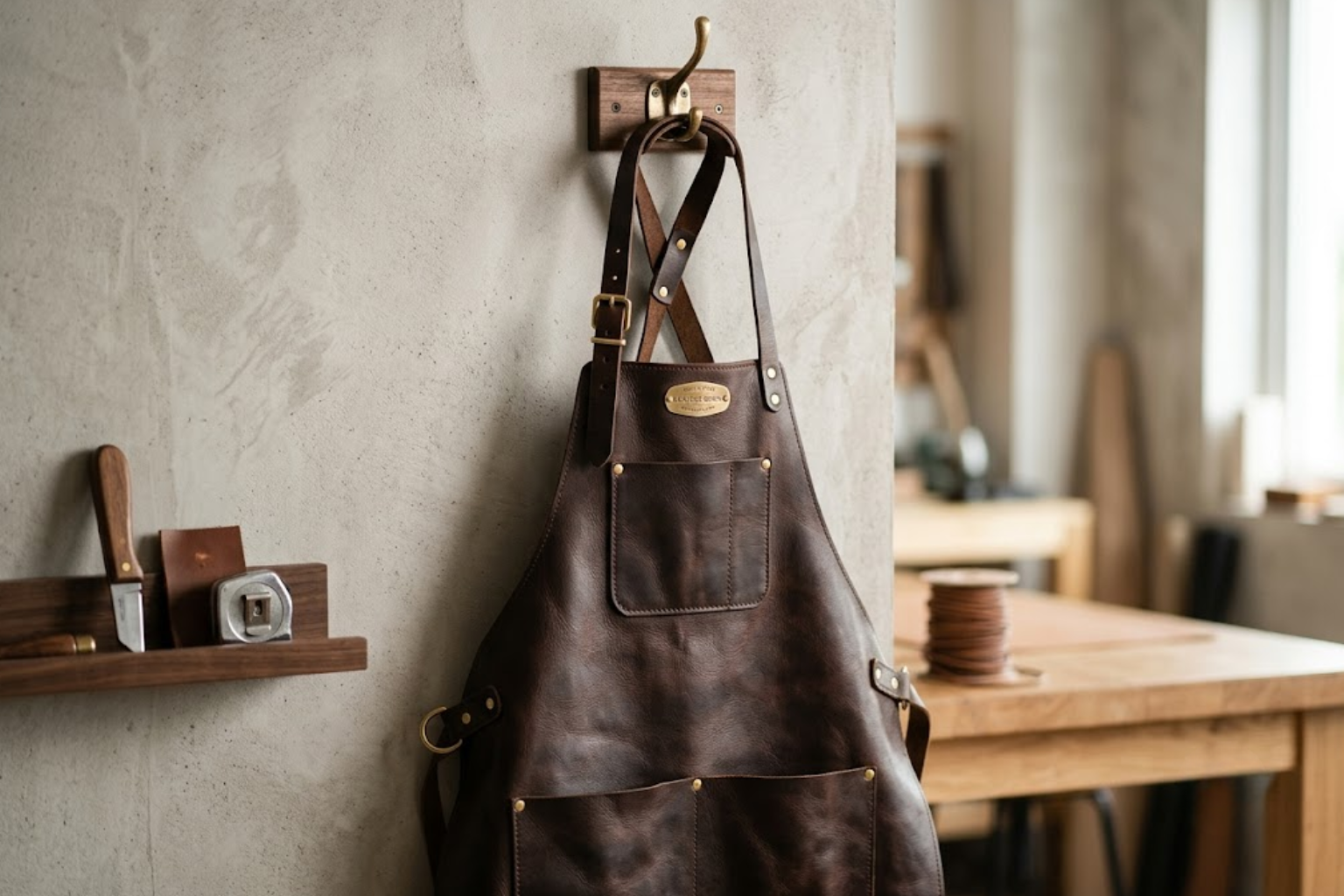
The leather apron is one of the oldest pieces of dedicated workwear still in daily use. Smiths are documented working in protective leather aprons from at least the 1300s, and the shape has barely changed since: a single heavy hide, tied at the neck and waist, covering the body from chest to knee. By the 1700s, trade guilds had turned the apron into something closer to a uniform. Butchers in particular followed guild specific color standards, and the apron itself became a visible marker of which trade a person belonged to, not just protective gear.
The Industrial Revolution widened the apron’s reach well beyond the forge. As factories, workshops, and tanneries multiplied through the 1800s, leather aprons became standard across woodworking, metalwork, and butchery wherever heat, blades, or abrasion were part of the job. Through the 1900s, the same garment moved into service trades, bars, kitchens, and barbershops adopted their own lighter cuts of the same basic idea. That path from forge to café is exactly why an apron built for a blacksmith and an apron built for a barista can share a name while being built almost nothing alike underneath.
Full Grain vs Split Leather Aprons: What Is the Real Difference?
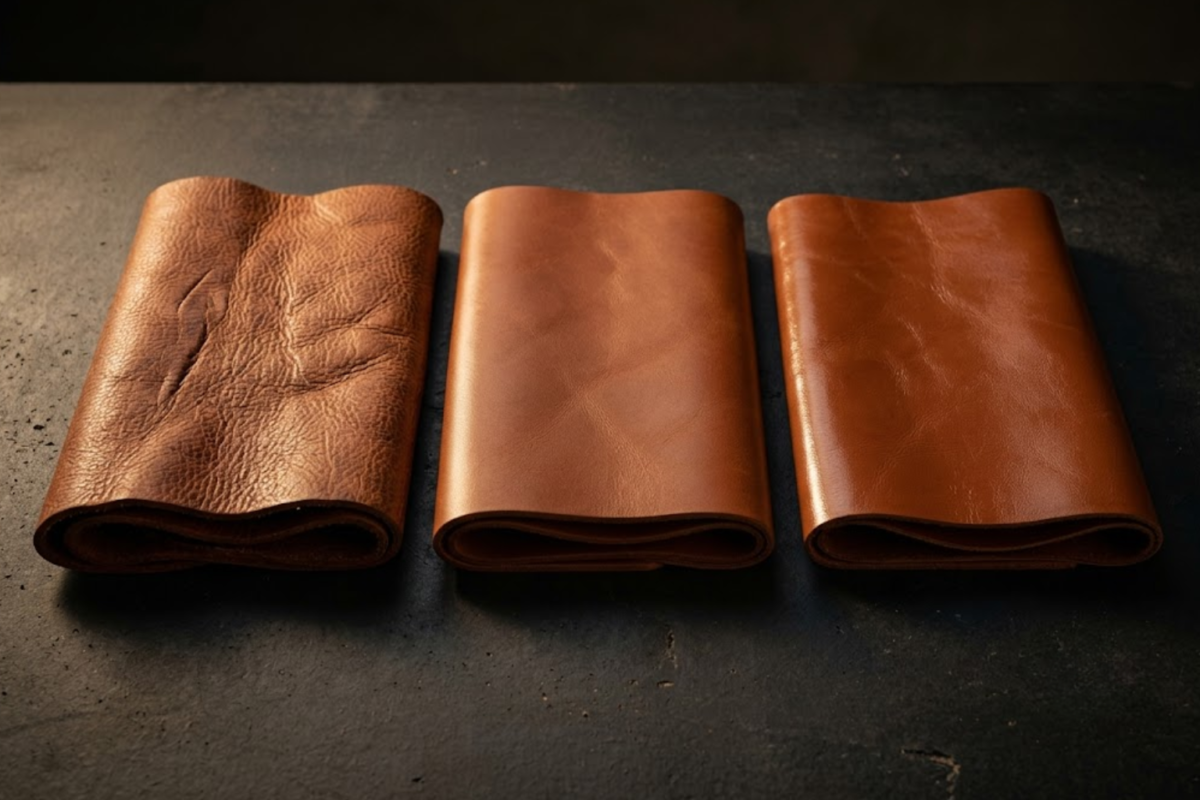
This is the single most important distinction in the entire buying decision, and it is the one most listings hide. When a hide is tanned, it can be used whole or split into thinner layers. The top layer, full grain leather, keeps the natural outer surface of the hide intact, including its full fiber density. Everything below that layer is a split, a lower grade cut of the same animal with a corrected or embossed surface applied to make it look uniform.
- Full grain leather is denser, resists punctures and abrasion better, and develops a patina rather than peeling or flaking with age.
- Split leather is thinner, cheaper, and prone to cracking and surface wear within a season of heavy trade use.
- Full grain is the only cut worth choosing for a trade apron meant to survive daily heat, blades, or spark exposure for years rather than months.
Leather thickness itself is measured in ounces, an industry standard where one ounce equals roughly 1/64 of an inch. An 8 ounce hide runs about 1/8 inch thick, which is a meaningful jump in protection over a thin 3 to 4 ounce split. Any listing that does not state the weight in ounces is a listing worth skipping.
What Makes a Quality Leather Apron? Expert Standards to Check
Before buying, run any apron through the same checklist a trade professional would use on the shop floor.
- Hide weight matched to the hazard. Heat and spark trades need heavier leather, precision trades need lighter, more flexible leather.
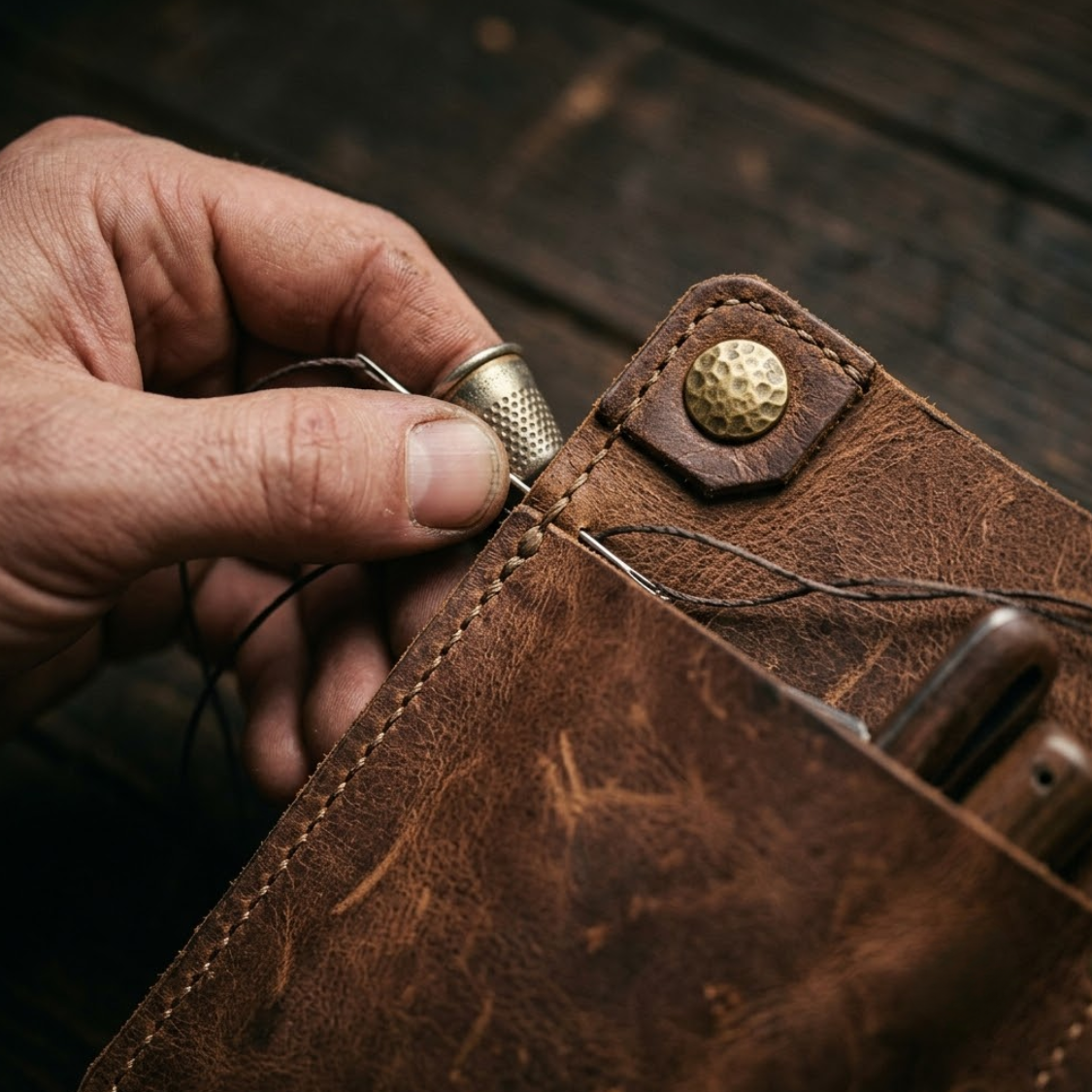
- Saddle stitching, not machine chain stitching. A saddle stitch uses two needles and locks each stitch independently, so if one thread fails the seam does not unravel.
- Riveted stress points. Pocket corners and strap anchors should be reinforced with metal rivets, not stitching alone, since stitching is the first thing to fail under repeated tool weight.
- Pocket layout built for the actual tools of the trade. A carpenter needs deep, wide pockets for a hammer and tape measure, a barista needs a slim pocket for a pen and thermometer.
- Adjustable neck and waist straps. Bodies and layers change by season, a fixed strap that fits in July will not fit over a jacket in January.
- Edge finishing. Burnished or bound edges resist fraying, raw cut edges will curl and split with repeated washing and flexing.
Which Leather Weight Fits Which Kind of Work?
The table below groups Rove Leather’s eleven trade apron styles by the hide weight each category is built around, and the specific job that weight is doing for the wearer.
| Trade Group | Typical Hide Weight | What the Weight Is For |
|---|---|---|
| Welding and Blacksmithing | 8 to 10 oz, heavy | Spark deflection and sustained heat resistance |
| Carpentry and Butchery | 6 to 8 oz, medium heavy | Tool weight capacity and blade resistance |
| BBQ, Bar, and Gardening | 5 to 7 oz, medium | Coverage and stain resistance without restricting movement |
| Barista, Barber, Cooking, and Artistry | 3 to 5 oz, light medium | All day comfort and flexibility during long shifts |
Common Mistakes When Buying a Leather Apron and How to Avoid Them
- Buying by looks instead of hide weight. A dark, distressed finish can disguise a thin split leather. Always check the stated ounce weight before checking the color.
- Choosing a one size fits all apron. Pocket depth, strap length, and total coverage should change based on trade, a bartender does not need blacksmith length coverage and a welder should never wear a short cropped apron.
- Ignoring pocket placement. A pocket in the wrong spot gets in the way of exactly the motion the trade requires most, reaching for a tool should not mean reaching across the body.
- Skipping the strap hardware check. Cheap pot metal buckles corrode fast under sweat and heat, solid brass or steel hardware holds up for years longer.
- Assuming all leather ages the same way. Full grain leather develops a patina and gets better looking with wear, split leather with a corrected finish just wears out.
Which Leather Apron Style Fits Which Trade?
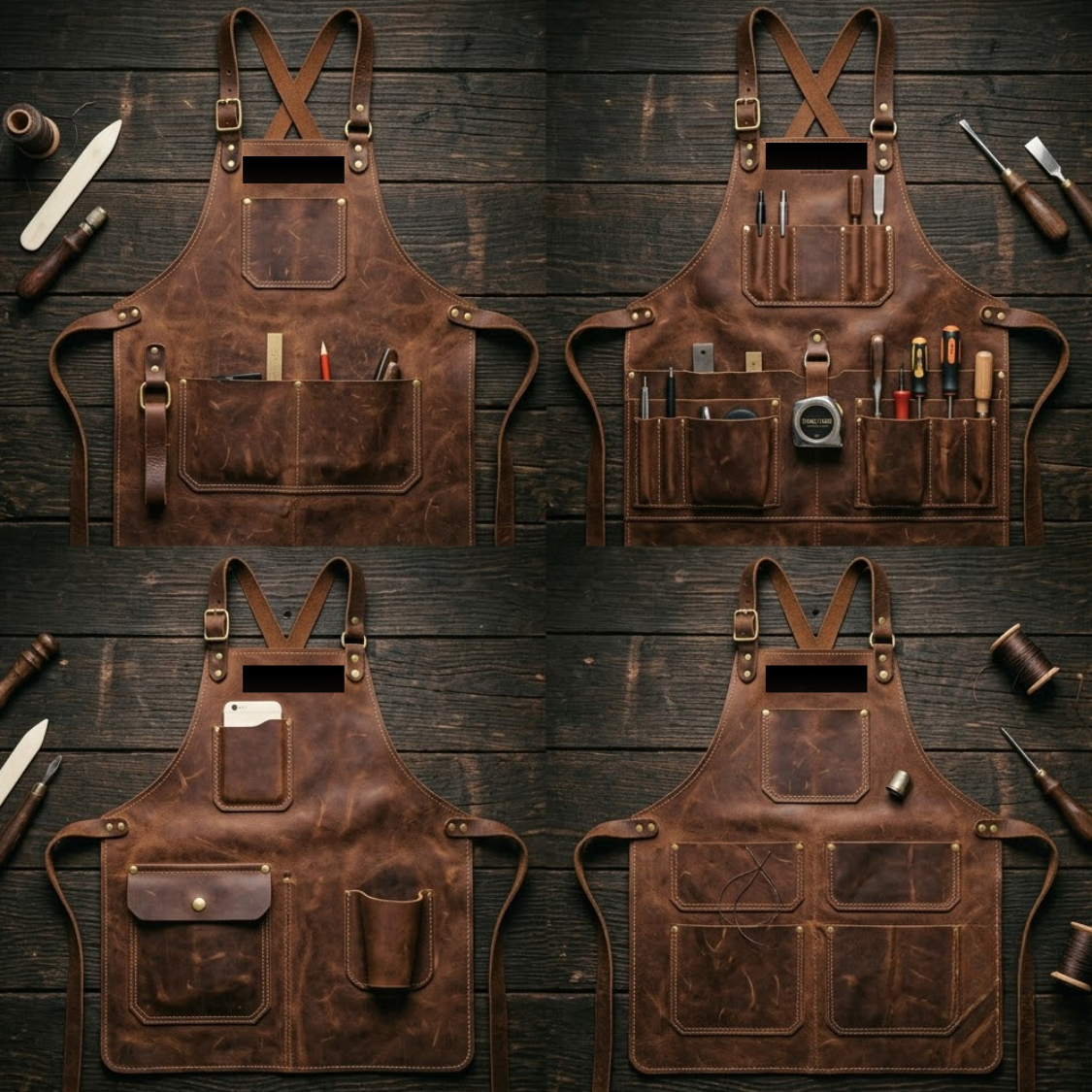
Rove Leather builds eleven distinct apron styles, one per trade, rather than a single generic cut sold across every category. Here is what each one is actually built to do.
Blacksmith Aprons
Full length, heavy weight coverage built to shrug off sparks and radiant heat at the forge. Explore Blacksmith Aprons at Rove Leather.
Welding Aprons
Full coverage, heat resistant cut with reinforced tool pockets for the heaviest spark and slag exposure on the shop floor. Explore Welding Aprons at Rove Leather.
Carpentry Aprons
Multi pocket layout built around the actual tool set a carpenter carries all day, from a tape measure to a full sized hammer. Explore Carpentry Aprons at Rove Leather.
Butchery Aprons
Dense, blade resistant hide with a buckle waist built for fast on and off changes between cuts. Explore Butchery Aprons at Rove Leather.
BBQ Aprons
Medium weight, stain resistant coverage with a single utility pocket for tongs and a thermometer at the grill. Explore BBQ Aprons at Rove Leather.
Bar Aprons
A shorter, tool pocketed cut built for movement behind a bar during a long service shift. Explore Bar Aprons at Rove Leather.
Cooking Aprons
A neck strap chef cut with a divided front pocket, built for kitchen heat without the bulk of a full trade apron. Explore Cooking Aprons at Rove Leather.
Barista Aprons
Lightweight, tie waist construction with slim tool pockets built for hours on a café floor. Explore Barista Aprons at Rove Leather.
Barber Aprons
A trim, organized cut with dedicated pockets for shears, clippers, and combs within easy reach of the chair. Explore Barber Aprons at Rove Leather.
Artistry Aprons
A multi pocket layout built for brushes, palette knives, and small tools, light enough for studio hours at the easel. Explore Artistry Aprons at Rove Leather.
Gardening Aprons
A loop neck, tool pocketed cut built to resist soil and moisture while carrying hand tools around the yard. Explore Gardening Aprons at Rove Leather.
Why Does the Leather Apron Still Matter Today?
Synthetic and rubberized alternatives exist for nearly every trade an apron protects, and in a few narrow cases, like acid handling, they are the correct choice. But for heat, blade, and general abrasion work, leather still outperforms most synthetics on the two things that matter most over years of use: it resists puncture and heat better than woven fabric, and it improves with wear instead of degrading. A synthetic apron gets replaced. A full grain leather apron gets broken in.
That durability is also why the trade specific approach matters more than it looks like it should. An apron cut for the wrong job either fails to protect where it needs to, or it protects in places that never needed protecting while getting in the way of the motions the job actually requires. Matching hide weight and pocket layout to the trade is not a styling choice, it is the entire point of wearing one.
Men’s Brown Leather Apron – Blacksmith Work Apron
Built from a heavier hide weight designed for sustained forge heat and spark exposure, this apron follows the same full length, chest to knee coverage that has defined the blacksmith silhouette since the trade first adopted leather protection centuries ago. The construction favors coverage and durability over cropped styling.
What sets it apart within the blacksmith category is a straightforward, low bulk pocket layout that stays out of the way during hammer work, paired with an adjustable neck strap that accommodates layered clothing through cold shop conditions.
Best suited for smiths, farriers, and anyone working consistently close to open flame or hot metal. Free shipping and 14 day returns on all orders from Rove Leather.
Men’s Crazy Horse Leather Carpenter Apron with 7 Pocket Tool Organization
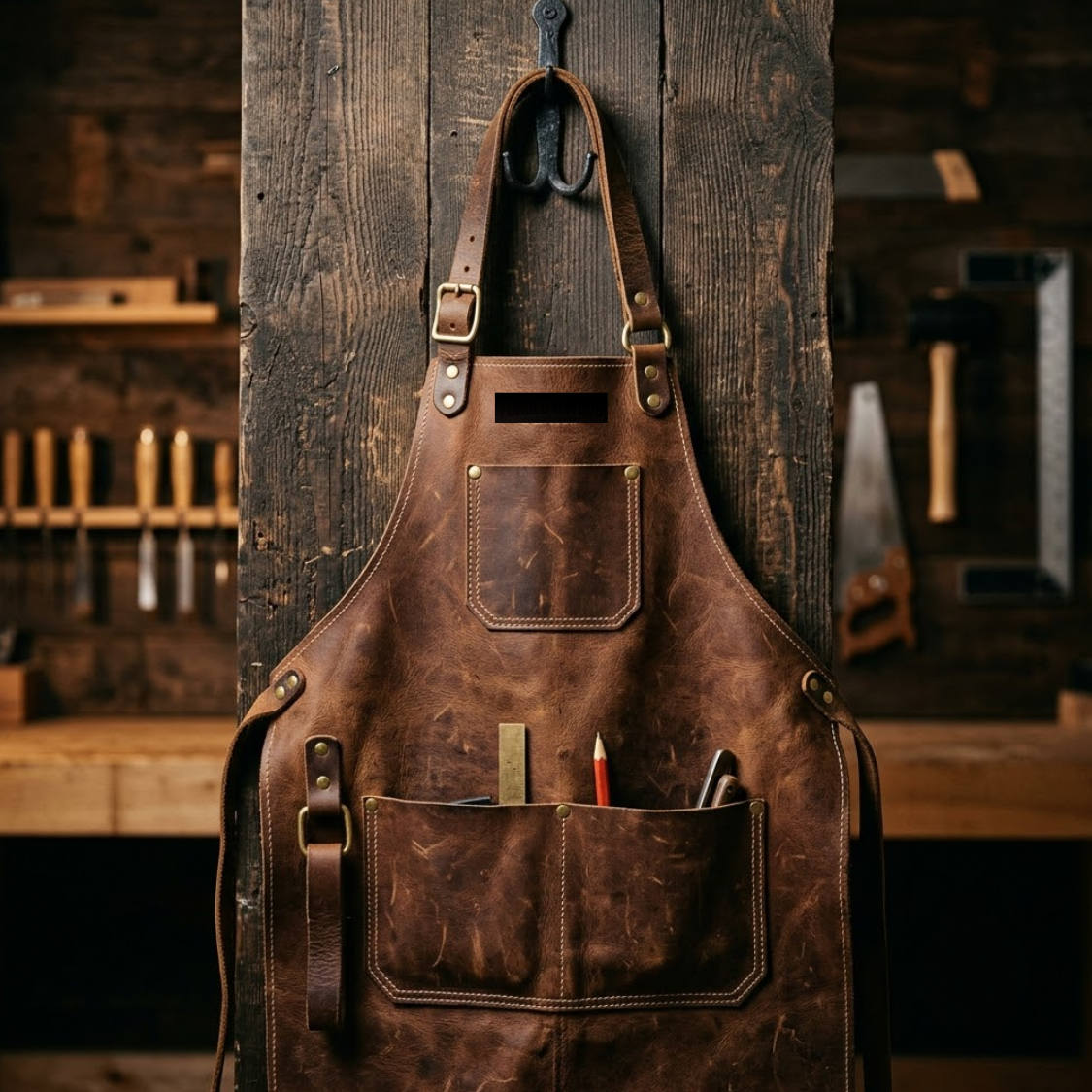
Crazy horse leather is a full grain hide finished with a pull up wax coating, which means it lightens slightly when flexed or scratched, then settles back with wear. On a carpentry apron that translates into visible, honest aging rather than a finish that just looks damaged.
The seven pocket layout is the real story here, sized specifically for a tape measure, a full sized hammer, pencils, and small fasteners, matching the actual standards discussed above for tool capacity and blade resistant density.
Best suited for carpenters, framers, and woodworkers who carry a full tool loadout through the day. Free shipping and 14 day returns on all orders from Rove Leather.
Dark Espresso Leather Barista Apron with Tie Waist and Tool Pockets
Built from a noticeably lighter hide weight than the trade aprons above, matched to the standard set earlier for all day comfort roles. The tie waist construction allows for quick adjustment between shifts and body types without any hardware to catch on equipment.
Where it distinguishes itself within the barista category is a slim front pocket sized correctly for a pen and a small notepad or thermometer, rather than the oversized tool pockets a heavier trade apron would carry.
Best suited for baristas, bartenders, and counter service roles that need hours of comfort over raw protection. Free shipping and 14 day returns on all orders from Rove Leather.
Frequently Asked Questions — Leather Aprons
The most common questions buyers ask about leather aprons, answered directly.
- Match hide weight to the hazard: heavy 8 to 10 ounce leather for heat and sparks, lighter 3 to 5 ounce leather for all day comfort roles.
- Full grain leather is non negotiable for trade use: split leather looks similar new but cracks and wears out far faster under daily conditions.
- Pocket layout should follow the actual tools of the trade: a generic pocket arrangement gets in the way instead of helping.
A leather apron is one of the few pieces of workwear that has stayed functionally the same for centuries, because the underlying problem it solves, protecting a person’s body while their hands stay free to work, has never really changed. What has changed is how specific the solution has become, with hide weight, pocket layout, and stitching now tuned to the exact demands of each trade rather than sold as one shape fits all.
That is the standard every apron on this page is built to. Whether the job is forging steel or pulling espresso shots, the right leather apron should disappear into the work rather than get in the way of it, and that starts with choosing the weight, grain, and pocket layout built for the trade in front of you.
Shop Aprons at Rove Leather
Full grain leather · Free shipping · 14 day returns