Full Grain Leather Jacket vs Top Grain vs Genuine Leather: What Is the Difference?
Three names that sound similar and mean completely different things for how long your jacket lasts.
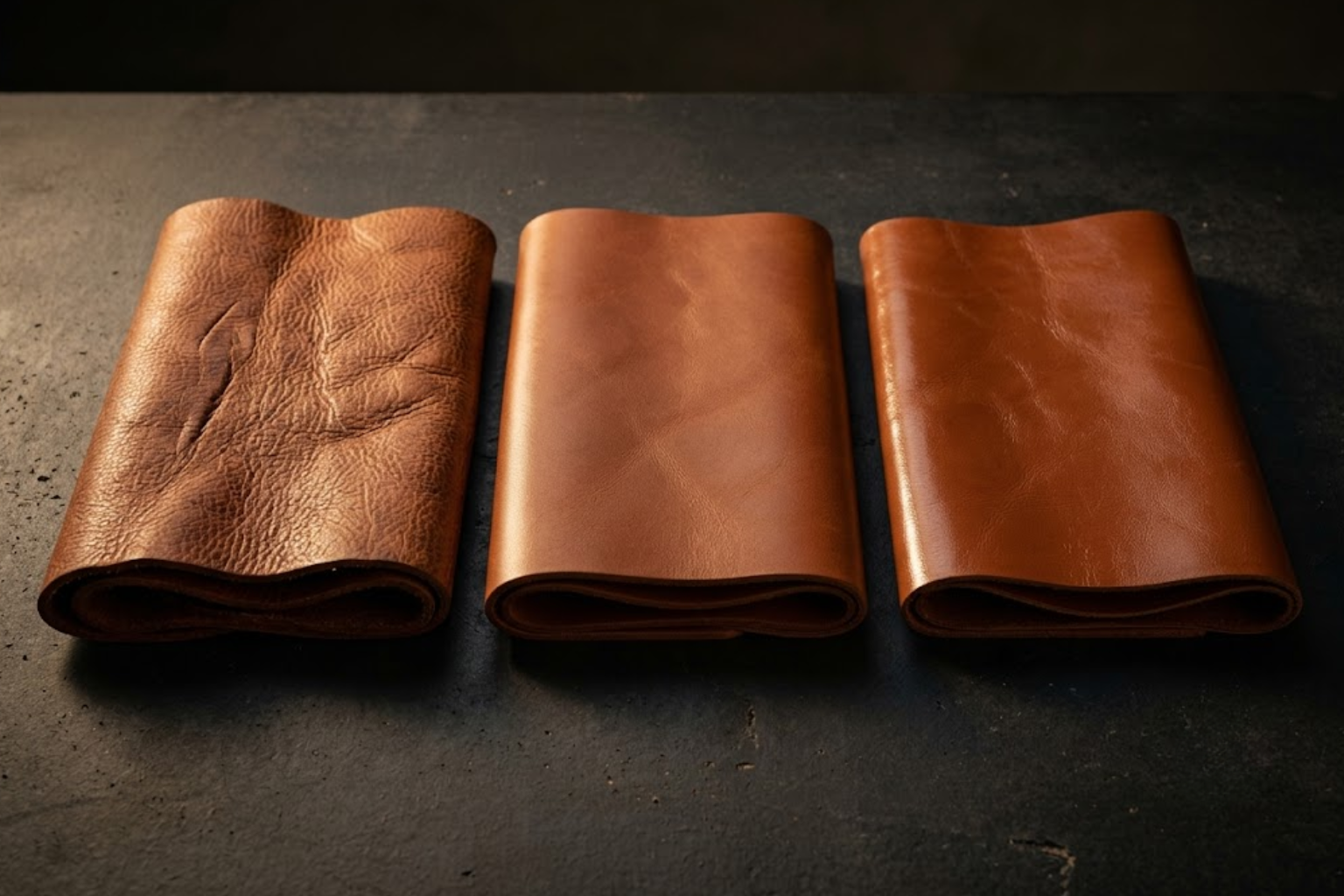
A full grain leather jacket uses the entire top layer of the hide with its natural grain left untouched, making it the strongest and most durable option available. Top grain leather takes that same layer but sands and buffs away surface imperfections before applying a finish coat, trading some durability for a smoother, more uniform look. Genuine leather, despite the reassuring name, is actually the lowest common grade on the market, typically made from a lower split of the hide with a coating applied to disguise the difference. Rove Leather builds its jackets around real hide construction rather than the marketing name printed on the tag.
What Is Full Grain Leather?
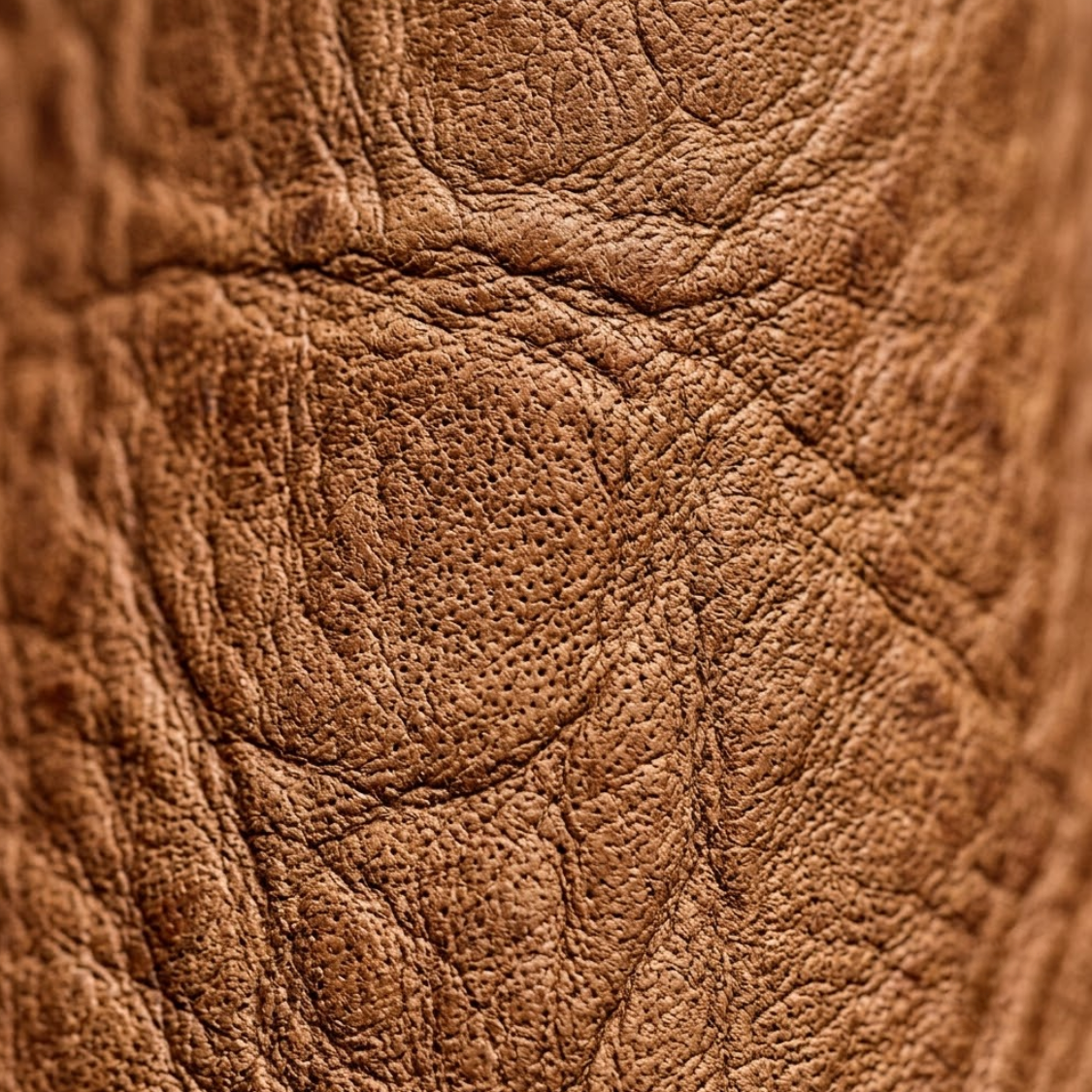
Full grain leather is the top layer of the animal hide, used exactly as nature made it, with no sanding, buffing, or surface correction applied. This layer contains the tightest fiber structure on the entire hide, because it comes directly from the outer skin that once protected the animal from the elements. Every natural mark, from subtle wrinkles to fine scarring, stays visible, because removing them would mean removing the very fibers that give the leather its strength.
This is why full grain is the standard against which every other grade gets measured. The tight, unbroken fiber weave resists tearing, holds its shape under stress, and develops a patina, a gradual darkening and softening of the surface, as it absorbs oils from wear and exposure to light. A full grain jacket generally starts stiffer than lower grades and only improves with time, which is the opposite of how most consumer goods behave.
What Is Top Grain Leather?
Top grain leather starts from the same layer as full grain, but the surface is lightly sanded to remove natural imperfections, then coated with a polymer or pigmented finish to create a smoother, more consistent appearance. This process is called corrected grain, and it is why top grain leather looks noticeably more uniform on a shelf than full grain leather does.
The tradeoff is real. Sanding removes a portion of the tightest, strongest fibers at the very surface of the hide, so top grain leather is thinner and somewhat less durable than full grain, even though it remains a genuine, high quality hide product. It resists staining better in the short term because of the applied finish, and it costs less to produce, which is why top grain shows up frequently in mid tier jackets, bags, and upholstery. It will not develop the same deep, organic patina as full grain, since the finish coat sits between the leather fibers and the air, light, and oils that create that aging process.
What Is Genuine Leather, and Why Is the Name Misleading?
Genuine leather is the most misunderstood term in the entire industry, because it sounds like a guarantee of quality when it actually describes the opposite. The word simply means the product is made from real animal hide rather than synthetic material. It says nothing about which layer of the hide was used or how it was processed.
In practice, genuine leather is most often made from a lower split of the hide, the layer beneath the grain that lacks the tight natural fiber structure. Manufacturers then apply a plastic coating and stamp a synthetic grain pattern onto the surface to make it resemble higher grades. It is weaker, thinner, and far more prone to cracking and peeling than full grain or top grain leather, and it will not develop a patina because the surface is not real hide grain to begin with.
- Full grain and top grain both use the grain layer, the strongest part of the hide.
- Genuine leather typically uses a split layer, coated to imitate the grain layer’s appearance.
- Bonded leather, an even lower tier sometimes confused with genuine leather, is made from scrap leather fibers bonded together with adhesive onto a fabric backing.
Full Grain vs Top Grain vs Genuine: What Is the Real Difference?
Side by side, the three grades separate cleanly once you know what to look for. The table below breaks down the practical differences a buyer actually feels when wearing the jacket.
| Attribute | Full Grain | Top Grain | Genuine Leather |
|---|---|---|---|
| Grain layer | Entire natural layer, untouched | Sanded and corrected | Usually a split, coated to imitate grain |
| Durability | Highest, tightest fiber structure | High, slightly reduced by sanding | Lowest, prone to cracking and peeling |
| Patina over time | Develops rich, natural patina | Minimal, finish coat limits aging | None, surface is coated or synthetic looking |
| Surface feel | Natural, slightly irregular | Smooth and uniform | Plastic like, stiff |
| Best suited for | Heritage jackets meant to last decades | Structured everyday jackets and bags | Entry price point items only |
What Makes a Quality Leather Jacket? Expert Standards
Grade is the foundation, but it is not the only signal of quality. A full grain hide can still be ruined by poor construction, and a well built top grain jacket can outperform a badly made full grain one. When evaluating any jacket, look past the leather grade to these construction details as well.
- Stitch density and pattern: tight, even stitching along stress points like the shoulders and cuffs, ideally with flat felled or lock stitched seams.
- Hardware quality: metal zippers and snaps that feel solid, resist sticking, and are set into the leather rather than glued on top of it.
- Panel consistency: matching grain and color across panels, which signals the hide was cut and matched deliberately rather than pieced together from scraps.
- Lining construction: a lining that is stitched into the seams rather than simply glued, so it does not separate from the shell after repeated wear.
Common Mistakes When Buying a Leather Jacket and How to Avoid Them
Most buyers do not get misled by dishonest sellers so much as by vague language that everyone in the industry has simply come to accept. These are the mistakes that cost people the most money over the life of a jacket.
- Trusting the word “genuine” as a quality signal. Always ask which specific grade the leather is, full grain, top grain, or a lower split, since “genuine” alone tells you nothing about durability.
- Judging leather by how smooth it looks in a photo. A perfectly uniform surface is often a sign of heavy correction or coating, not superior quality.
- Ignoring the lining and stitching. A high grade hide poorly assembled will fail faster than a well constructed jacket in a slightly lower grade.
- Assuming price always equals grade. Markup varies enormously by brand, so price is a weak substitute for actually confirming the leather grade and construction details.
Why Does Leather Grade Still Matter Today?
Synthetic alternatives have gotten better at imitating the look of leather, but they still cannot replicate how full grain hide ages, breathes, or holds up to decades of use. Leather grade determines whether a jacket becomes a lifelong piece or a seasonal one, and that distinction has only grown more relevant as fast fashion has made short lived, low grade leather goods more common.
Understanding the difference between full grain, top grain, and genuine leather is not a niche detail for collectors. It is the single most useful piece of information a buyer can have before spending real money on a jacket, because it directly predicts how the garment will look and perform five or ten years from now.
Vantage Men’s Black Leather Biker Jacket
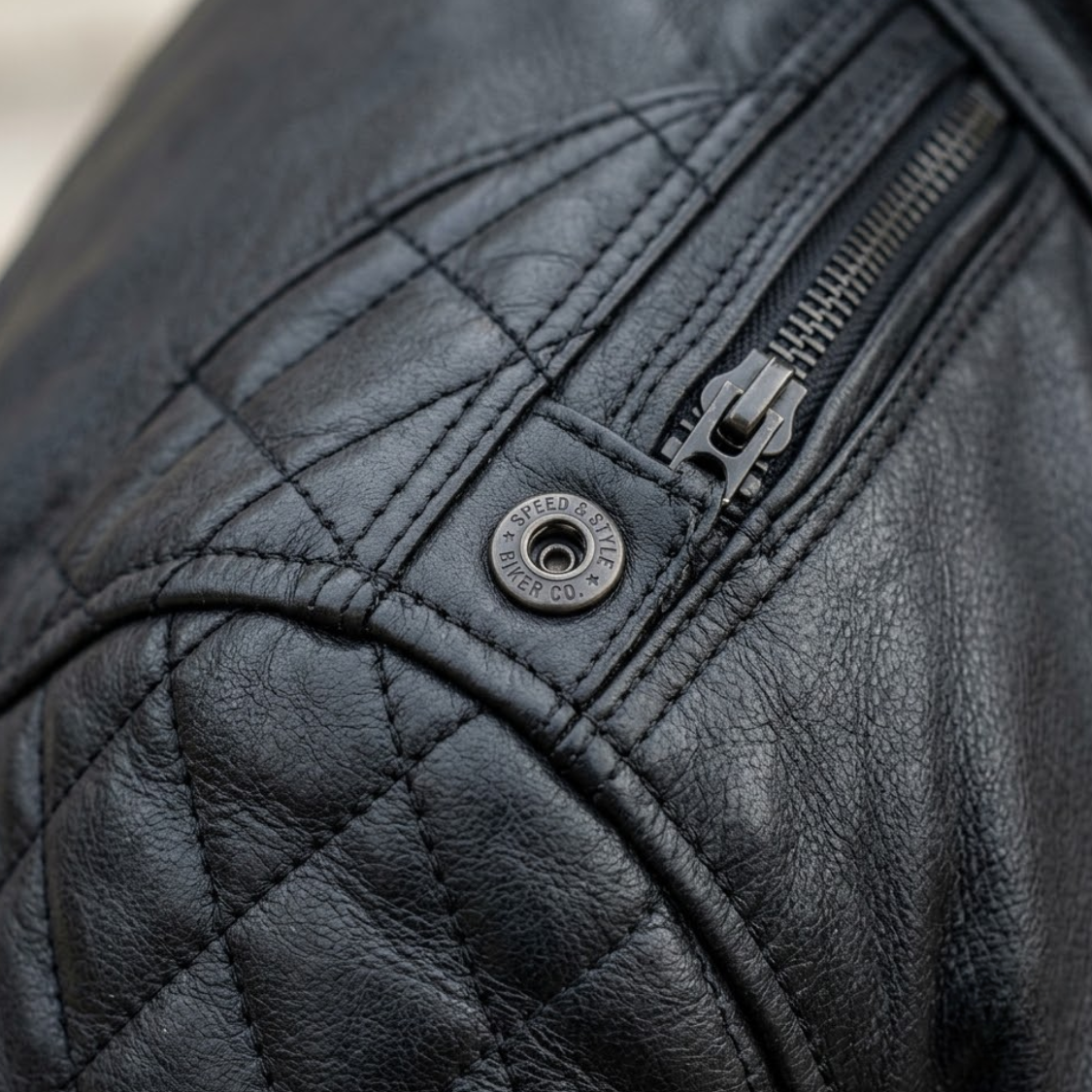
The Vantage is a clear example of how construction quality shows up in a finished jacket. Built from a smooth, tight grain leather hide, it holds its jet black surface consistently and takes on definition at the elbows and chest with wear, exactly the kind of natural break in described earlier in the What Is Full Grain Leather and What Makes a Quality Leather Jacket sections above.
The diamond quilted shoulder panels are stitched into the hide itself rather than layered over separate padding, reinforcing the exact stress points discussed in the construction standards section. The mandarin collar, asymmetric chest zips, and gunmetal hardware are functional design choices, not decorative ones, which is the same standard this article recommends looking for in any jacket purchase.
It suits a buyer who wants a single jacket that works from a morning commute to a dinner out without needing to explain the choice either way. Every order ships with free shipping and a 14 day return window from Rove Leather.
Frequently Asked Questions — Leather Grades
The most common questions buyers ask about full grain, top grain, and genuine leather, answered directly.
- Full grain is the strongest grade: it uses the entire natural grain layer untouched and develops a genuine patina over years of wear.
- Top grain is a legitimate middle tier: sanded and finished for a smoother look, with less long term character but real hide durability.
- Genuine leather is a marketing term, not a quality guarantee: it usually refers to a lower split layer coated to resemble higher grades.
Choosing between full grain, top grain, and genuine leather ultimately comes down to what a buyer values most, whether that is maximum durability and patina, a smoother finished look at a lower cost, or simply the lowest entry price on the market. Once the terminology is understood, the decision stops being about marketing language and starts being about what the jacket is actually made from.
At Rove Leather, every jacket is built around real hide construction and honest material descriptions, so buyers can make that decision with full information rather than guesswork.
Shop Leather Jackets at Rove Leather
Genuine hide construction · Free shipping · 14 day returns