

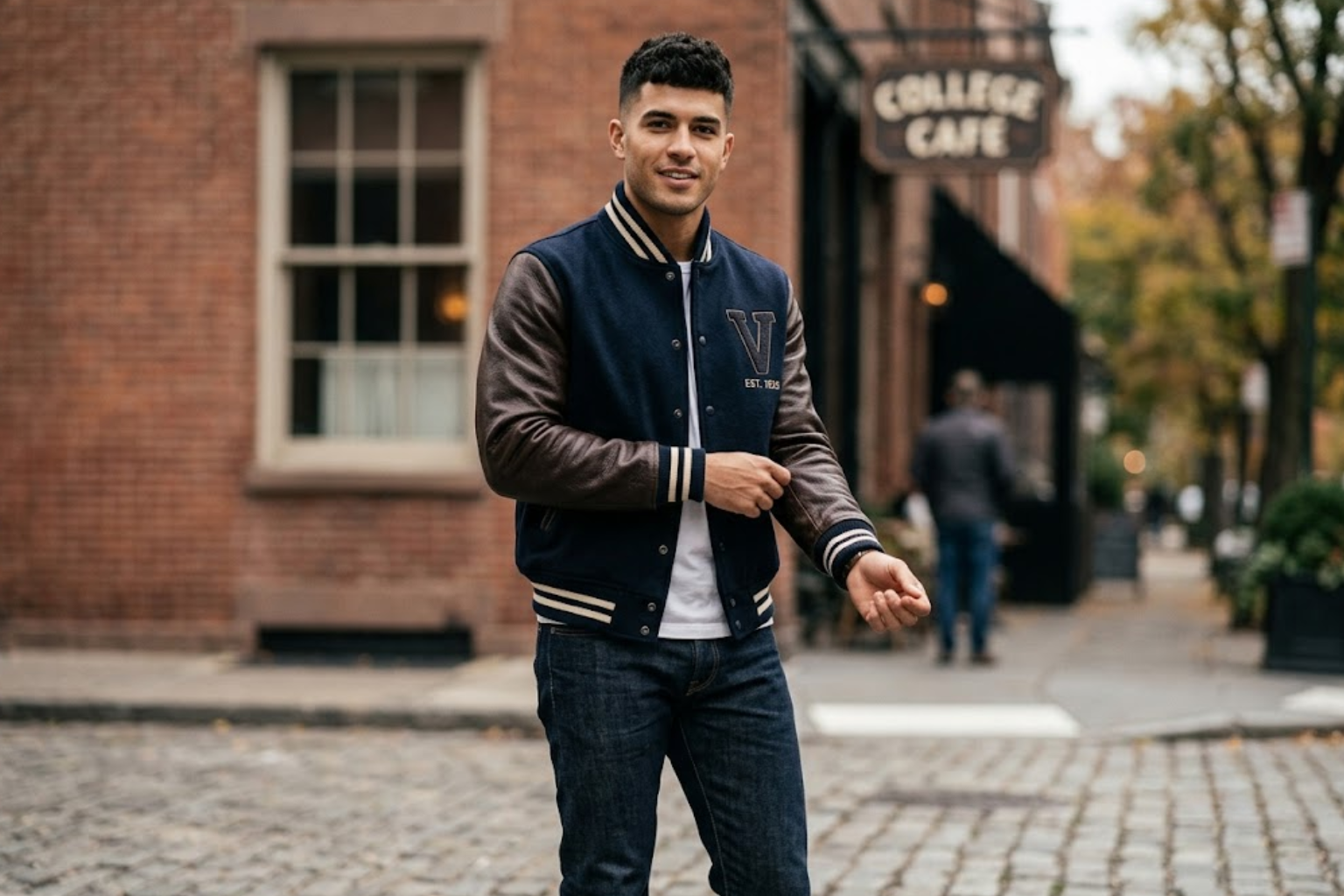
Leather Varsity Jacket: History, Styles, and Why It Is Back in 2026
From a Harvard baseball sweater in 1865 to the streetwear staple it is today, here is how to read a leather varsity jacket and buy one that actually holds up.
A leather varsity jacket is a full leather or leather sleeved version of the classic American letterman jacket, a garment that traces back to 1865 when Harvard University’s baseball team began sewing large wool letters onto their uniforms to mark team membership. By 1930, the jacket had taken the shape most people recognize today, a wool or leather body, contrasting leather sleeves, a ribbed collar, cuffs, and hem, and a snap button front. The all leather version swaps the wool body for a second panel of hide, trading campus tradition for a heavier, more durable silhouette that has made the leather varsity jacket one of the defining pieces of 2026 streetwear. Rove Leather builds both men’s and women’s leather varsity styles in full grain leather.
What Is a Leather Varsity Jacket?
A leather varsity jacket is a hip length jacket built around the classic letterman silhouette, a boxy body, ribbed knit collar, cuffs, and hem, and a snap button front, constructed either fully in leather or with leather sleeves against a contrasting body. The shape has stayed almost unchanged since the 1930s, which is exactly why it reads as instantly recognizable no matter what material updates it.
What separates a genuine leather varsity jacket from a costume version comes down to three things: the grade of leather used, whether the ribbing is real knit or a printed imitation, and whether the snap hardware is solid metal or plastic dressed to look like it. Rove Leather builds both men’s and women’s leather varsity jackets to the same full grain standard used across the rest of the catalog.

Where Did the Varsity Jacket Come From?
The story starts in 1865, when Harvard University’s baseball team needed a simple way to mark its official players apart from casual and club level participants. The solution was a thick wool sweater with a large letter H sewn onto the chest, worn only by players who had earned a spot on the team. That single sewn letter is the direct root of the word letterman, and it spread quickly. Harvard’s football team adopted the same tradition around 1875, and other Ivy League schools followed within a few decades, each attaching its own school letter and colors to the same basic idea.
For the next several decades the garment stayed close to its original form, a heavy wool sweater or cardigan. The version most people picture today, a fitted jacket with a snap front, ribbed trim, and contrasting sleeves, did not fully arrive until athletes began asking for something warmer and more structured than a knit sweater.
How Did the Varsity Jacket Become an All Leather Style?
Once the 1930 wool and leather combination became the standard, leather sleeves stopped being decoration and started being function, they resisted wind, held their shape, and aged better than the wool body around them. It was a short step from there to jackets built entirely from leather, favored first by aviators and motorcyclists who wanted the same silhouette with more durability and weather resistance than a wool panel could offer.
The jacket’s second major expansion came through pop culture rather than campus tradition. Through the mid to late 1900s, the varsity silhouette moved from strictly athletic wear into film, music, and street style, carried well beyond its collegiate origin by musicians, actors, and eventually hip hop and skate culture, each era pushing the jacket toward bolder colors, fully leather builds, and looser, more casual fits.
Leather Varsity vs Wool Body Varsity: What Is the Real Difference?
Both versions share the same silhouette, but they behave completely differently in daily wear.
- Wool body, leather sleeves. The traditional campus build, lighter overall, closer to the 1930 original, and best suited to cooler but not harsh conditions.
- Full leather varsity. Heavier, more weather resistant, and considerably more durable over years of regular wear, since leather resists abrasion and wind far better than wool.
- Full leather jackets develop a patina with age rather than pilling or thinning at the elbows the way a wool body eventually does.
For anyone shopping the leather varsity category specifically for its durability and street style presence rather than pure campus nostalgia, the full leather build is the stronger long term choice.
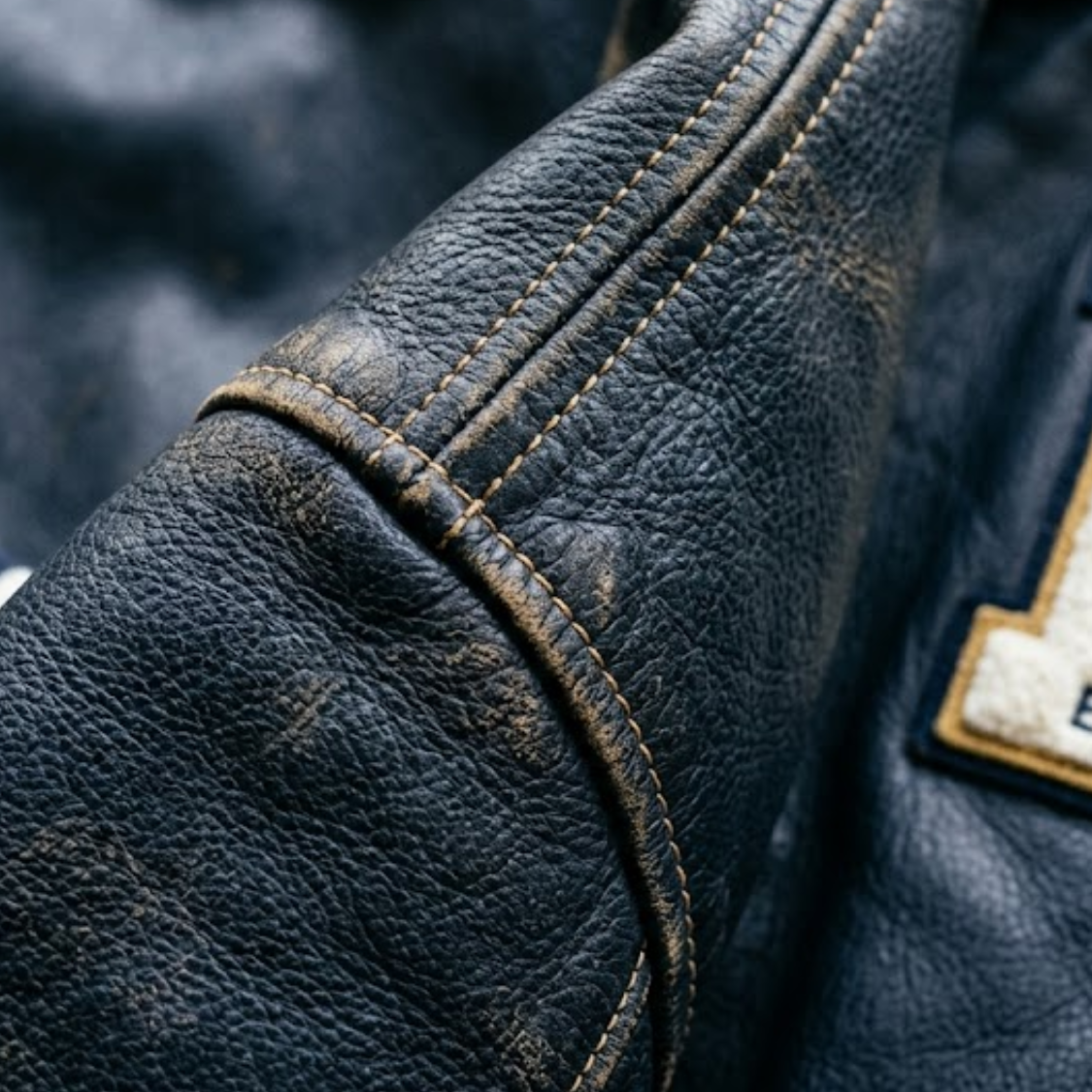
What Makes a Quality Leather Varsity Jacket? Expert Standards
- Full grain leather body and sleeves. Full grain resists cracking and develops a patina, where a lower grade split or bonded leather cracks and peels within a season.
- Real ribbed knit trim. Genuine ribbing on the collar, cuffs, and hem holds its shape and stretch over years, printed or bonded imitation trim loses elasticity fast.
- Solid snap hardware. Metal snaps should seat firmly with a clean click, not a loose or shallow catch that will pop open under movement.
- Reinforced shoulder and sleeve seams. This is the highest stress area on the entire jacket and the first place a poorly built one will fail.
- A true boxy, not oversized, body. The varsity silhouette is meant to sit close through the shoulders and drop straight at the hem, an overly slouchy cut reads as a knockoff rather than the original shape.
- Consistent color and grain across both panels. On a two tone build, the body and sleeve leather should be tanned and finished to match, mismatched sheen is a sign of mixed leather grades.
Common Mistakes When Buying a Leather Varsity Jacket and How to Avoid Them
- Buying by color alone. A striking colorway does not tell you anything about leather grade, always check the material description before the finish.
- Ignoring the ribbing. Cheap acrylic trim loses its stretch within months, real ribbed knit is worth checking closely in product photos and descriptions.
- Choosing the wrong body type for the climate. A full leather build runs warmer and blocks wind better than a wool body version, pick based on how and where the jacket will actually be worn.
- Sizing for a slouchy fit. The varsity jacket is meant to sit structured through the shoulder, sizing up for an oversized look changes the entire silhouette and drapes the ribbing incorrectly.
- Overlooking the lining. A jacket built for daily wear needs a smooth, durable lining that will not bunch or tear with repeated on and off wear.
Men’s vs Women’s Leather Varsity Jackets: What Changes in the Fit?
The core construction, ribbed trim, snap front, contrasting sleeves, stays identical across gendered lines, but fit and proportion shift in a few consistent ways. Men’s leather varsity jackets are typically cut with a slightly boxier shoulder and a straighter body line, following the original athletic silhouette closely. Women’s leather varsity jackets are usually tailored with a more fitted waist and a shorter overall body length, softening the boxy 1930s shape into something closer to a cropped silhouette.
Neither version changes the core standards from the section above, hide quality, ribbing quality, and hardware still matter equally regardless of the fit the jacket is cut around.
| Style | Construction | Best For |
|---|---|---|
| Classic Letterman | Wool body, leather sleeves, chenille letter patch | Heritage campus styling and cooler mild weather |
| Full Leather Varsity | Full grain leather body and sleeves, ribbed knit trim | Streetwear, daily wear, and cold or windy climates |
| Two Tone Leather Varsity | Contrasting leather body and sleeve colors, snap front | Statement layering over simple base pieces |
Why Is the Leather Varsity Jacket Back in 2026?
Trend cycles in menswear and womenswear tend to return to pieces with genuine cultural depth rather than pieces invented purely for a season, and the varsity jacket has 150 plus years of continuous relevance behind it. What is different in its current run is the shift toward full leather builds over the traditional wool body, a change driven by streetwear’s preference for heavier, more durable materials over campus grade wool.
That durability is also a practical argument, not just an aesthetic one. A full grain leather varsity jacket handles daily wear, weather, and years of use better than the wool original ever could, which is exactly why a garment born on a baseball field in 1865 still makes sense as a everyday jacket in 2026.
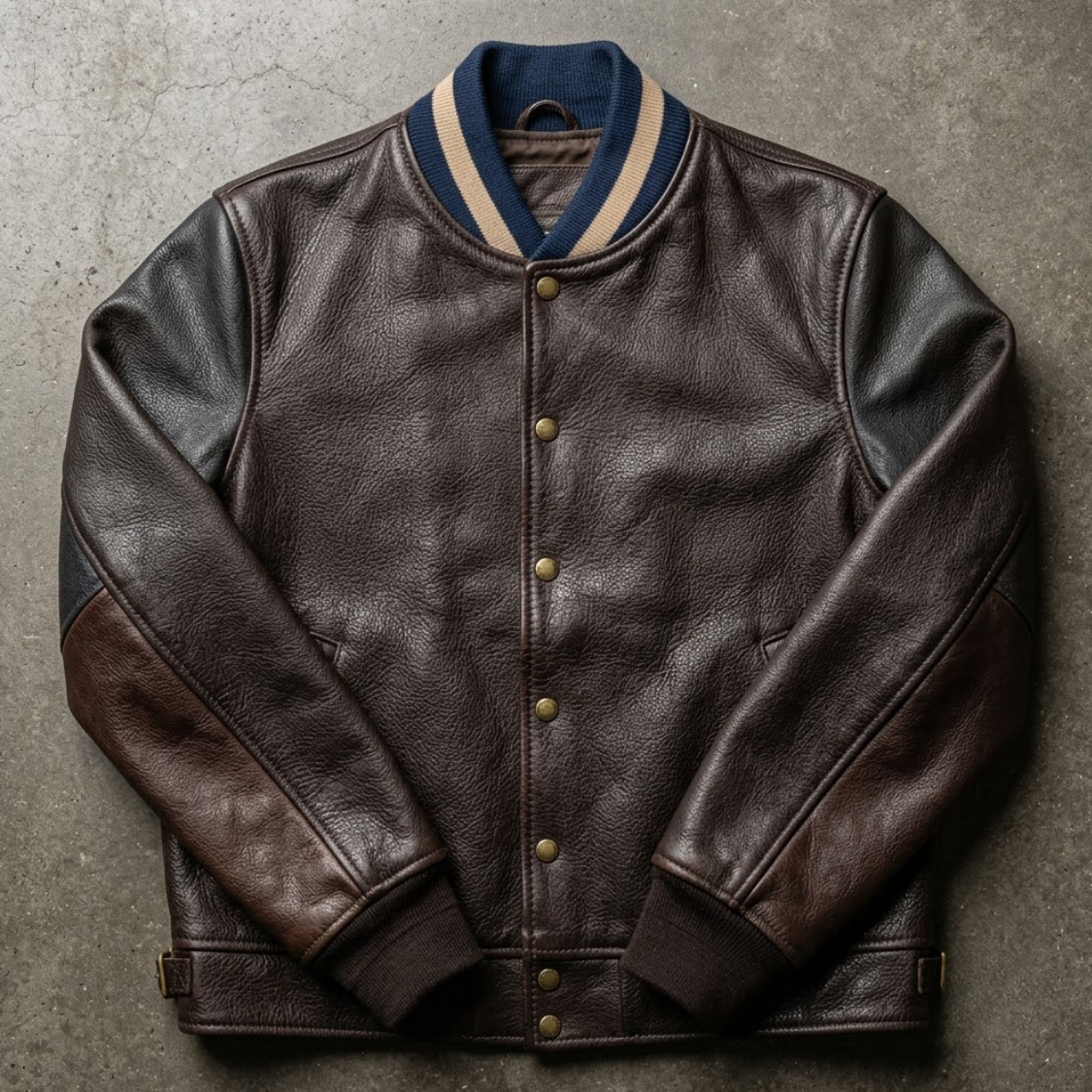
Halcyon Men’s Cream Leather Varsity Bomber Jacket – Genuine Leather Navy Stripe
Built in full grain leather with a cream body and navy stripe detailing, this jacket follows the same boxy, structured shoulder line that has defined the varsity silhouette since the 1930 redesign. The ribbed collar, cuffs, and hem are genuine knit rather than a printed imitation, matching the trim standard covered above.
What distinguishes it within the men’s category is the two tone panel construction, which keeps the classic varsity color blocking without leaning on a separate wool body, giving it the durability of a full leather build while still reading as an authentic letterman silhouette.
Best suited for anyone who wants the traditional varsity look built for daily wear rather than occasional campus nostalgia. Free shipping and 14 day returns on all orders from Rove Leather.
Alabaster Women’s White Leather Varsity
A full grain white leather build that keeps the classic boxy varsity shoulder while shortening the body length into a more fitted, cropped silhouette, exactly the shift discussed above between men’s and women’s cuts. The white finish highlights grain consistency, which is one of the clearest signs of full grain quality on a light colored hide.
Where it stands apart in the women’s category is proportion, the waist and hem are tailored closer to the body than a traditional oversized letterman fit, while still keeping the ribbed collar, cuffs, and snap front intact.
Best suited for anyone wanting the varsity silhouette in a fitted, elevated cut rather than a slouchy oversized shape. Free shipping and 14 day returns on all orders from Rove Leather.
Frequently Asked Questions — Leather Varsity Jackets
The most common questions shoppers ask about leather varsity jackets, answered directly.
- The varsity jacket has genuine 150 plus year history: it began as a wool letter sweater at Harvard in 1865, not as a fashion invention.
- Full leather builds outperform wool body versions in durability: full grain leather resists wind, abrasion, and years of daily wear far better than wool.
- Fit, ribbing, and hardware quality separate a real varsity jacket from a knockoff: check these details before color or styling.
The leather varsity jacket has outlasted almost every other piece of American sportswear because it was never really about the sport to begin with, it was about marking who had earned their place on a team, then later, who had a point of view about how to dress. That same signal, structured shoulders, a bold snap front, contrasting sleeves, still reads the same way on a city sidewalk in 2026 as it did on a Harvard baseball field in 1865.
Choosing a good one now comes down to the same fundamentals it always has, full grain leather, real ribbed trim, and a fit built around the jacket’s original structured shoulder rather than an oversized reinterpretation of it. Whether the fit leans toward the classic men’s silhouette or a shorter, more tailored women’s cut, that is the standard every leather varsity jacket in the Rove Leather catalog is held to.
Shop Varsity Jackets at Rove Leather
Full grain leather · Free shipping · 14 day returns