

Leather BBQ Apron: What Pitmasters Actually Need and What the Grill Marketers Won’t Tell You
An honest breakdown of heat resistance, coverage, and pocket placement, without the marketing gloss that leaves most backyard grillers under protected.
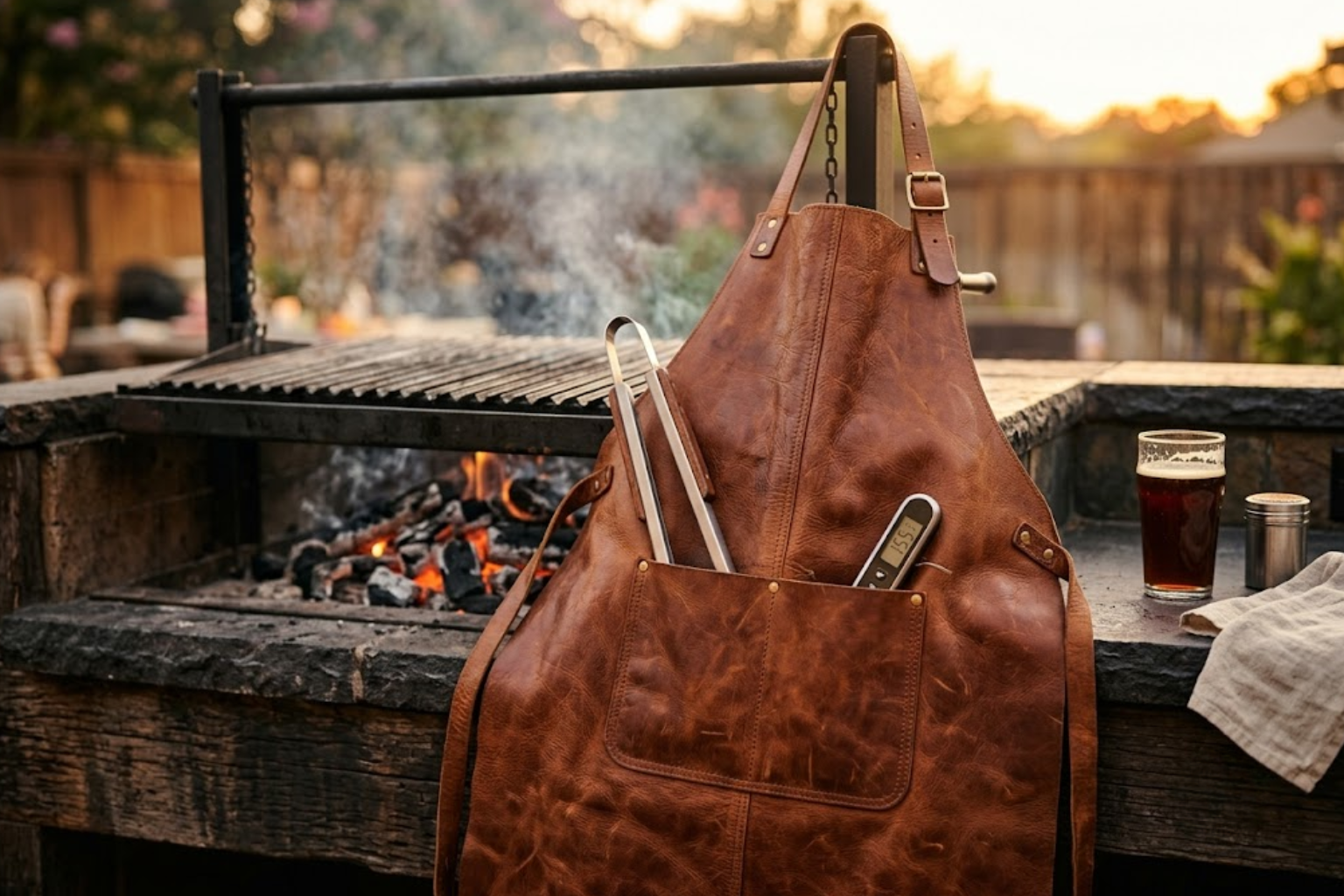
A leather BBQ apron is a grilling apron built from full grain leather, offering wide chest to mid thigh coverage, a large front pocket, and natural resistance to grease and light heat, though it is not rated for direct flame contact the way some marketing implies. The single biggest gap between what is marketed and what pitmasters actually need is honesty about heat exposure, since leather protects against splatter, embers, and radiant heat but is not a substitute for a flame resistant welding apron if you are reaching directly into open fire. Rove Leather builds its BBQ apron from full grain pull up leather designed specifically for outdoor grilling and smoking conditions.
What Is a Leather BBQ Apron?
A leather BBQ apron is a grilling apron built from full grain leather rather than cotton, canvas, or synthetic fabric, designed to cover the chest and thighs during outdoor cooking. Its job is to handle grease splatter, ash, and radiant heat from a grill or smoker, which is a fundamentally different set of conditions than what a kitchen apron or a light cotton grilling apron is built to survive.
The category has grown well beyond backyard cookouts. Competition pitmasters, smokehouse owners, and serious home grillers have all pushed demand for something that survives repeated grease exposure without turning into a stained, stiff mess after a handful of cooks.
What Do Grill Marketers Get Wrong About Heat Resistance?
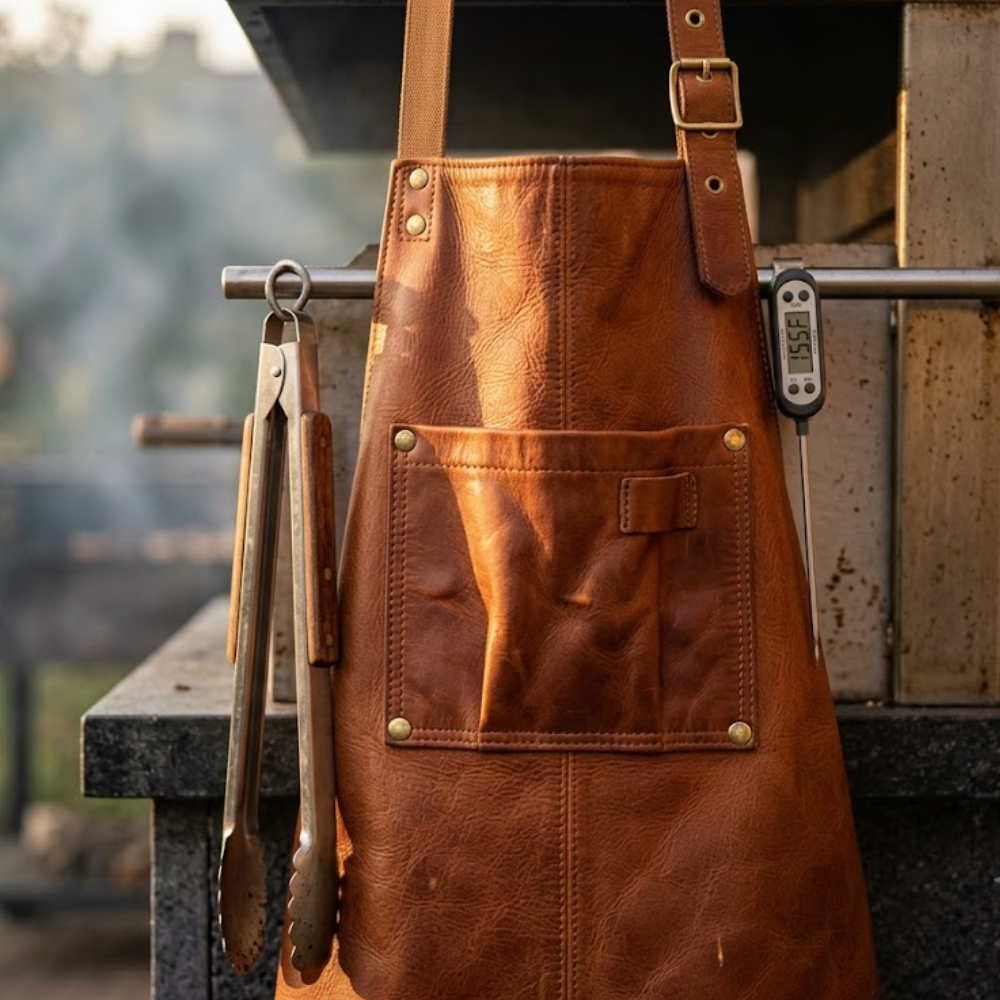
This is where most product listings stretch the truth. Many BBQ apron descriptions use language like heat resistant or flame proof without clarifying what that actually covers, which leaves buyers assuming a level of protection the apron does not provide. Full grain leather is naturally more resistant to heat and grease than fabric, but it is not rated for direct flame contact, and no honest product page should claim otherwise.
What leather is genuinely good at is blocking grease splatter, resisting embers that land and bounce off rather than sit and burn through, and holding up against the sustained radiant heat that comes off a grill or smoker during a normal cook. That is a real and useful form of protection, it is just a different claim than flame proof, and pitmasters deserve the distinction spelled out clearly.
What Coverage Does a Real BBQ Apron Actually Need?
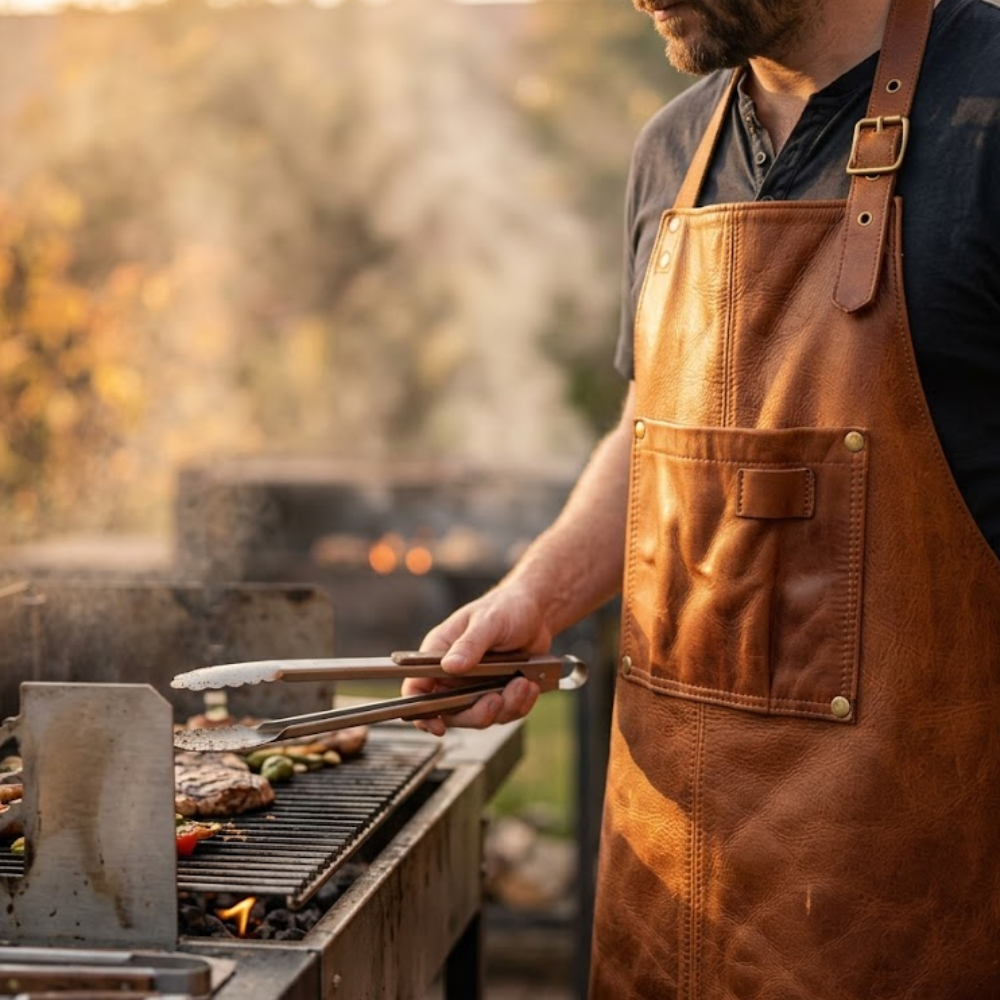
Coverage is the second area where marketing photos can mislead. A cropped, waist length apron photographs well but leaves the thighs exposed to exactly the kind of grease splatter and dripping fat a grill produces. A wide, full bib apron that extends from the chest to mid thigh is what actually protects a griller managing a charcoal kettle, running a smoker at a competition, or standing over a hot grate for hours.
Strap design matters just as much as coverage length. An adjustable neck strap that lets the bib height be set precisely, combined with long tie waist straps rather than a single fixed loop, keeps the apron secure and properly positioned through long cook times rather than riding up or shifting.
| Claim | What It Actually Means |
|---|---|
| Heat resistant | Handles radiant heat and grease splatter, not direct flame contact |
| Full coverage | Should mean chest to mid thigh, not a short waist apron |
| Self healing leather | Light surface scratches rub out with a thumb, not deep cuts or gouges |
| Grease resistant | Wipes clean and camouflages staining, not fully stain proof |
Where Should the Pocket Actually Sit?
Pocket placement gets less attention than it deserves in most reviews, but it changes how usable an apron actually is mid cook. A single large center pocket, positioned below chest height, works better for grilling than several small divided slots, since the tools a griller reaches for most, a thermometer, tongs, a bottle opener, a phone, are bulkier than the fine tools a barber or artist carries.
Reinforcement at the pocket corners matters more here than in almost any other apron category, since a loaded pocket combined with constant bending and reaching over a hot grill puts real, repeated stress on those seams. Rivets at the top corners of the pocket are a simple detail that tells you whether the apron was actually built with grilling in mind.
Full Grain vs Split Leather: Does It Matter for Grilling?
Full grain leather keeps the outer layer of the hide intact, preserving its natural fiber density and giving it real resistance to grease, light moisture, and radiant heat. Split leather, which uses a lower layer of the hide, tends to absorb grease rather than resist it, and can become stiff or brittle faster under repeated heat exposure from a grill or smoker.
For a BBQ apron specifically, pull up leather, a full grain hide finished with waxes and oils, adds a self healing quality against light surface scratches and deepens into a personal patina with repeated grilling sessions, rather than simply looking worn out.
Common Mistakes When Buying a BBQ Apron
- Trusting flame proof or heat resistant claims without qualification. Ask specifically what the apron is rated for, radiant heat and splatter, or genuine direct flame contact.
- Choosing a short, waist length apron for full outdoor cooking. A cropped apron leaves the thighs exposed to exactly the splatter a grill produces.
- Overlooking pocket reinforcement. An unreinforced pocket loaded with a thermometer and tongs will fail at the seams well before the leather itself wears out.
- Buying split leather marketed as premium. Split leather absorbs grease and stiffens faster than full grain, regardless of how the finish looks in photos.
How Do You Care for a Leather BBQ Apron?
Wipe the apron down with a dry cloth after each cook to remove grease, ash, and food debris while the leather is still warm and pliable. For heavier residue, use a slightly damp cloth and let the apron air dry completely before storing it, since trapped moisture is what actually damages leather over time, not brief heat exposure.
Apply a leather conditioner or pull up leather balm every six to eight weeks to keep the hide supple and maintain its surface finish. Store the apron hanging rather than folded, and avoid machine washing or prolonged water exposure at any point.
Why Does the Honest Version of This Guide Matter?
A leather BBQ apron is genuinely one of the better upgrades a serious griller can make, but only if the buying decision is based on what the material actually does rather than marketing language stretched past what it means. Real heat resistance, real full coverage, and a pocket that survives a full season are what separate an apron that lasts from one that gets replaced after a single busy summer.
Knowing the difference between splatter resistance and flame proof, and between full grain and split leather, is what actually determines whether a BBQ apron holds up behind the grill for years.
Men’s Full Grain Leather BBQ Apron with Tool Pocket
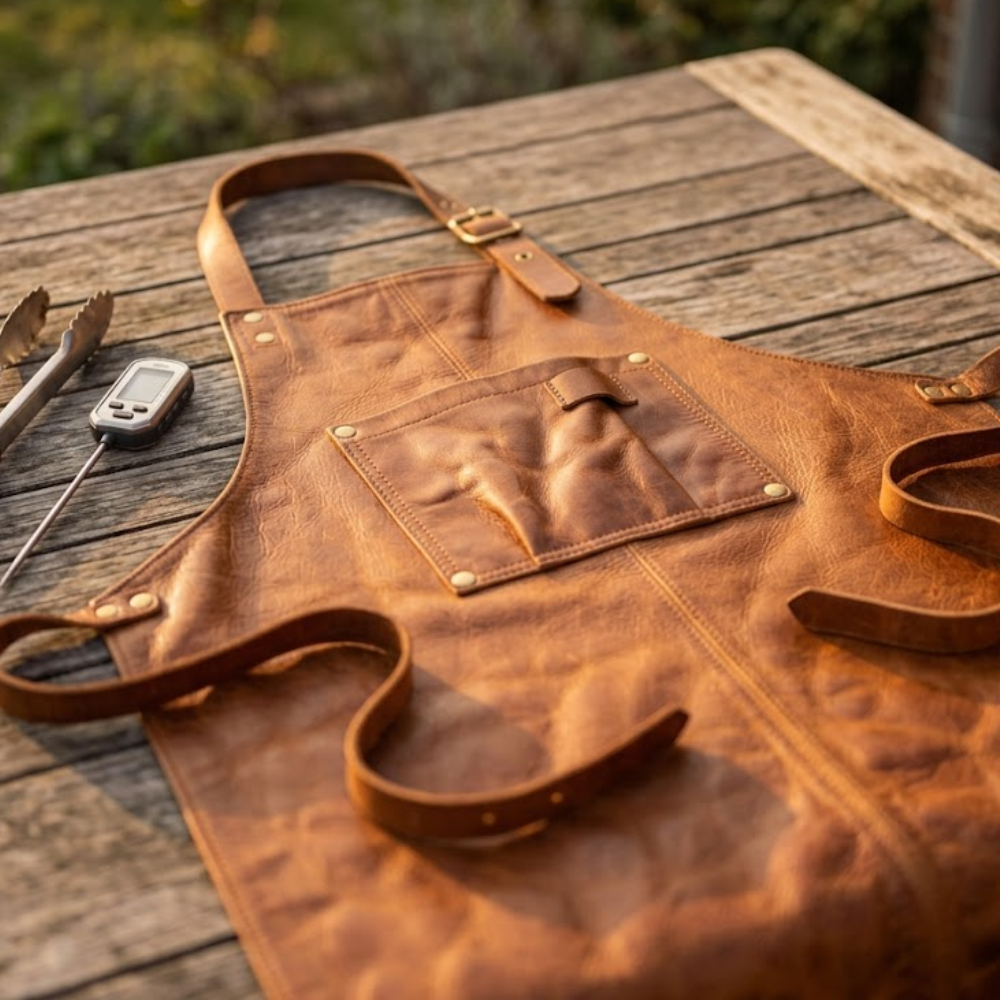
This apron is built from thick full grain pull up leather in a warm cognac brown, the same grade discussed above for its natural resistance to grease and radiant heat. The wide full bib design covers the chest and extends to mid thigh, meeting the coverage standard this guide recommends rather than the cropped, waist length cut common in cheaper grilling aprons.
An adjustable brass roller buckle neck strap lets the bib height be set precisely, paired with long leather tie waist straps for a secure, tailored fit. The large center patch pocket is reinforced with antique brass rivets at both top corners, sized for a thermometer, tongs, or a phone rather than a set of small, fiddly slots.
It suits backyard grillers, competition pitmasters, and anyone running a smoker regularly enough to have already burned through a fabric apron. Every order ships with free shipping and a 14 day return window from Rove Leather.
Frequently Asked Questions — Leather BBQ Aprons
The most common questions grillers and pitmasters ask when choosing a leather BBQ apron, answered directly.
- Heat resistant does not mean flame proof: leather handles splatter, embers, and radiant heat well, but direct flame contact calls for gear rated specifically for that exposure.
- Full bib coverage to mid thigh is the real standard: a cropped, waist length apron leaves the exact area most exposed to dripping grease unprotected.
- Full grain leather with a reinforced pocket outperforms split leather every time: it resists grease rather than absorbing it, and holds up to repeated loading without failing at the seams.
Choosing a leather BBQ apron comes down to separating real protection from marketing language, then matching hide quality, coverage, and pocket construction to the kind of grilling actually being done. A backyard cookout and a full competition weekend are not the same job, but both deserve gear that is honest about what it protects against.
At Rove Leather, the BBQ apron is built from full grain pull up leather with full bib coverage and a reinforced center pocket, so it holds up to real grease, embers, and radiant heat rather than a single marketing photo shoot.
Shop the BBQ Apron at Rove Leather
Full grain leather construction · Free shipping · 14 day returns