

Leather Barber Apron: Why Professional Barbers Are Switching Back to Leather
Durability, client perception, and ease of cleaning, broken down for individual barbers and the shop owners buying for a full team.
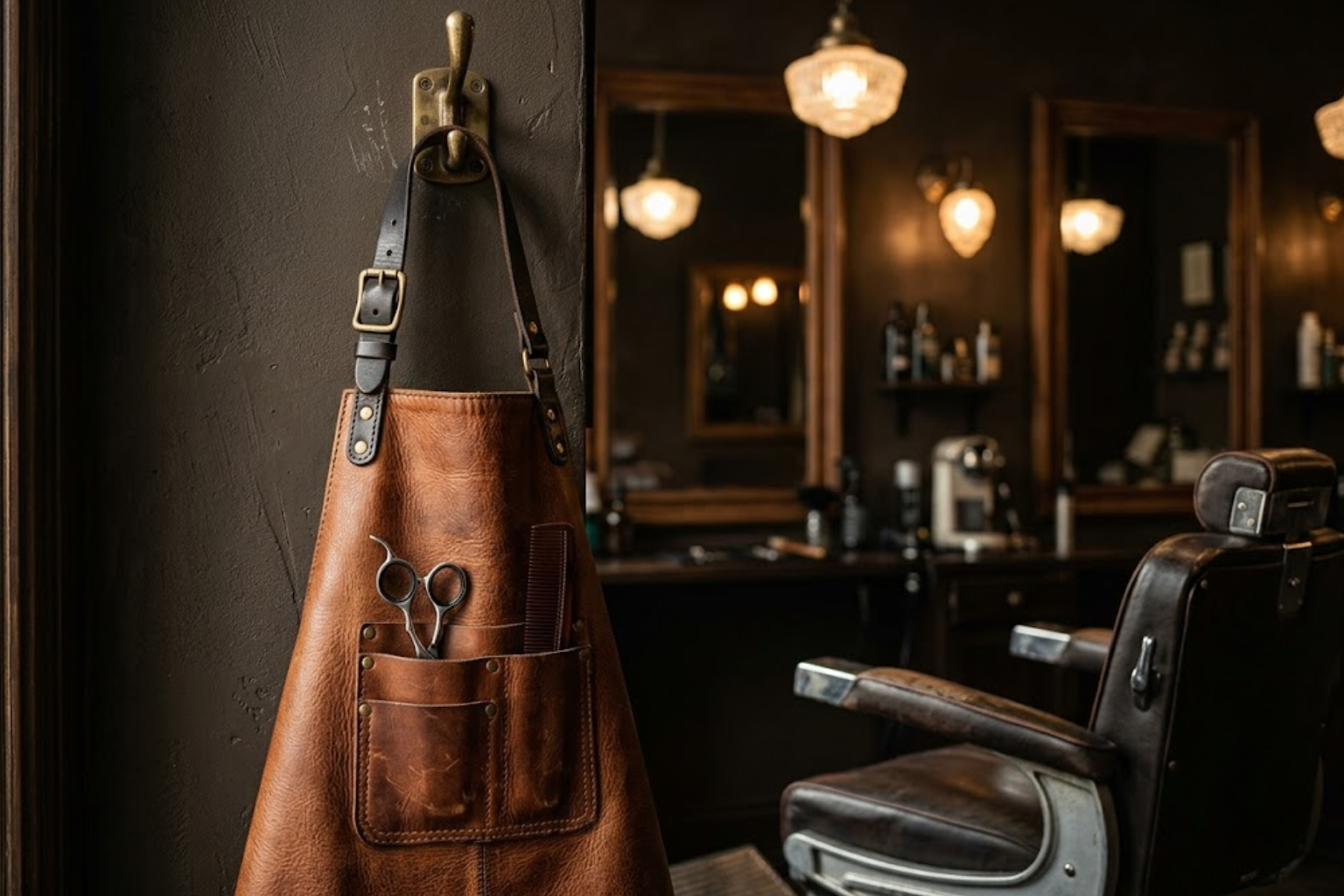
A leather barber apron is a work apron made from full grain leather, built with a crossback strap harness and dedicated tool slots for scissors, combs, and clippers, and it is what a growing number of professional barbers are returning to after years of cotton and vinyl. The main reason barbers are switching back is durability against daily product exposure paired with how the apron looks and wears in front of clients, since leather resists water, oils, and hair product mist far better than fabric while also projecting a level of craft that clients notice. Rove Leather builds its barber apron from full grain pull up leather specifically for this kind of daily professional use.
What Is a Leather Barber Apron?
A leather barber apron is a chest to knee length work apron worn behind the chair, built specifically to hold and protect the tools a barber reaches for constantly through a shift. Scissors, combs, clippers, and detailing tools all need a place that keeps them within reach without shifting, which is a different design problem than a bar apron or a kitchen apron is solving for.
Unlike a general work apron, a barber apron is built around one core job, holding cutting tools securely at hip height while standing and moving for hours at a time. That is why the pocket layout, the strap system, and the leather itself all get built around motion and repetition rather than bulk storage.
Why Are Barbers Switching Back to Leather?
Cotton and vinyl aprons dominated barbershops for years because they were cheap and easy to replace, but many working barbers and shop owners are moving back to leather for three specific reasons that show up daily behind the chair.
Durability Against Daily Product Exposure
A barbershop apron gets hit constantly with water, hair product, aftershave, and clipper oil, all in the same shift. Full grain leather resists this kind of repeated moisture and oil contact far better than cotton, which stains and thins after repeated washing, or vinyl, which cracks and peels once its coating starts to wear.
Client Perception
Clients notice what a barber is wearing, even if they never mention it. A worn cotton apron with faded stains reads as tired, while a leather apron that has developed a clean patina reads as experienced and established. Leather is one of the few materials that looks better the longer it has been worked in, rather than simply looking older.
Ease of Cleaning Between Clients
Between appointments, a barber does not have time for a full change of clothes. A quick wipe is all there is time for, and leather, particularly a pull up finish, handles that far better than fabric. Product residue and light staining wipe off a leather surface in seconds rather than setting into the fibers the way it does with cotton.
Full Grain vs Pull Up Leather: Which Matters More for a Barber Apron?
Full grain refers to the layer of the hide, keeping the natural fiber structure intact rather than sanding it down or using a lower layer of the hide. Pull up refers to a specific finishing process, where the leather is treated with waxes and oils that shift color and lighten slightly when the hide is pulled or flexed, then settle back as it relaxes.
For a barber apron specifically, this pull up finish matters because it gives the leather a self healing quality against light surface scratches, which get rubbed out with a simple pass of a thumb. It also naturally resists water and light oil exposure, which is exactly the daily contact a barber apron sees behind the chair.
| Material | Behavior Under Daily Use | Best Suited For |
|---|---|---|
| Cotton or canvas | Stains, thins, and needs frequent washing | Light, occasional use |
| Vinyl or synthetic | Cracks and peels once the coating wears through | Budget, short term use |
| Full grain pull up leather | Resists water and oil, wipes clean, develops patina | Daily professional shop use |
What Should a Professional Barber Apron Include?
Beyond the leather itself, a handful of construction details separate an apron actually built for barbering from a general work apron that happens to be leather.
- A crossback strap harness rather than a single neck loop. Standing for a full shift puts constant pressure on the neck with a single strap, while a crossback design spreads that weight across both shoulders.
- Adjustable buckles for a precise fit. A barber apron that shifts or rides up during a cut is a distraction, so a secure, adjustable fit matters more here than in most other apron categories.
- A dedicated multi slot pocket for scissors and combs. Tools that clatter together in one open pocket slow a barber down between cuts, while individual slots keep everything oriented and ready to grab.
- A separate closed pocket for a clipper or spray bottle. Heavier tools need their own space so they do not press into or damage the finer tools sharing the same pocket.
- Reinforced stitching or rivets at every pocket seam. Pocket seams take the most repeated stress of any part of the apron, since tools are pulled out and replaced dozens of times a day.
Individual Barber vs Shop Owner: What Changes When Buying in Bulk?
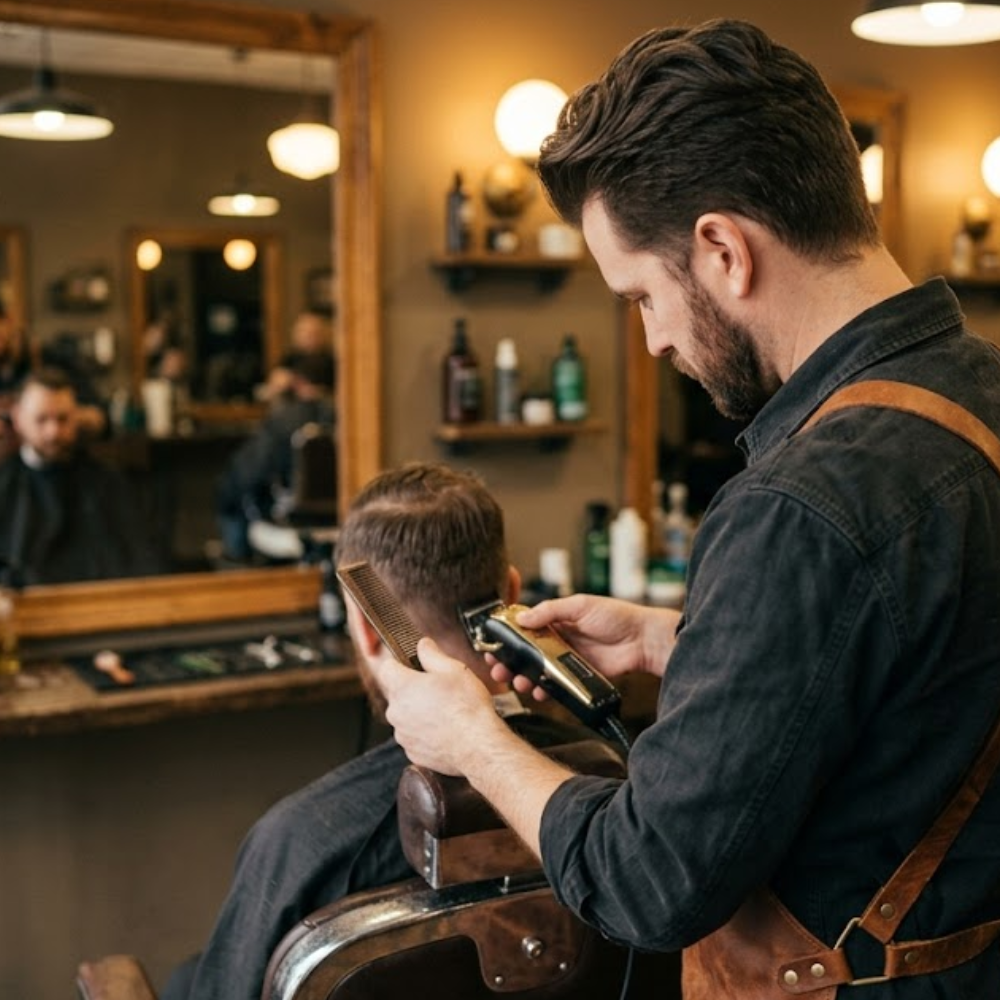
An individual barber usually buys one apron and expects it to last for years, so fit, comfort, and how the leather ages matter most. A shop owner buying for a full team is solving a different problem, consistency across every chair, a uniform look for clients walking in, and a price that holds up across a larger order.
Shops that outfit every chair in the same leather apron also get a branding benefit that is easy to underestimate. A row of barbers in matching leather aprons reads as a cohesive, established business in a way that a mix of whatever apron each barber happened to buy never does.
Common Mistakes When Buying a Barber Apron
- Choosing based on color or finish alone. A dark, attractive finish says nothing about whether the leather underneath is full grain or a lower grade split.
- Ignoring the strap system. A neck loop apron might look similar in a photo, but the difference in comfort over a full shift is significant.
- Buying a general work apron instead of one built for barbering. A carpentry or bar apron pocket layout is not built around scissors, combs, and clippers, and it shows the first time you try to use it that way.
- Overlooking pocket reinforcement. An apron with unreinforced pocket seams will start failing at exactly the point where tools are pulled in and out the most.
How Do You Care for a Leather Barber Apron?
Wipe the apron down with a dry or slightly damp cloth after each shift to remove product residue and hair before it works into the grain. Condition the leather every few months, since daily contact with water and oils, even a leather that resists them well, still pulls some moisture out of the hide over time.
Store the apron hanging rather than folded to avoid crease lines forming at the points that already flex most during a shift. Light surface scratches from a pull up finish generally rub out with a thumb, so there is rarely a need to treat minor marks as damage.
Why Does the Switch Back to Leather Matter?
The move back to leather aprons in barbershops is not nostalgia, it is a practical response to what fabric and vinyl aprons consistently fail to hold up against, daily oil and product exposure, and what they fail to communicate to a client sitting in the chair. Durability, a professional appearance, and quick cleaning between clients are the three reasons this keeps coming up among working barbers and the shop owners equipping them.
Choosing the right one comes down to the same standards covered in this guide, full grain leather, a crossback harness, and a pocket layout actually built around the tools a barber uses every day.
Men’s Full Grain Leather Barber Apron with Tool Organizer Pockets
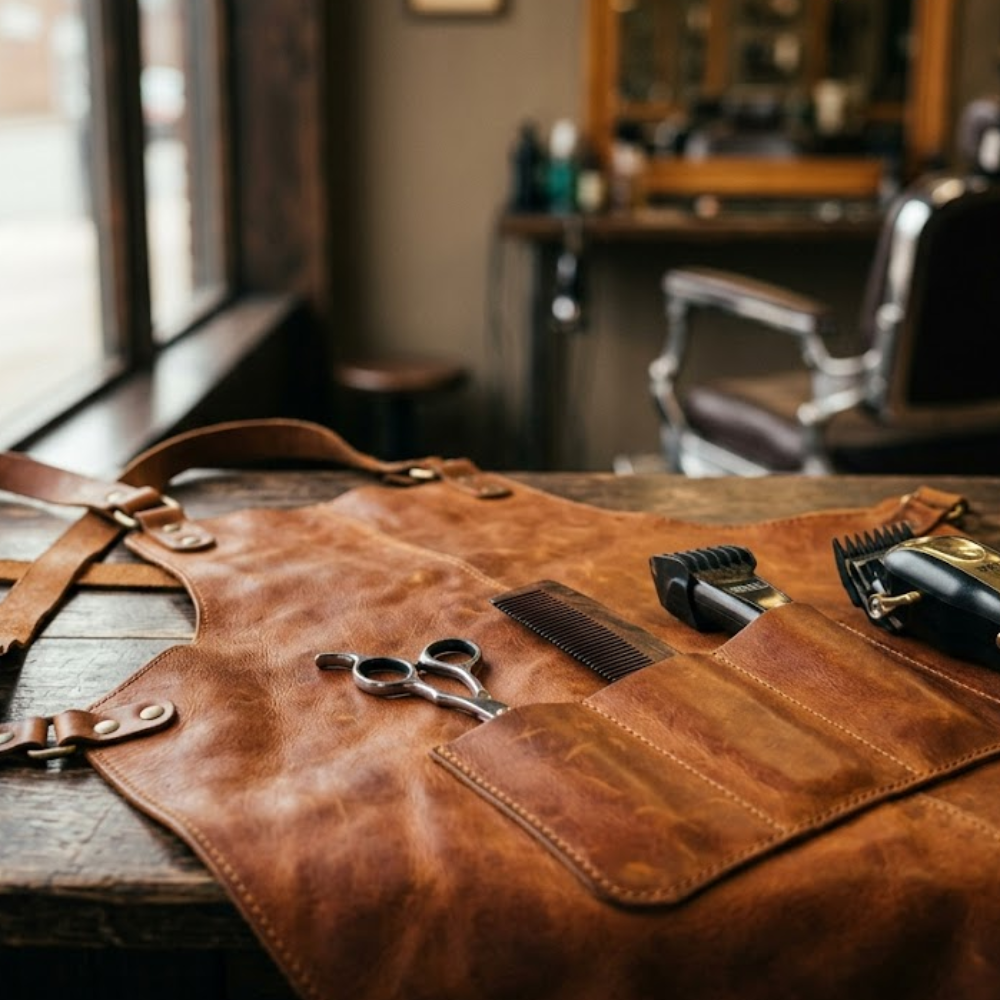
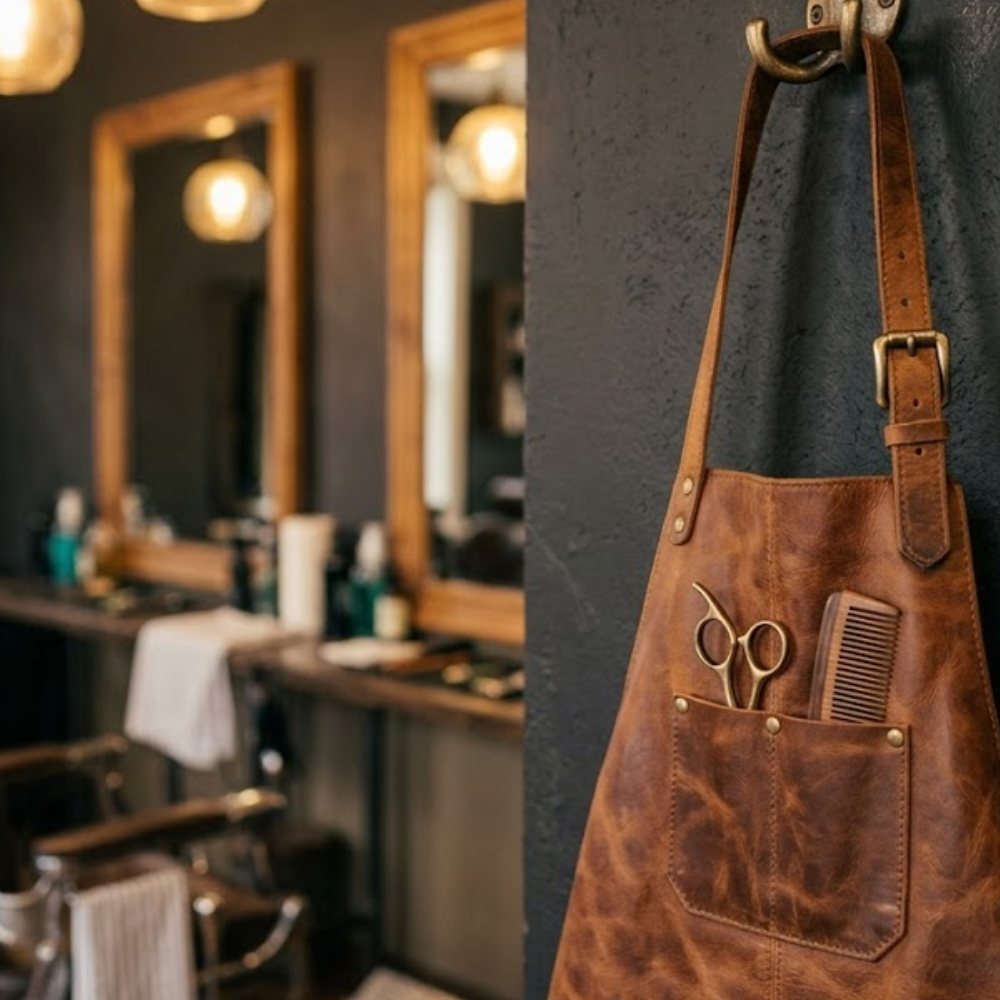
This apron is built from thick full grain pull up leather in a warm cognac tan finish that develops deeper character with regular wear rather than simply wearing out. It meets the construction standards outlined above with a crossback X strap harness and adjustable brass shoulder buckles that keep the apron flat and secure through a full day of cuts, fades, and shaves.
The left side multi slot tool organizer holds scissors, combs, and fine detailing tools in individual slots, while the right side stud closure flap pocket is sized for a clipper, a large brush, or a spray bottle. Brass rivets reinforce every pocket seam, addressing the exact stress point discussed earlier in this guide.
It suits solo barbers, hairstylists, and full teams equipping every chair with a matching, professional look. Every order ships with free shipping and a 14 day return window from Rove Leather.
Frequently Asked Questions — Leather Barber Aprons
The most common questions barbers and shop owners ask when choosing a leather barber apron, answered directly.
- Durability, client perception, and easy cleaning drive the shift back to leather: fabric and vinyl aprons simply do not hold up against daily product and oil exposure the way full grain leather does.
- Full grain pull up leather is the standard to look for: it resists water and light oil contact while self healing light surface scratches.
- Shop owners buying for a full team should confirm bulk terms directly: matching aprons across every chair strengthen how a shop presents to walk in clients.
Choosing a leather barber apron comes down to matching real daily conditions, water, product, oil, constant tool use, to a hide and construction built to handle them, rather than choosing on finish or price alone. Whether outfitting one chair or a full shop, the same standards apply.
At Rove Leather, the barber apron is built from full grain pull up leather with a crossback harness and reinforced tool pockets, designed to hold up behind the chair for years rather than a single busy season.
Shop the Barber Apron at Rove Leather
Full grain leather construction · Free shipping · 14 day returns